72-Hour Deployment: Mobile & Modular Units for Emergency Relief
72-Hour Deployment: Mobile & Modular Units for Emergency Relief
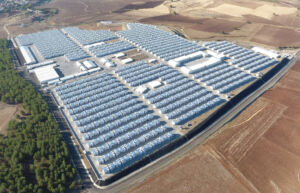
In the first hours following a disaster or humanitarian crisis, time becomes the most critical resource. Access to shelter, sanitation, medical support, and operational facilities within the first seventy two hours can determine survival rates, public health outcomes, and the stability of affected communities. Mobile and modular units are specifically engineered to meet this narrow response window. By combining off site manufacturing with logistics driven design, these systems enable emergency relief operations to move from decision to deployment at unprecedented speed while maintaining safety and functional integrity.
What is 72 hour deployment in emergency relief?
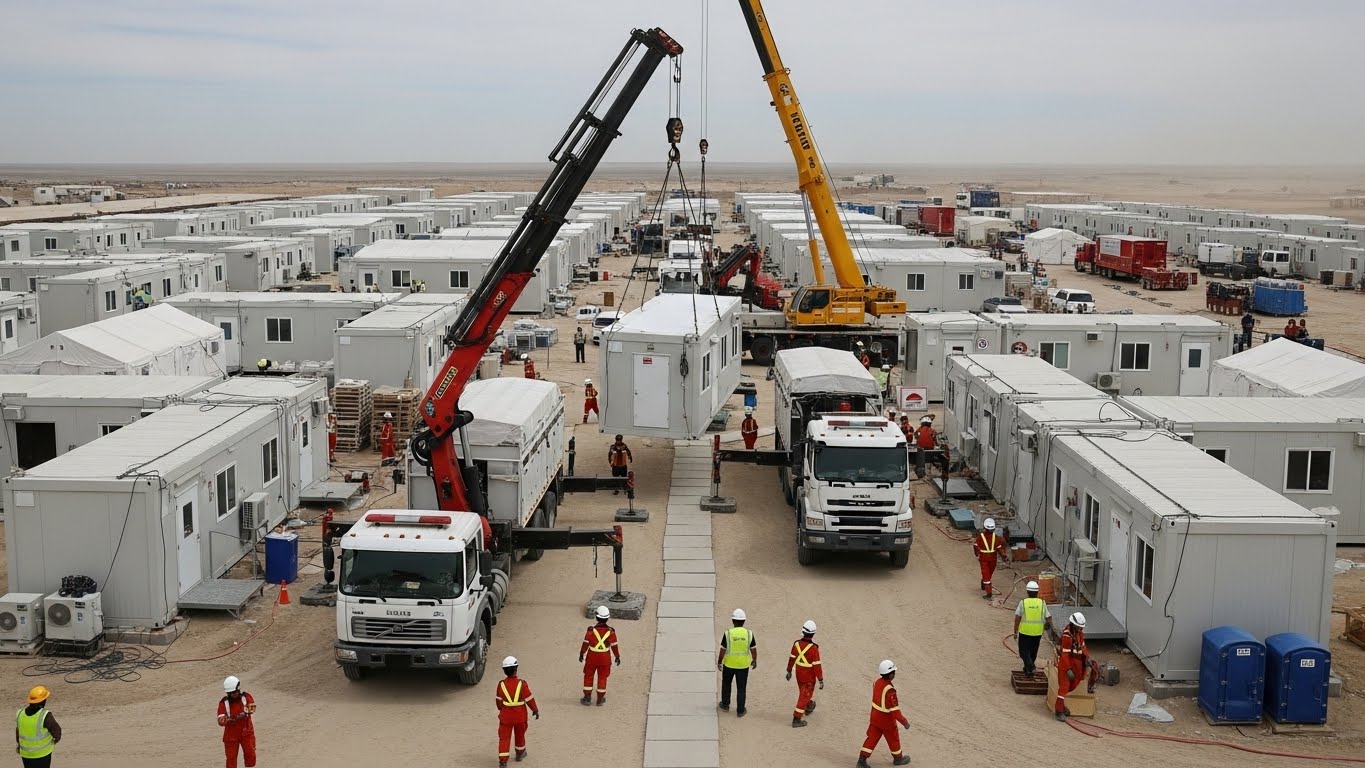
Seventy two hour deployment refers to the ability to deliver, assemble, and commission fully functional units within three days of mobilization. This includes accommodation units, medical facilities, command centers, kitchens, sanitation blocks, and technical support structures. The concept relies on pre engineered modular systems that are produced in advance or rapidly manufactured, packaged for transport, and installed using standardized assembly procedures.
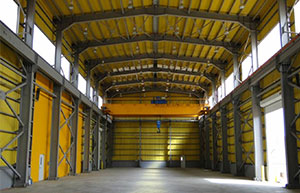
Unlike improvised shelters, mobile and modular units are designed as complete systems. Structural frames, insulation, internal finishes, and MEP provisions are integrated during production. This allows relief teams to focus on placement and connection rather than on site construction, significantly reducing time and risk in unstable environments.
Advantages
Speed of response is the primary advantage. Parallel processes allow production, transport planning, and site preparation to occur simultaneously, enabling operational readiness within days.
Operational reliability is ensured through factory controlled manufacturing. Units arrive on site with predictable performance in terms of structural safety, thermal comfort, and hygiene.
Logistics efficiency is achieved through optimized dimensions and packaging. Flat pack and transport ready modular formats maximize truck, container, and aircraft capacity, which is critical when access routes are limited.
Minimal on site labor requirements reduce exposure to security risks and allow deployment even in areas with limited skilled workforce availability.
Durability supports extended use. Although designed for emergency response, these units are engineered to remain functional for months or years, supporting transitions from immediate relief to longer term settlement.
Scalability enables rapid expansion. Additional units can be added as needs evolve, using the same infrastructure and layout logic without disrupting existing operations.
Usage areas
Seventy two hour deployable mobile and modular units are used across a wide range of emergency relief scenarios.
Emergency housing for displaced families
Field hospitals and mobile clinics
Humanitarian command and coordination centers
Sanitation, shower, and laundry units
Mobile kitchens and food distribution facilities
Accommodation for emergency response teams
Technical units supporting water, power, and communications
In all cases, rapid deployment must be matched with reliability and safety to avoid secondary crises caused by inadequate facilities.
Dorce’s approach
Dorce delivers seventy two hour deployment capability through a fully integrated emergency response model. Modular units are engineered with deployment speed as a core design parameter, balancing transport efficiency, structural performance, and ease of assembly. Production processes are standardized to allow rapid scaling without compromising quality.
Logistics planning is embedded into the design stage. Units are configured for road, sea, or air transport depending on mission requirements, ensuring compatibility with available access routes. On site installation follows predefined procedures that reduce assembly time and simplify commissioning.
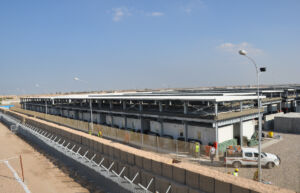
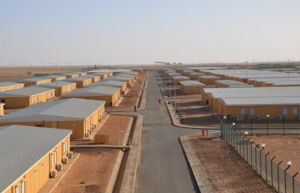
Dorce’s experience delivering emergency settlements, camps, and mobile facilities in high pressure environments enables effective coordination with humanitarian organizations, governments, and international agencies. This ensures that mobile and modular units are not only delivered quickly, but operate safely and reliably from the first day of deployment.
In emergency relief, speed saves lives only when it is paired with discipline and engineering rigor. Through mobile and modular systems designed for seventy two hour deployment, Dorce supports rapid humanitarian response while providing durable, scalable infrastructure that can adapt as crises evolve.