
Containerized vs. Prefabricated Units: Choosing the Right Emergency Solution
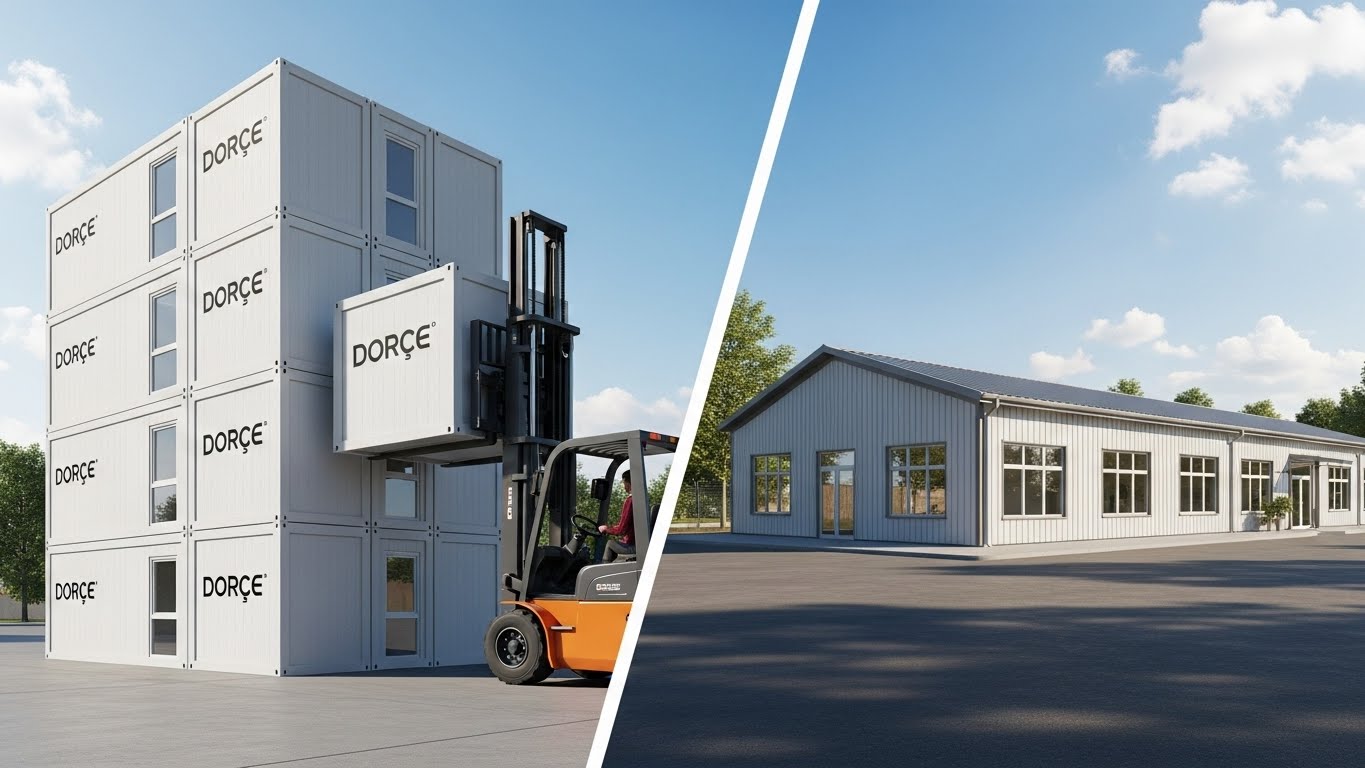
In emergency and rapid response projects, selecting the right building solution directly impacts speed, functionality, and long term performance. Governments, humanitarian organizations, and industrial operators often face a critical decision between containerized units and prefabricated units. While both systems enable fast deployment compared to conventional construction, their structural logic, flexibility, and operational suitability differ significantly. Understanding these differences is essential for delivering effective emergency infrastructure under challenging conditions.
What Are Containerized and Prefabricated Units?
Containerized units are building solutions developed from standard ISO shipping containers. Originally designed for global logistics, these steel containers are converted into functional spaces such as accommodation units, clinics, offices, or technical modules. Their standardized dimensions and inherent structural strength make them easy to transport, stack, and deploy rapidly.
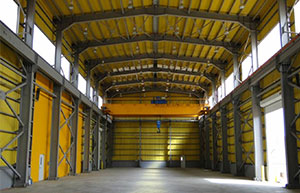
Prefabricated units, on the other hand, are purpose designed building systems manufactured off site using steel frame, panelized, or modular construction technologies. Unlike containers, prefabricated units are not constrained by fixed shipping dimensions and are engineered specifically for their intended use. Walls, floors, roofs, and modules are produced in factory environments and assembled on site into complete buildings.
Advantages of Containerized and Prefabricated Solutions
Containerized units offer exceptional mobility and robustness. Their global transport compatibility allows fast delivery to remote or disaster affected regions using existing logistics networks. They are particularly effective for short term or mobile emergency operations where rapid relocation may be required.
Prefabricated units provide superior design flexibility and user comfort. Because they are purpose built, layouts, ceiling heights, insulation levels, and mechanical systems can be optimized for climate conditions and long term occupancy. This makes prefabricated solutions more suitable for extended emergency settlements and critical public facilities.
From a performance perspective, prefabricated units generally offer better thermal efficiency, acoustic comfort, and architectural adaptability. Containerized units, while highly durable, often require additional modification to achieve similar comfort standards.
Cost efficiency also varies by use case. Containerized solutions can be cost effective for compact, standardized functions, while prefabricated systems offer better value for larger scale or long duration emergency projects due to optimized material use and operational efficiency.
Usage Areas in Emergency Projects
Containerized units are commonly used for emergency field offices, mobile clinics, command centers, security checkpoints, and technical rooms. They are ideal for rapid deployment in disaster zones, military operations, and industrial emergencies where relocation or reuse is expected.
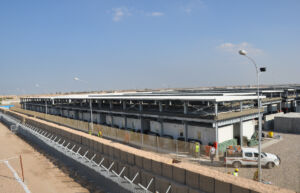
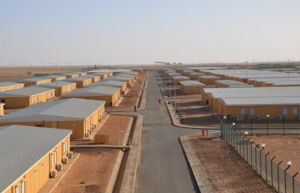
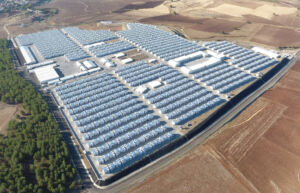
Prefabricated units are widely applied in emergency housing programs, modular hospitals, healthcare complexes, schools, dining facilities, and sanitation buildings. Their scalability and adaptability make them suitable for refugee camps, post disaster reconstruction, and humanitarian infrastructure requiring long term service life.
In many emergency projects, a hybrid approach is adopted. Containerized units support logistics and technical operations, while prefabricated buildings provide living, healthcare, and community spaces.
Dorce’s Difference and Conclusion
Dorce Prefabricated Construction does not position containerized and prefabricated units as competing solutions, but as complementary systems within a comprehensive emergency response strategy. With in house engineering, manufacturing, and project delivery capabilities, Dorce evaluates each project based on urgency, climate, operational duration, and functional requirements.
By offering both containerized solutions and advanced prefabricated steel building systems, Dorce ensures that clients receive the most suitable and efficient emergency infrastructure solution. Each project is engineered for rapid deployment while maintaining compliance with international standards, structural safety, and user comfort.
Choosing between containerized and prefabricated units is not a one size fits all decision. With the right technical assessment and integrated delivery approach, emergency projects can achieve speed, resilience, and long term value. Dorce continues to support critical response efforts worldwide by delivering tailored modular solutions where reliability and time are paramount.