
Meeting International Standards: Quality Control in Emergency Prefab Buildings
In emergency construction projects, speed is essential, but quality and compliance cannot be compromised. Emergency prefab buildings are often deployed in critical environments where safety, durability, and functionality directly impact human lives. Meeting international standards through rigorous quality control processes ensures that prefabricated emergency buildings perform reliably under extreme conditions while complying with global regulatory and technical requirements. For organizations delivering urgent infrastructure, quality control is the foundation of trust and long term performance.
What Is Quality Control in Emergency Prefab Buildings?
Quality control in emergency prefab buildings refers to the systematic processes applied throughout design, manufacturing, transportation, and on site assembly to ensure compliance with international standards. These standards typically cover structural integrity, fire safety, thermal performance, hygiene, electrical and mechanical systems, and overall building durability.
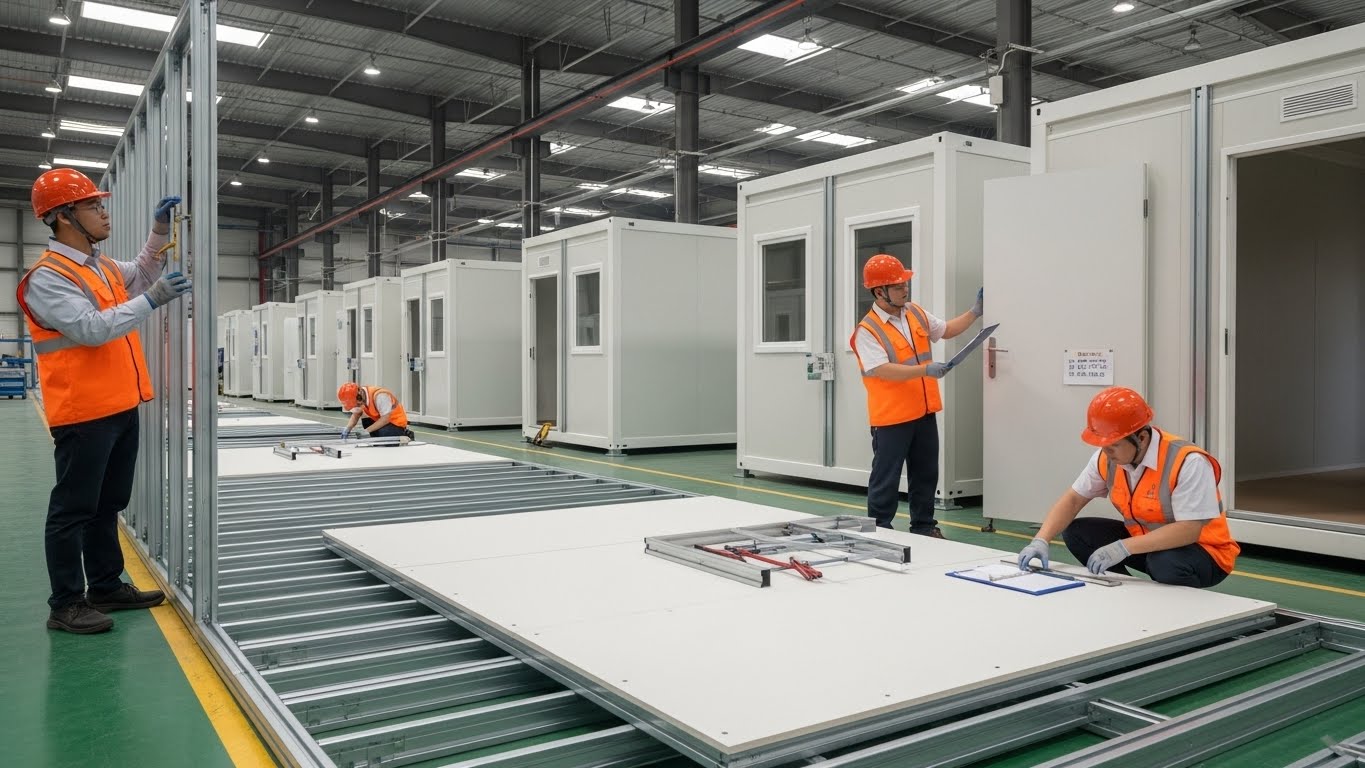
Unlike traditional construction, prefab buildings are manufactured in controlled factory environments. This allows quality checks to be embedded at every production stage, from raw material inspection to final module testing. For emergency projects, this structured approach ensures that buildings are delivered ready for immediate and safe use.
Advantages of International Standard Compliance
One of the most important advantages of meeting international standards is safety. Emergency prefab buildings are often used as housing, healthcare facilities, and command centers where structural stability and system reliability are critical. Compliance ensures resistance to environmental loads, fire risks, and operational stress.
Consistency is another key benefit. Factory based production combined with standardized quality procedures results in uniform performance across all units. This is especially important in large scale emergency deployments where hundreds or thousands of buildings must function identically.
Regulatory acceptance also improves with standard compliance. Projects funded by governments, international organizations, or humanitarian agencies require adherence to recognized norms. Certified quality control processes reduce approval times and facilitate smoother project execution.
Long term durability further strengthens value. Emergency buildings that meet international standards maintain their performance over extended service periods, allowing temporary facilities to be repurposed or upgraded rather than replaced.
Usage Areas Requiring Strict Quality Control
Emergency prefab buildings are widely used in healthcare infrastructure such as modular hospitals, clinics, laboratories, and isolation units. These facilities require strict hygiene, ventilation, and electrical standards to operate safely.
Humanitarian housing and refugee accommodation also rely heavily on quality controlled prefab buildings to ensure occupant safety, comfort, and resilience in difficult environments.
Industrial emergency response, defense applications, and critical infrastructure recovery projects further depend on certified prefab buildings for site offices, control rooms, and technical facilities where operational continuity is essential.
Dorce’s Difference and Conclusion
Dorce Prefabricated Construction integrates international quality standards into every stage of its emergency prefab building solutions. Quality control begins at the design phase, where engineering teams align structural and system requirements with applicable global standards and project specific regulations.
Manufacturing is carried out in controlled factory environments with documented inspection procedures, material traceability, and performance testing. Before shipment, units undergo final quality checks to ensure readiness for rapid installation and immediate operation.
On site assembly is supported by experienced teams following standardized installation and commissioning protocols. This end to end quality approach allows Dorce to deliver emergency prefab buildings that combine speed with proven reliability.
Meeting international standards is not an obstacle to rapid response but a prerequisite for responsible emergency construction. Through disciplined quality control and integrated delivery, Dorce continues to provide safe, compliant, and high performance prefab buildings for emergency projects worldwide.