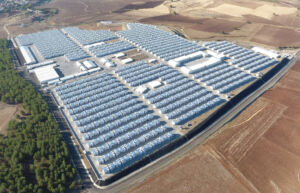
Meeting International Humanitarian Standards: Safe Settlements for Displaced People
Meeting International Humanitarian Standards: Safe Settlements for Displaced People
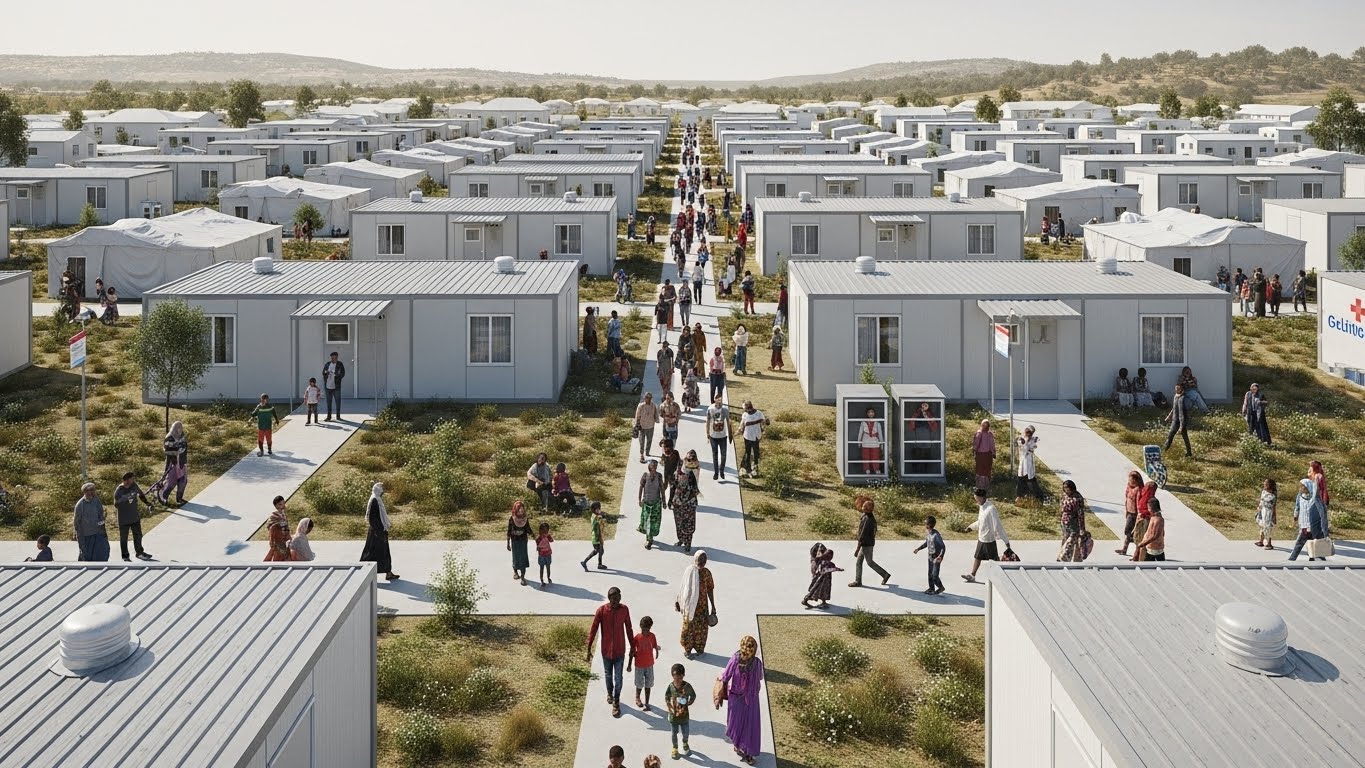
Large scale displacement caused by conflict, natural disasters, and climate related events has made the delivery of safe and dignified settlements one of the most urgent global challenges. Emergency shelters are no longer short term solutions measured in weeks. In many regions, displaced communities remain in temporary settlements for years. This reality requires housing and camp infrastructure that meet international humanitarian standards while remaining fast to deploy, scalable, and suitable for prolonged use. Safe settlements are not defined only by speed, but by compliance, durability, and the ability to protect human health and dignity under extreme conditions.
What does meeting international humanitarian standards mean?
International humanitarian standards define the minimum conditions required to ensure safety, health, and well being for displaced populations. These standards are shaped by organizations such as UN agencies, international NGOs, development banks, and humanitarian coordination bodies. They address structural safety, environmental performance, public health, privacy, accessibility, and social functionality.
In practical terms, compliant settlements must provide weather resistant structures, adequate thermal comfort, proper ventilation, fire safety, and secure circulation. Sanitation systems must prevent contamination. Living spaces must allow privacy and reduce overcrowding. Infrastructure must support water supply, wastewater management, power distribution, and access to healthcare and community services.
Prefabricated and modular construction systems align well with these requirements because they allow precise engineering, repeatable quality, and controlled production. This reduces the risk of inconsistent performance that often occurs in purely site built emergency solutions.
Advantages of standards compliant settlements
Safety is the most critical benefit. Structures designed and produced according to international standards provide resistance against wind, seismic activity, temperature extremes, and long term wear. This is essential in regions exposed to harsh climates or unstable ground conditions.
Public health protection is significantly improved. Proper sanitation layouts, controlled ventilation, moisture management, and separation of living and service areas reduce the risk of disease outbreaks in dense settlements.
Scalability enables humanitarian operations to respond to rapidly changing needs. Standardized modular units allow settlements to expand without disrupting infrastructure logic or service access.
Operational efficiency increases when settlements follow recognized standards. Maintenance becomes simpler, spare parts are interchangeable, and upgrades can be implemented without dismantling entire systems.
Long term usability is another key advantage. Many emergency settlements transition into semi permanent or permanent communities. Standards compliant construction ensures that these environments remain safe and functional beyond the initial emergency phase.
Where safe humanitarian settlements are essential
International standard compliant settlements are required across a wide range of displacement scenarios.
Refugee camps for conflict affected populations
Temporary settlements for internally displaced people
Post disaster housing following earthquakes floods or storms
Transitional housing during post conflict reconstruction
Accommodation for humanitarian workers and medical teams
In all these cases, compliance is not optional. It is the foundation for sustainable humanitarian response and community stabilization.
Dorce’s approach to safe humanitarian settlements
Dorce designs and delivers humanitarian settlements with a focus on compliance, speed, and long term performance. From the earliest planning stage, settlement layouts and building systems are engineered in line with international humanitarian guidelines and technical standards.
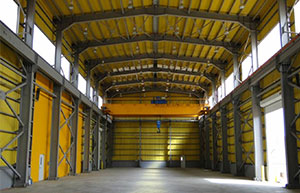
Factory based production allows full control over structural components, insulation performance, and hygiene related details. Each unit is produced with consistent quality and documented processes that support international audits and donor requirements. Modular design enables flexible deployment strategies while maintaining safety and service integration.
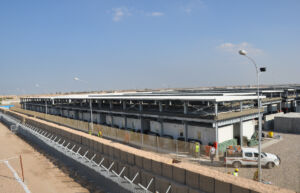
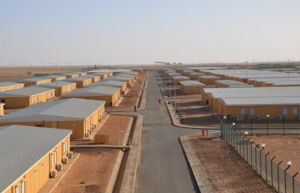
Dorce’s experience in delivering large scale camps, emergency housing, and integrated settlements across different geographies ensures that solutions are adapted to local climate, logistics, and operational constraints without compromising standards. This approach allows displaced populations to live in environments that are not only fast to deploy, but safe, dignified, and resilient over time.
Meeting international humanitarian standards is not simply a technical requirement. It is a responsibility toward people whose lives have been disrupted. Through its modular and prefabricated construction expertise, Dorce supports humanitarian actors with settlement solutions that protect health, ensure safety, and provide a stable foundation for recovery.