
Cross-Border Humanitarian Operations: Logistics of Modular Housing in Syria
Cross-Border Humanitarian Operations: Logistics of Modular Housing in Syria
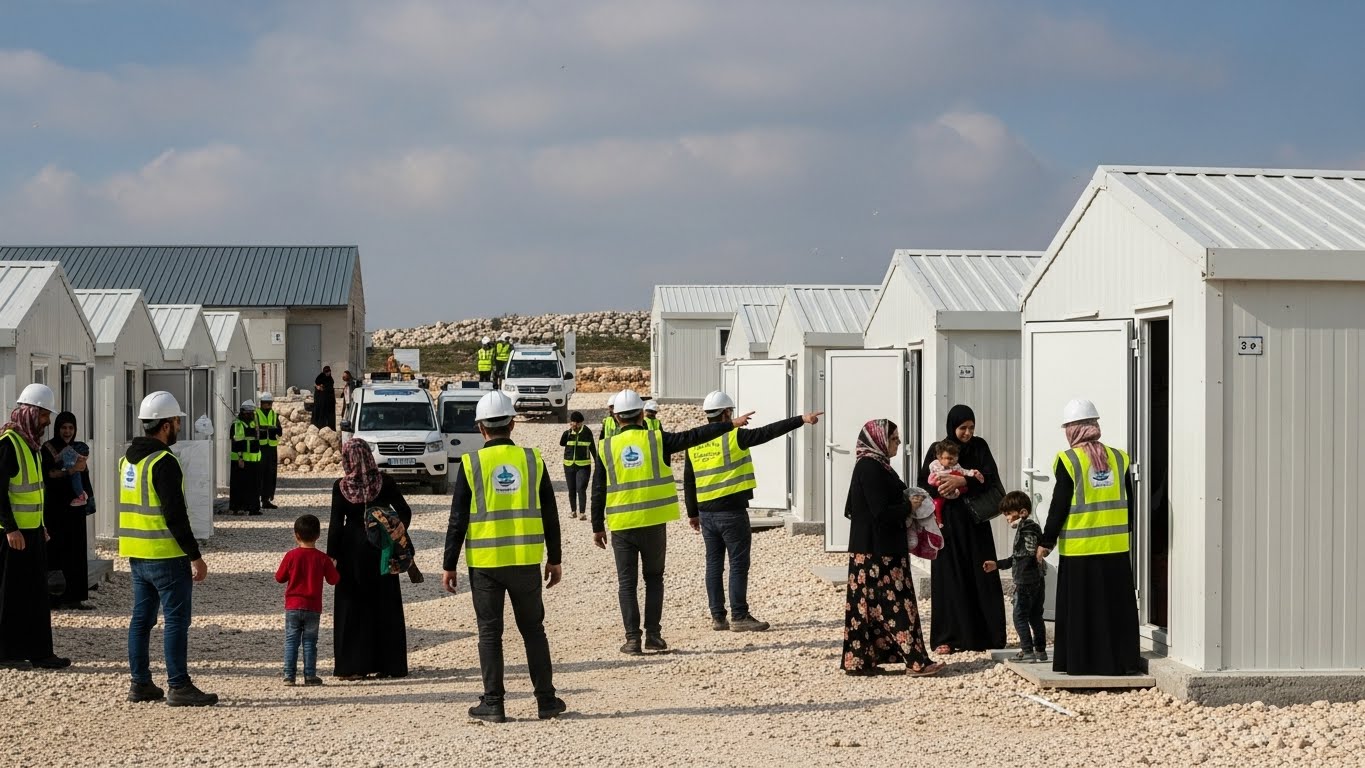
Cross border humanitarian operations involve the delivery of aid, infrastructure and essential services from neighboring countries into Syria to support displaced and vulnerable populations. Within these operations, modular housing plays a critical role by providing fast, durable and standardized accommodation that can be transported, assembled and commissioned efficiently across borders.
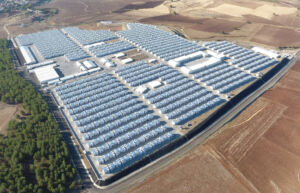
Modular housing units are produced in factory controlled environments, shipped as complete or flat pack systems and installed on site to create organized settlements, staff compounds and social infrastructure. For humanitarian agencies working under time pressure and logistical constraints, modular construction ensures dependable quality and continuity of shelter support across multiple regions inside Syria.
Advantages
The biggest advantage of modular housing in cross border operations is logistics efficiency. Flat pack and containerized systems allow high volume transport through limited access routes, maximizing the number of shelters delivered per truck or container.
Prefabrication also reduces on site work, which is essential in insecure or remote areas. Units arrive with structural, mechanical and electrical systems already integrated, allowing rapid installation with minimal workforce requirements.
Standardization improves planning, coordination and stock management across multiple border entry points and distribution hubs. Modular buildings are durable, weather resistant and designed for long term use, supporting both emergency relief and stabilization phases.
Flexibility is another key benefit. Settlements can be expanded, reorganized or relocated as humanitarian needs shift, ensuring operational resilience without major additional construction costs.
Usage Areas
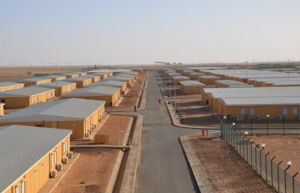
In Syria, modular housing delivered through cross border operations is used for family accommodation, temporary resettlement areas, staff housing for humanitarian workers, administrative offices, clinics, education facilities and community service buildings.
These units support refugee and IDP settlements, host communities and regions where traditional construction is limited or unsafe. They are also used as logistics hubs, registration centers, coordination offices and storage areas that enable smoother aid distribution.
Because modular buildings can be adapted for climate, cultural and accessibility needs, they provide inclusive and safer environments for vulnerable populations including children, elderly people and persons with disabilities.
Dorce’s Difference/Conclusion
Dorce supports cross border humanitarian operations with modular housing solutions engineered for efficiency, durability and compliance with international standards. Every unit is produced using certified materials and audited quality systems, ensuring consistent performance across large scale deployments.
With turnkey capability, Dorce manages design, production, packing optimization, transport planning, installation and commissioning, helping humanitarian partners reduce operational complexity and respond faster in the field.
By combining engineering expertise with an understanding of humanitarian logistics, Dorce delivers modular housing that supports dignity, safety and community stability in Syria. These solutions strengthen the operational backbone of cross border aid programs, enabling reliable and sustainable shelter systems where they are needed most.