
Overcoming Access Challenges: Delivering Aid Infrastructure to Gaza Strip
Overcoming Access Challenges: Delivering Aid Infrastructure to Gaza Strip
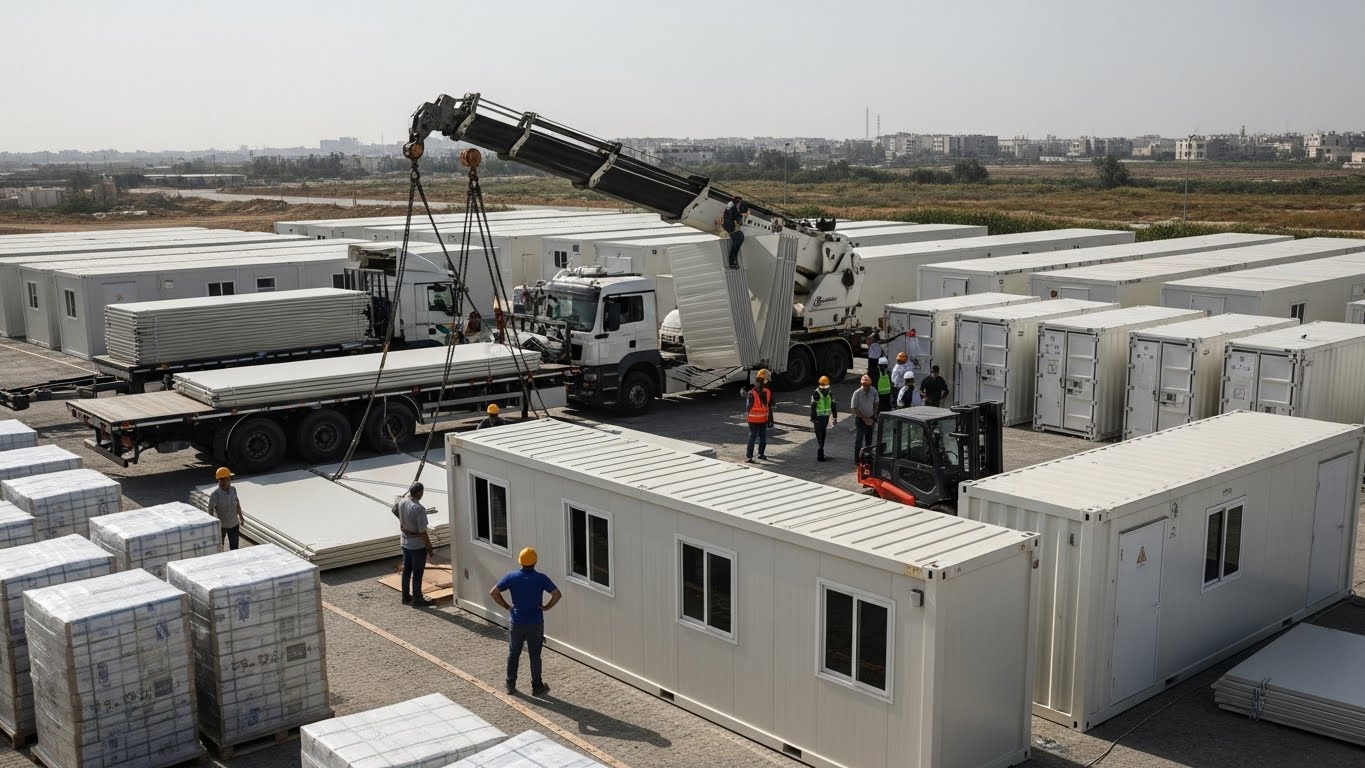
Delivering aid infrastructure into Gaza requires more than fast production. It demands a logistics-first delivery model built around restricted entry points, limited storage capacity, damaged internal transport networks, and operational uncertainty. In these conditions, shelters, WASH blocks, clinics, kitchens, and power support units must be engineered not only for performance, but for how they move, how they are handled, and how they are installed with minimal disruption. Modular and prefabricated construction enables this by turning complex site work into a controlled, repeatable supply chain from factory to commissioning.
What is delivering aid infrastructure under access constraints?
Delivering aid infrastructure under access constraints means planning the entire project around the realities of limited corridors, strict loading rules, staged entry, and constrained on-ground lifting and assembly. Success depends on designing infrastructure as transport-ready systems rather than traditional construction packages.
In practice, this involves selecting the right format for the mission. Flat-pack systems maximize shipment density when volume is the limiting factor. Containerized and modular units reduce installation time when on-site labor and equipment are limited. Hybrid delivery models combine both, sending high-volume elements as flat-pack and critical service modules as pre-integrated units to shorten commissioning time.
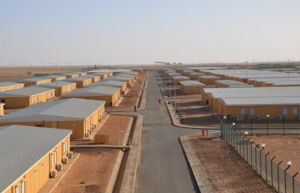
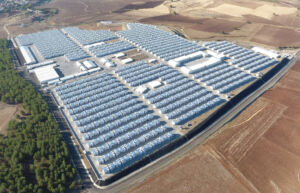
It also requires a settlement approach. Housing without WASH, energy, and safe circulation becomes unlivable quickly. Aid infrastructure must be delivered as an integrated sequence, where each wave unlocks immediate functionality for people on the ground.
Advantages
Logistics efficiency is the first advantage. Transport-optimized packaging reduces the number of shipments and simplifies handling, which matters when entry volume is constrained and staging areas are limited.
Faster operational readiness is achieved by reducing on-site work. Pre-engineered systems with integrated MEP provisions enable quick assembly and quicker connection to water, drainage, and power.
Lower on-site risk comes from shorter installation windows and fewer trades required on the ground. Standardized assembly procedures reduce improvisation and improve safety.
Quality consistency improves outcomes at scale. Factory-controlled production ensures repeatable dimensions, reliable joints, and predictable component compatibility, which reduces failures and rework in difficult environments.
Scalability supports phased delivery. Infrastructure can expand block by block as access windows open, without breaking the settlement layout or overloading utilities.
Better maintainability is achieved through standardization. Interchangeable parts, documented assemblies, and accessible service zones reduce downtime and simplify maintenance planning.
Usage areas
Access-constrained delivery models are relevant across most aid infrastructure categories in Gaza.
Emergency and transitional shelter clusters paired with basic services
Sanitation blocks including toilets, showers, handwashing, and service corridors
Mobile and modular clinics, triage units, and staff accommodation
Field kitchens, dining modules, and food distribution support points
Power support units such as generator rooms, distribution cabins, and hybrid energy containers
Water storage, pumping modules, and localized wastewater management packages
Coordination offices, storage units, and logistics hubs for humanitarian operations
In all cases, outcomes improve when these assets are planned as a single integrated settlement system rather than independent deliveries.
Dorce’s approach
Dorce manages access constraints by treating logistics as an engineering input from day one. Unit dimensions, packaging logic, weights, and handling requirements are defined around real transport conditions and installation capacity. Where shipment volume is the main bottleneck, Dorce prioritizes flat-pack formats to maximize delivered area per container or truck. Where speed to commissioning is critical, Dorce deploys pre-integrated modules that arrive ready for rapid installation and connection.
Dorce also plans aid infrastructure as an integrated deployment sequence. Shelter units are designed to connect cleanly with modular WASH blocks, kitchens, clinics, and technical support units so that each delivery wave unlocks immediate functionality. This approach reduces bottlenecks on the ground and supports stable camp operations from the earliest phase. By combining off-site production discipline with logistics-driven design and standardized installation workflows, Dorce helps humanitarian partners deliver reliable, scalable infrastructure even when access conditions are severely constrained.