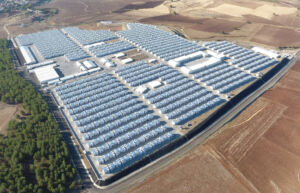
From License to Launch: Accelerating Libya Oil Exploration with Prefabricated Camps
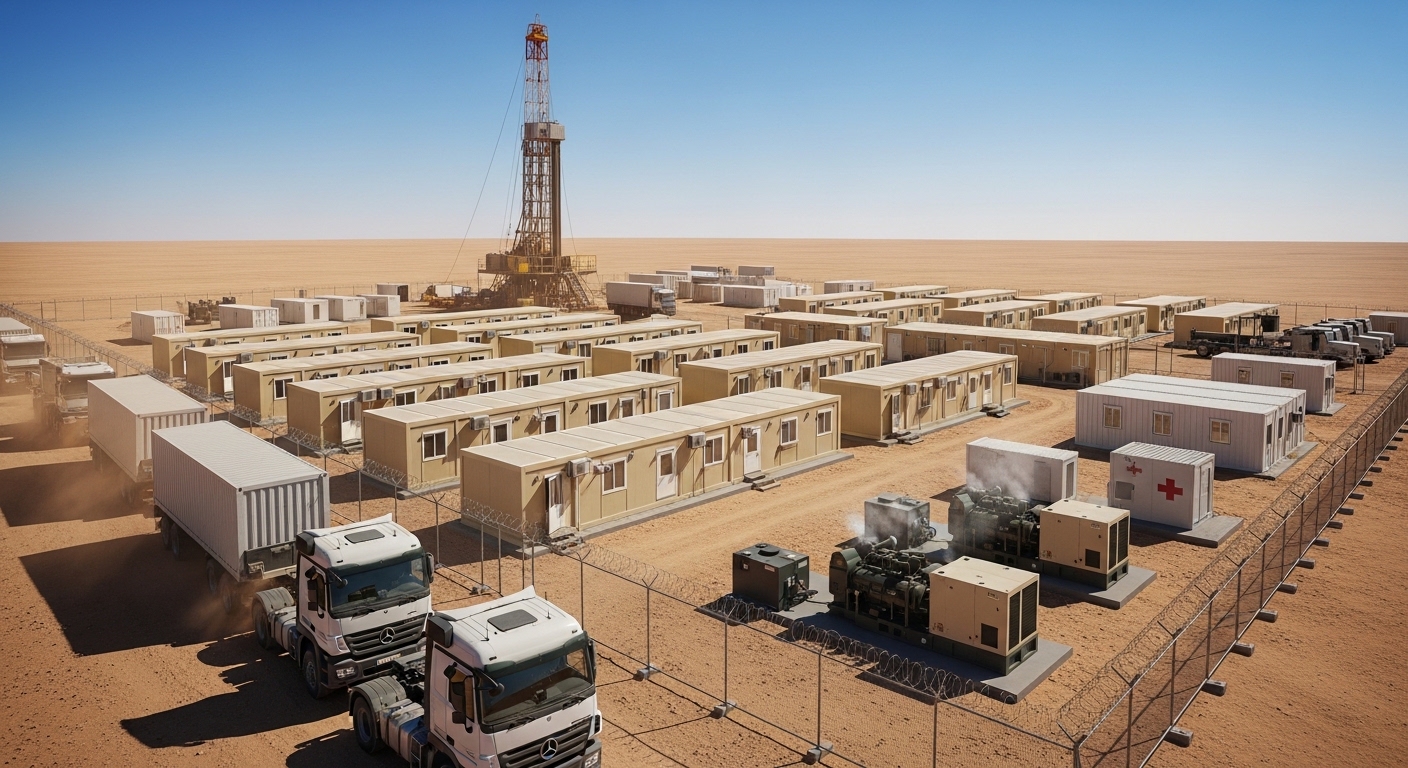
In Libya’s upstream sector, the timeline between license award and first drilling activity is commercially decisive. Whether linked to NOC Libya tenders in the Sirte Basin, Murzuq Basin, or offshore-linked onshore blocks, the speed at which operators mobilize determines cost exposure, contractor confidence, and production forecasting. One of the most critical enablers in this transition phase is not the rig itself, but the infrastructure that supports it.
Prefabricated camps and modular construction systems have become strategic tools that shorten the path from exploration license approval to operational launch.
What Happens Between License Award and First Drill?
After a license is granted, operators must complete several parallel workstreams before drilling begins:
• Seismic validation and data review
• Environmental and regulatory compliance
• Access road engineering
• Logistics corridor establishment
• Workforce mobilization
• Temporary site facilities installation
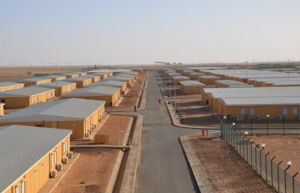
• Man camps and Life Support Areas (LSA) construction
Traditional construction methods can extend mobilization timelines significantly, particularly in desert environments far from the Tripoli logistics base. Modular construction compresses this sequence by shifting major activities off-site.
Why Infrastructure Timing Determines Exploration Success
Oil exploration economics are sensitive to delay. Idle rigs, standby contractors, and extended security deployments increase daily burn rates.
Critical risk factors include:
• Delayed workforce housing availability
• Utility backbone installation bottlenecks
• Camp safety non-compliance
• Incomplete medical and emergency facilities
• Security exposure during prolonged setup
Rapid deployment prefabricated buildings reduce these vulnerabilities by allowing parallel production and site preparation.
Modular Construction as a Mobilization Multiplier
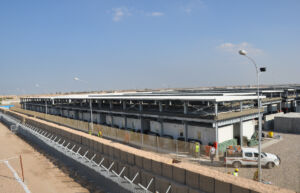
Prefabricated camps support oil field accommodation needs with controlled factory production and fast installation cycles.
Core advantages:
• Off-site fabrication reduces desert labor exposure
• Standardized modules improve quality control
• Shorter installation windows minimize environmental risk
• Expandable layouts allow phased exploration scaling
Man camps and LSAs can be fully engineered before final site grading is complete, accelerating total project readiness.
Tripoli Logistics Base as a Staging Engine
The Tripoli logistics base functions as the central hub for:
• Material consolidation
• Container staging
• Prefabricated building inspection
• Utility component integration
• Workforce assembly
Modules can be kitted, tested, and partially commissioned before transport to inland basins. This approach dramatically reduces commissioning time in remote areas.
For offshore-linked operations in the Sirte Basin, synchronized logistics planning ensures:
• Sequential delivery aligned with drilling schedules
• Reduced desert convoy congestion
• Improved security coordination
Designing Camps for Exploration Phases
Exploration camps differ from long-term production settlements. They require flexibility and rapid scalability.
Typical exploration infrastructure includes:
• Workforce housing blocks
• Mobile dining facilities
• Sanitation and WASH units
• Temporary offices
• Medical clinics
• Workshop and maintenance shelters
• Secure storage and blast-resistant containers
Prefabricated buildings allow capacity expansion if additional rigs are mobilized.
Life Support Areas (LSA) in Remote Blocks
Life Support Areas must deliver operational continuity under desert conditions.
Technical considerations:
• High thermal insulation against extreme heat
• Sand-resistant sealing systems
• Redundant generator and power distribution
• Integrated wastewater treatment
• Dust-controlled HVAC systems
Well-designed LSAs reduce workforce fatigue and improve retention in harsh environments.
Blast-Resistant Containers and Operational Safety
Certain exploration zones require protective infrastructure.
Applications include:
• Control rooms
• Hazardous material storage
• Communication hubs
• Emergency coordination centers
Blast-resistant containers enhance safety compliance and meet international oil and gas standards.
Turnkey EPC for Exploration Infrastructure
Turnkey EPC models are particularly effective during exploration mobilization. A single contractor manages:
• Engineering and design
• Modular construction fabrication
• Logistics coordination
• Site installation
• Utility integration
• Commissioning and handover
This structure reduces interface conflicts and accelerates time to launch.
Turkish Contractors in Libya and ENR Top 250 Expertise
Turkish contractors in Libya have historically played significant roles in infrastructure and energy projects. Many ENR Top 250 contractors maintain established operational knowledge within Libyan basins.
Key advantages include:
• Familiarity with desert logistics
• Understanding of NOC Libya tender processes
• Established supply chains
• Experience in post-conflict operational environments
These capabilities align closely with the needs of rapid exploration mobilization.
Dorçe Prefabrik Capabilities in Exploration Camps
Dorçe Prefabrik delivers prefabricated buildings and modular construction systems designed for oil field accommodation and rapid mobilization.
Core strengths include:
• Engineering of man camps and LSAs
• Factory-based production ensuring quality consistency
• Fast inland transport staging via Tripoli logistics base
• Blast-resistant container solutions
• Integrated Turnkey EPC delivery
Dorçe’s approach compresses the license-to-launch window by reducing on-site complexity and increasing deployment predictability.
Acceleration Through Parallel Workflows
The most effective exploration mobilization strategy relies on parallel execution:
• While site grading occurs, modules are manufactured
• While access roads are completed, utility systems are assembled
• While regulatory approvals finalize, camp modules are staged
This synchronized model transforms infrastructure from a bottleneck into a competitive advantage.
Conclusion: From Paper License to Operational Launch
In Libya’s evolving upstream landscape, success is measured by how quickly operators move from license approval to active drilling. Prefabricated camps and modular construction systems shorten this timeline while enhancing safety, scalability, and cost control.
By integrating Tripoli logistics staging, Life Support Areas, oil field accommodation, and Turnkey EPC execution under a unified strategy, exploration projects gain speed without sacrificing compliance. Through its modular engineering capabilities and field-proven deployment experience, Dorçe Prefabrik supports operators in transforming exploration blocks into operational assets with efficiency and structural reliability.
Tags
Tags