
Turnkey Worker Accommodation: Reducing Mobilization Time by 40% in North Africa
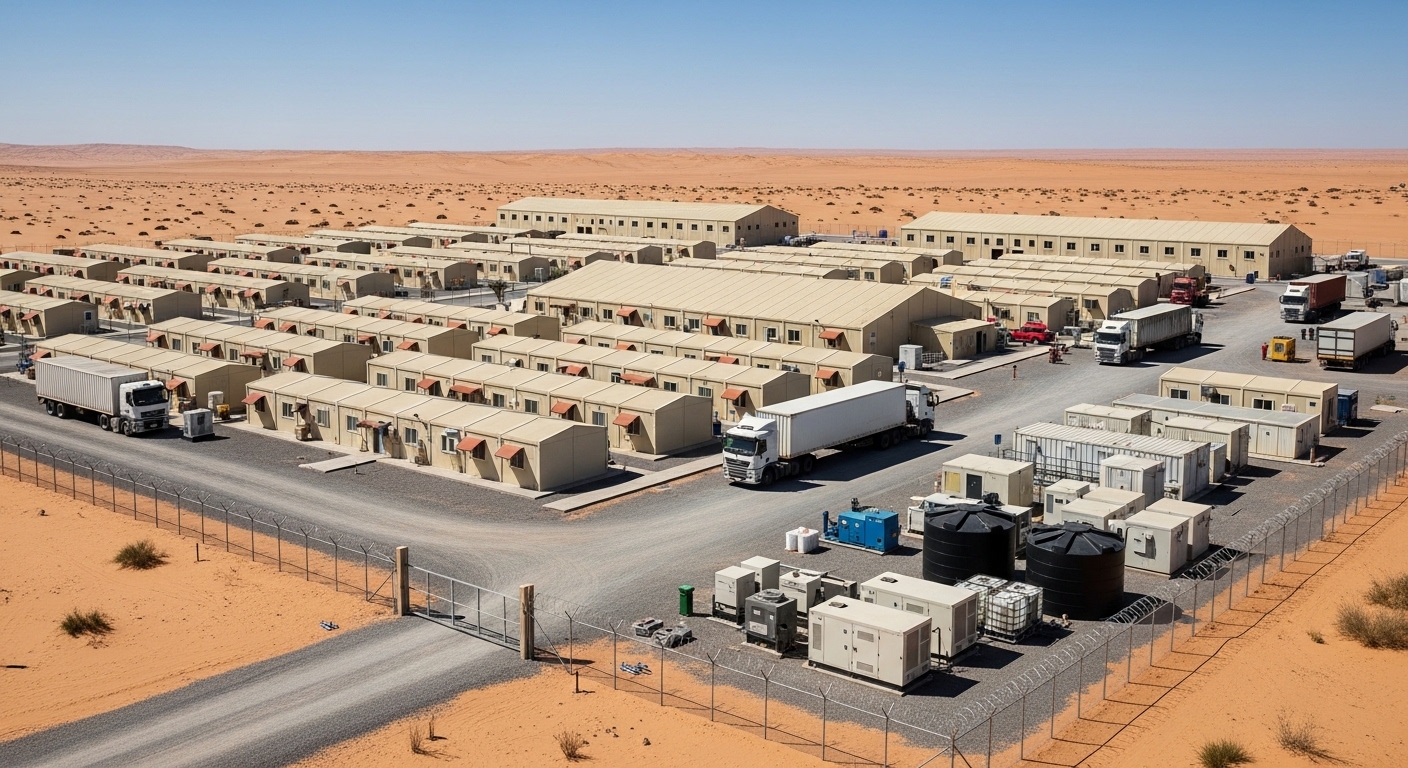
In North Africa’s oil, gas, mining, and infrastructure sectors, mobilization speed directly influences project economics. Whether supporting NOC Libya tenders, Sirte Basin exploration campaigns, Murzuq oil field services, or large-scale construction corridors, the interval between contract award and operational readiness determines cost exposure, contractor productivity, and investor confidence.
Turnkey worker accommodation built through modular construction and prefabricated building systems has emerged as a measurable accelerator, capable of reducing mobilization timelines by up to 40 percent compared to conventional site-built methods.
Why Mobilization Time Matters in North Africa
Mobilization in North Africa often involves:
• Remote desert logistics
• Cross-border material movement
• Security coordination
• Workforce relocation
• Utility backbone installation
• Temporary site facilities setup
Each day of delay increases:
• Equipment standby costs
• Security expenditures
• Contractor overhead
• Lost production revenue
• Idle drilling or processing capacity
Workforce housing and Life Support Areas (LSA) must therefore be treated as strategic infrastructure rather than secondary support elements.
The 40 Percent Reduction: Where Time Is Saved
The reduction in mobilization time comes from structural shifts in execution methodology.
Traditional on-site construction typically requires:
• Sequential foundation and superstructure phases
• Large on-site labor deployment
• Weather-sensitive assembly
• Extended material staging
• Progressive mechanical and electrical installation
Turnkey modular construction compresses these activities by shifting major workstreams off-site.
Time savings are achieved through:
• Parallel factory production during site grading
• Pre-installed mechanical and electrical systems
• Reduced desert labor exposure
• Faster commissioning cycles
• Simplified quality control
This integrated approach shortens total deployment timelines significantly.
Modular Construction as a Time Compression Tool
Prefabricated buildings allow industrialized manufacturing in controlled environments before shipment to remote oil fields or industrial zones.
Core advantages include:
• Standardized module production
• Factory-based quality assurance
• Pre-fitted plumbing and electrical systems
• Structural integrity verification before transport
• Reduced on-site assembly complexity
In North African deserts, minimizing on-site work reduces environmental risk and logistical congestion.
Turnkey EPC Integration
Turnkey EPC execution further accelerates mobilization by consolidating:
• Engineering design
• Procurement
• Manufacturing
• Transport logistics
• Installation
• Commissioning
Single-point accountability eliminates interface delays between subcontractors. This structure is especially effective in Libya, Algeria, Egypt, and neighboring regions where coordination complexity can otherwise extend timelines.
Tripoli Logistics Base and Regional Staging
For Libya-focused projects, the Tripoli logistics base functions as a staging hub that optimizes:
• Module consolidation
• Pre-shipment inspections
• Utility system integration
• Workforce mobilization coordination
• Convoy scheduling toward remote oil fields
By pre-configuring workforce housing at centralized logistics nodes, installation windows in the Sirte Basin or Murzuq Basin can be dramatically shortened.
Designing Workforce Housing for Rapid Deployment
Worker accommodation in oil and industrial zones must balance speed with durability.
Essential components include:
• Insulated sleeping quarters
• High-capacity dining halls
• Sanitation and WASH systems
• Medical clinics
• Recreation areas
• Technical support units
• Security and access control systems
Modular layouts allow scalable deployment aligned with workforce size fluctuations.
Life Support Areas (LSA) as Operational Anchors
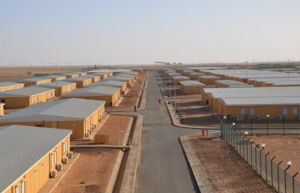
Life Support Areas in North Africa must be self-sufficient due to limited municipal infrastructure.
Critical systems include:
• Redundant power generation
• Water storage and pumping systems
• Wastewater treatment units
• Dust-resistant HVAC systems
• Secure perimeter infrastructure
Prefabricated buildings engineered for desert climates reduce maintenance and long-term operating costs.
Blast-Resistant Containers and Safety Compliance
In high-risk oil field environments, blast-resistant containers may be integrated for:
• Control rooms
• Emergency coordination centers
• Hazardous material storage
• Technical instrumentation hubs
Compliance with international HSE standards strengthens operational credibility under NOC Libya tenders and international joint venture agreements.
Turkish Contractors in North Africa
Turkish contractors in Libya and broader North Africa bring decades of regional experience, including participation in large-scale energy and infrastructure programs.
Many ENR Top 250 contractors leverage:
• Established desert logistics knowledge
• Regional subcontractor networks
• Adaptation to climatic extremes
• Experience with rapid mobilization models
This expertise supports accelerated worker accommodation delivery.
Cost and Risk Implications
Reducing mobilization time by 40 percent delivers measurable financial impact:
• Lower standby equipment costs
• Faster revenue generation
• Reduced security overhead
• Lower exposure to weather delays
• Shorter financing cycles
Operational predictability also improves investor confidence and project stability.
Dorçe Prefabrik Capabilities in North Africa
Dorçe Prefabrik delivers turnkey worker accommodation solutions engineered for North African conditions.
Core competencies include:
• Modular construction of man camps and LSAs
• Prefabricated buildings designed for extreme climates
• Rapid mobilization aligned with drilling and industrial schedules
• Blast-resistant container systems
• Integrated Turnkey EPC execution
• Scalable workforce housing configurations
With off-site manufacturing capacity and logistics coordination experience linked to Tripoli logistics base operations, Dorçe compresses deployment cycles while maintaining structural durability and safety compliance.
Conclusion: Speed as a Strategic Advantage
In North Africa’s competitive energy and industrial landscape, infrastructure speed is not optional. Turnkey worker accommodation delivered through modular construction transforms mobilization from a bottleneck into a competitive advantage.
By integrating prefabricated buildings, Life Support Areas, workforce housing, and Turnkey EPC coordination under a unified strategy, projects gain measurable acceleration without compromising safety or durability. Dorçe Prefabrik supports this transformation by combining industrialized manufacturing, desert logistics expertise, and scalable infrastructure design to reduce mobilization timelines and strengthen operational performance across North Africa.
Tags
Tags