
The Turkey-Libya Logistics Corridor: Why Turkish EPC Contractors are the Best Fit for Oil & Gas Projects
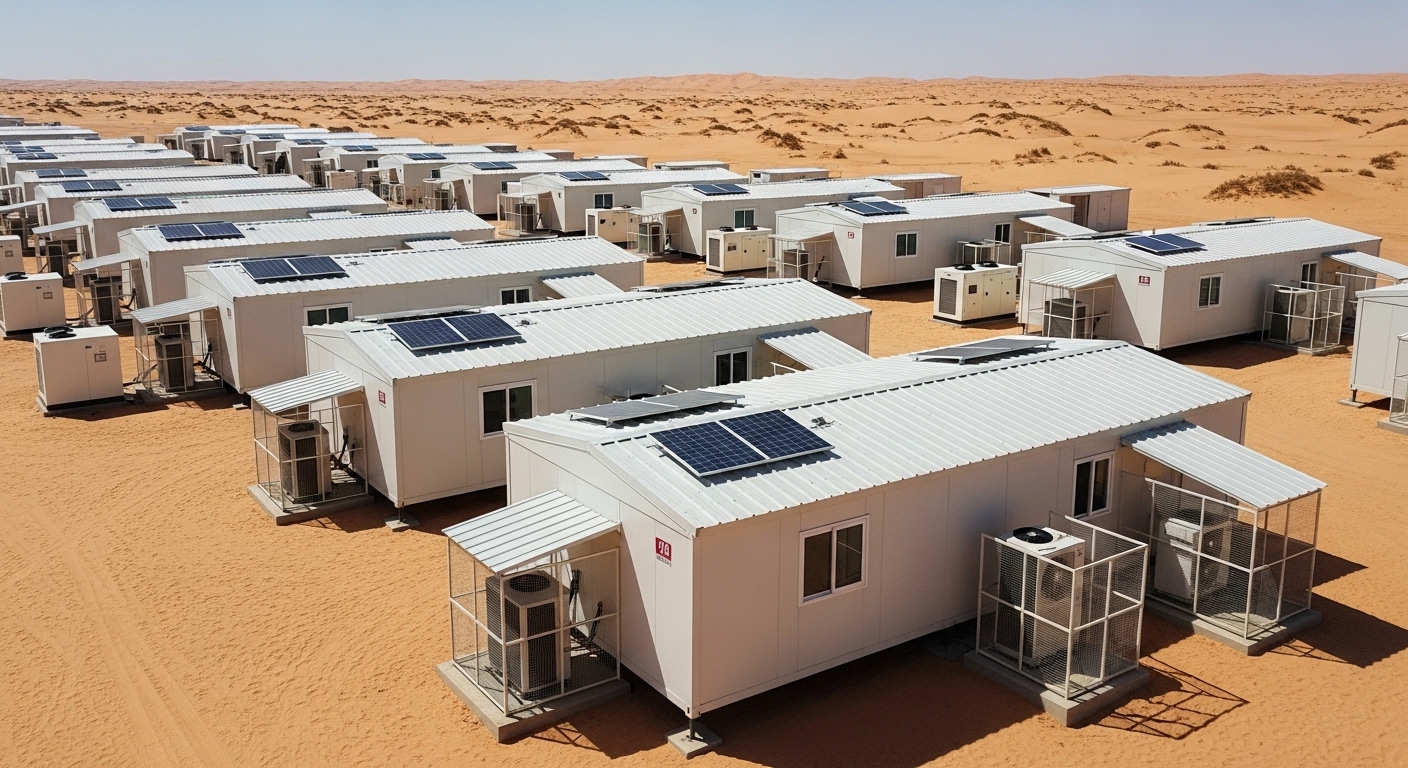
The Turkey Libya logistics corridor has become one of the most practical supply and mobilization routes for Libya’s upstream oil and gas recovery, exploration, and field development programs. For projects connected to NOC Libya tenders, Sirte Basin exploration, Murzuq oil field services, and Tripoli logistics base staging, the ability to move people, modular infrastructure, and critical equipment quickly and predictably is often more important than the theoretical lowest build cost.
Turkish EPC contractors are frequently well-positioned in this corridor because they can combine regional proximity with industrial manufacturing depth, modular construction capability, and turnkey delivery models that reduce interface risk in remote and high-uncertainty environments.
Why the Turkey Libya Corridor Matters for Libya’s Upstream Timelines
Libya’s oil projects are highly schedule-sensitive. The time between tender award and operational readiness affects:
• Rig standby and contractor day rates
• Security and convoy costs
• Fuel and consumables burn rate
• Early production targets and cashflow timing
• HSE exposure during prolonged site setup
When the logistics corridor is short, repeatable, and supported by established industrial suppliers, mobilization becomes faster and more controllable.
Tripoli as the Primary Staging Node
Tripoli functions as a central consolidation point for many projects, especially when contractors need to stage:
• Temporary site facilities for early works
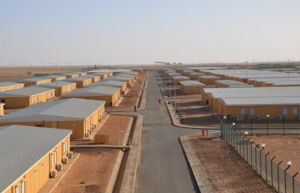
• Man camps and workforce housing modules
• Life Support Areas (LSA) infrastructure
• WASH units, clinics, dining facilities, laundry buildings
• Power generation, distribution, and utility packages
A well-managed Tripoli logistics base strategy typically includes pre-kitting and pre-inspection so that inland transport to Sirte Basin or southern routes toward Murzuq focuses on installation, not troubleshooting.
Linking Tripoli to Sirte Basin and Murzuq Basin Operations
The corridor value becomes clear when you look at the operational geography.
• Sirte Basin projects often require rapid ramp-up of exploration and production support infrastructure with frequent workforce rotations
• Murzuq Basin projects amplify the logistics challenge due to remoteness, long inland travel, desert exposure, and higher dependence on self-sufficient LSAs
In both cases, fast-track deployment of modular construction assets reduces the time crews spend waiting for habitable and compliant accommodation.
Why Turkish EPC Contractors Often Fit the Delivery Model
Turkish EPC contractors are not automatically the best choice for every project, but they can be a strong fit when projects prioritize speed, integrated delivery, and logistical predictability.
Industrialized manufacturing advantage
Turkey has large-scale capability for producing and packaging:
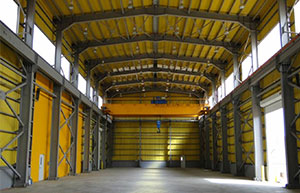
• Prefabricated buildings and steel structures
• Modular container systems and flat-pack solutions
• MEP kits, doors, windows, and interior fit-out packages
• Utility skids and equipment housings
This supports parallel workstreams, meaning site grading and foundations can proceed while modules are produced off-site.
Turnkey EPC reduces interface risk
Oil and gas camps and temporary site facilities fail most often at interfaces.
• Civil works versus module installation sequencing
• Utilities integration and commissioning readiness
• HSE compliance documentation and quality traceability
• Logistics handover points and staging congestion
A turnkey EPC approach reduces fragmentation by placing design, procurement, production, logistics, installation, and commissioning under one accountable structure.
Proven relevance to man camps and LSAs
For upstream operations, the camp is an operational asset, not a temporary convenience.
• Man camps support drilling and maintenance continuity
• LSAs protect productivity by delivering food, hygiene, medical support, and recreation
• Workforce housing affects retention and fatigue risk in remote basins
EPC contractors with experience in structured LSAs tend to deliver more stable operations and fewer shutdowns caused by infrastructure gaps.
Modular Construction as the Corridor’s Core Enabler
Modular construction turns the corridor into a schedule tool rather than a transport challenge.
Key mechanisms that accelerate delivery:
• Factory-controlled fabrication improves repeatability and reduces rework
• Reduced on-site labor exposure in desert environments
• Faster installation windows and earlier commissioning
• Scalability, allowing phased expansion aligned with workforce size
For Libya, where projects can shift from scout teams to full drilling campaigns quickly, modular systems enable capacity growth without restarting the whole construction logic.
Safety in High-Risk Zones and Blast-Resistant Containers
Certain operational zones require enhanced protective measures, especially near industrial hazards or sensitive operations.
Blast-resistant and hardened modules can be used for:
• Control rooms and communications hubs
• Emergency coordination and muster support
• Critical electrical and instrumentation rooms
• Secure storage for sensitive equipment
Even when not mandated, protective design decisions often reduce operational risk and insurance friction, particularly under strict operator HSE expectations.
Compliance and Tender Readiness for NOC Libya Programs
NOC Libya tenders and operator-led procurement usually prioritize contractors who can demonstrate:
• Quality assurance systems with traceability
• HSE planning and site safety discipline
• Clear delivery schedules and logistics methodology
• Documented commissioning and handover procedures
EPC teams that can package compliance, documentation, and field execution as one system typically shorten approval cycles and reduce client-side supervision burden.
ENR Top 250 Contractors and Market Signaling
ENR Top 250 status is not a technical specification, but it is often used as a credibility signal in large-scale international contracting. In practice, it can indicate:
• Experience with multi-country project governance
• Structured project controls and reporting maturity
• Capability to manage complex subcontractor ecosystems
• Familiarity with stringent client documentation and audit expectations
In Libya’s high-stakes oil and gas environment, these signals can influence shortlists and partnering decisions.
Dorçe Prefabrik’s Position in This Corridor
Dorçe Prefabrik can support Libya-focused EPC delivery with modular and prefabricated infrastructure aligned to upstream realities.
Relevant capability areas include:
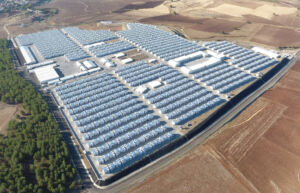
• Workforce housing and oil field accommodation master planning
• Life Support Areas including dining, laundry, clinics, recreation, and utilities
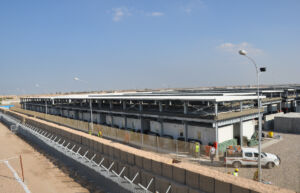
• Temporary site facilities such as site offices, storage, workshops, and WASH blocks
• Modular construction and prefabricated building production with staged logistics planning
• Protective modules where required, including blast-resistant container applications
• Turnkey EPC execution logic that reduces interface risk from staging through commissioning
When combined with disciplined staging through Tripoli and structured inland mobilization, these capabilities help convert the Turkey Libya corridor into a schedule and risk control advantage.
Dorçe-related conclusion
For Libya’s upstream projects, logistics is not a background activity. It is a primary determinant of schedule, safety, and cost predictability. The Turkey Libya logistics corridor supports faster mobilization when paired with modular construction and turnkey EPC execution, especially for man camps, LSAs, and temporary site facilities connected to Sirte Basin and Murzuq Basin operations. Dorçe Prefabrik’s integrated approach to design, production, logistics coordination, and installation supports this model by delivering scalable, field-ready infrastructure that helps operators move from tender award to operational readiness with fewer delays and fewer interfaces.
Tags
Tags