
Sourcing Construction Materials for Libya from a Regional Hub
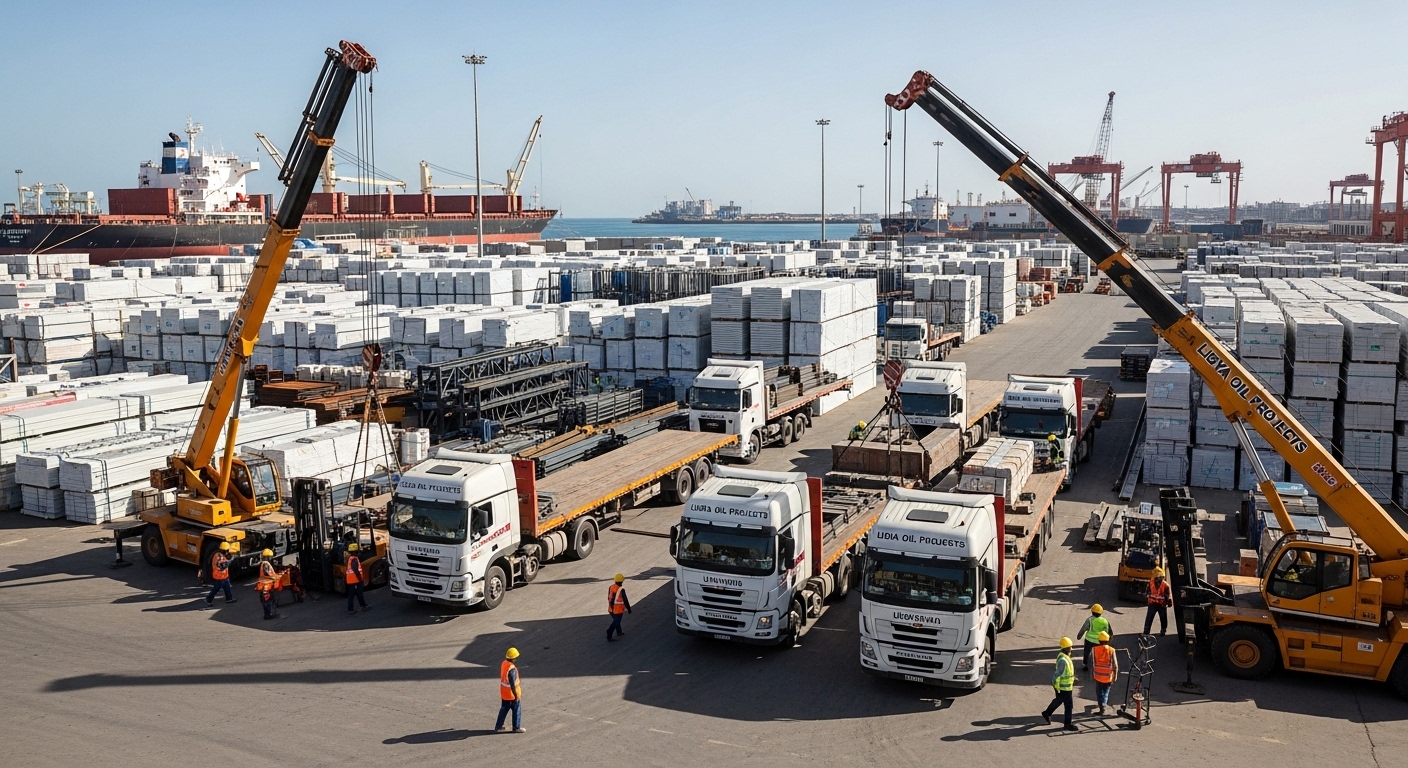
Libya’s oil, gas, mining, and infrastructure sectors depend heavily on predictable material flow. Whether supporting NOC Libya tenders, Sirte Basin exploration, Murzuq oil field services, or large-scale industrial expansions, construction timelines are often determined not by engineering complexity, but by supply chain stability.
In remote and logistically sensitive environments, supply chain resilience becomes a structural requirement. Sourcing construction materials through a regional hub such as the Tripoli logistics base or coordinated Turkey Libya corridor transforms risk exposure into managed predictability.
The Structural Vulnerabilities of Direct-to-Site Procurement
Remote oil field accommodation and temporary site facilities face unique procurement challenges:
• Long inland transport distances
• Limited local manufacturing capacity
• Customs clearance delays
• Fuel supply constraints
• Storage limitations in desert zones
• Exposure to environmental degradation
Direct shipment from distant suppliers to remote sites increases:
• Lead time volatility
• Inventory fragmentation
• Freight cost escalation
• Quality control gaps
• Commissioning delays
A regional hub model mitigates these risks.
The Regional Hub Strategy
A regional logistics hub functions as a structured consolidation, inspection, and redistribution center.
Core functions include:
• Material consolidation and cross-docking
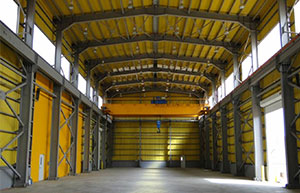
• Pre-assembly of modular construction kits
• Quality inspection and documentation control
• Spare parts stocking
• Workforce and subcontractor coordination
• Convoy scheduling and dispatch planning
For Libya, Tripoli logistics base often serves as this operational anchor.
Why Regional Sourcing Improves Predictability
Supply chain resilience depends on reducing unknown variables.
Regional sourcing offers:
• Shorter shipping routes
• Reduced exposure to multi-border transit complexity
• Faster re-order cycles
• Lower freight volatility
• Improved customs management
When prefabricated buildings and steel structures are staged regionally, inland transport becomes a controlled deployment rather than an uncertain delivery.
Modular Construction and Supply Chain Stability
Modular construction inherently strengthens supply chain resilience.
Because modules are manufactured off-site:
• Material requirements are consolidated
• Quality control is centralized
• Packaging is standardized
• Damage risk during transport is reduced
• Installation timelines are shortened
In Libya’s desert basins, fewer on-site trades mean fewer dependency points and lower failure probability.
Managing Critical Material Categories
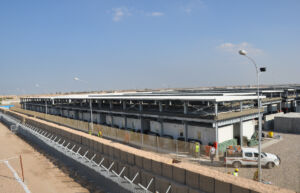
For oil field accommodation, LSAs, and workforce housing, critical material categories include:
• Structural steel components
• Insulated sandwich panels
• Mechanical and electrical kits
• HVAC units and spare filters
• Water and wastewater systems
• Generator packages and fuel tanks
• Doors, windows, and interior fit-out kits
A resilient hub maintains buffer inventory for high-lead items while sequencing lower-risk components to match installation schedules.
Risk Mitigation in Desert Logistics
Desert operations in Sirte Basin and Murzuq Basin amplify supply chain exposure.
Risk mitigation strategies include:
• Pre-kitting modules at the hub
• Weather-resistant packaging
• Sand-protected mechanical systems
• Spare part redundancy planning
• Staggered convoy dispatch
• Real-time tracking coordination
These strategies reduce disruption from sandstorms, road degradation, or security constraints.
Quality Assurance and Documentation Control
Resilient sourcing is not only about speed. It is also about compliance.
NOC Libya tenders and international joint ventures often require:
• Material traceability documentation
• Inspection and test plans
• Welding and fabrication certifications
• HSE compliance records
• Electrical and mechanical certification
Centralized hubs simplify documentation management and reduce field-level administrative burden.
Fuel and Energy Considerations
In remote camps, energy logistics are intertwined with construction materials.
Regional planning supports:
• Efficient generator sizing
• Pre-commissioning of power systems
• Fuel consumption forecasting
• Spare parts planning for mechanical systems
Reducing emergency fuel deliveries lowers convoy exposure and operational cost volatility.
The Role of Turkish Contractors in Regional Supply Chains
Turkish contractors in Libya often leverage industrial manufacturing depth combined with geographical proximity.
Advantages include:
• Short maritime routes
• Established fabrication capacity
• Scalable steel and modular production
• Familiarity with Libya’s operational context
• Integrated EPC execution capability
Many ENR Top 250 contractors operating in the region have structured logistics frameworks aligned with high-volume industrial programs.
Turnkey EPC and Integrated Supply Planning
Turnkey EPC models strengthen supply chain resilience by aligning:
• Engineering specifications
• Procurement schedules
• Manufacturing sequencing
• Transport coordination
• Installation workflows
Fragmented procurement increases interface risk. Integrated planning reduces misalignment between civil works, modular installation, and utilities integration.
Dorçe Prefabrik Capabilities in Regional Sourcing
Dorçe Prefabrik integrates supply chain resilience into its modular construction and prefabricated building strategy.
Key strengths include:
• Off-site manufacturing with quality-controlled production
• Consolidated packaging of structural and MEP systems
• Coordinated staging through regional logistics hubs
• Integrated transport planning for remote oil fields
• Turnkey EPC delivery minimizing subcontractor fragmentation
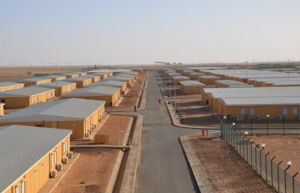
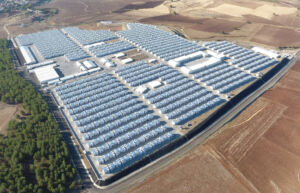
• Scalable workforce housing and Life Support Areas
By reducing dependency on unpredictable on-site sourcing and aligning production with installation schedules, Dorçe enhances delivery certainty in Libya’s oil and gas sector.
Economic and Operational Impact
Resilient sourcing produces measurable advantages:
• Reduced project delay risk
• Lower emergency freight premiums
• Improved cashflow predictability
• Fewer installation stoppages
• Enhanced safety through controlled logistics
• Better lifecycle cost management
In high-uncertainty markets, resilience becomes a financial safeguard.
Dorçe-related conclusion
In Libya’s oil and gas landscape, supply chain design is as critical as structural engineering. Regional hub sourcing combined with modular construction transforms logistical exposure into structured execution. By integrating production, inspection, staging, transport, and installation under a unified framework, Dorçe Prefabrik supports resilient infrastructure delivery across Sirte Basin, Murzuq Basin, and other upstream zones. This approach strengthens schedule reliability, reduces risk concentration, and enables operators to maintain operational momentum even in complex desert environments.
Tags
Tags