
How to House 7,000 Workers for the Alaska LNG Project: Scalable Modular Solutions
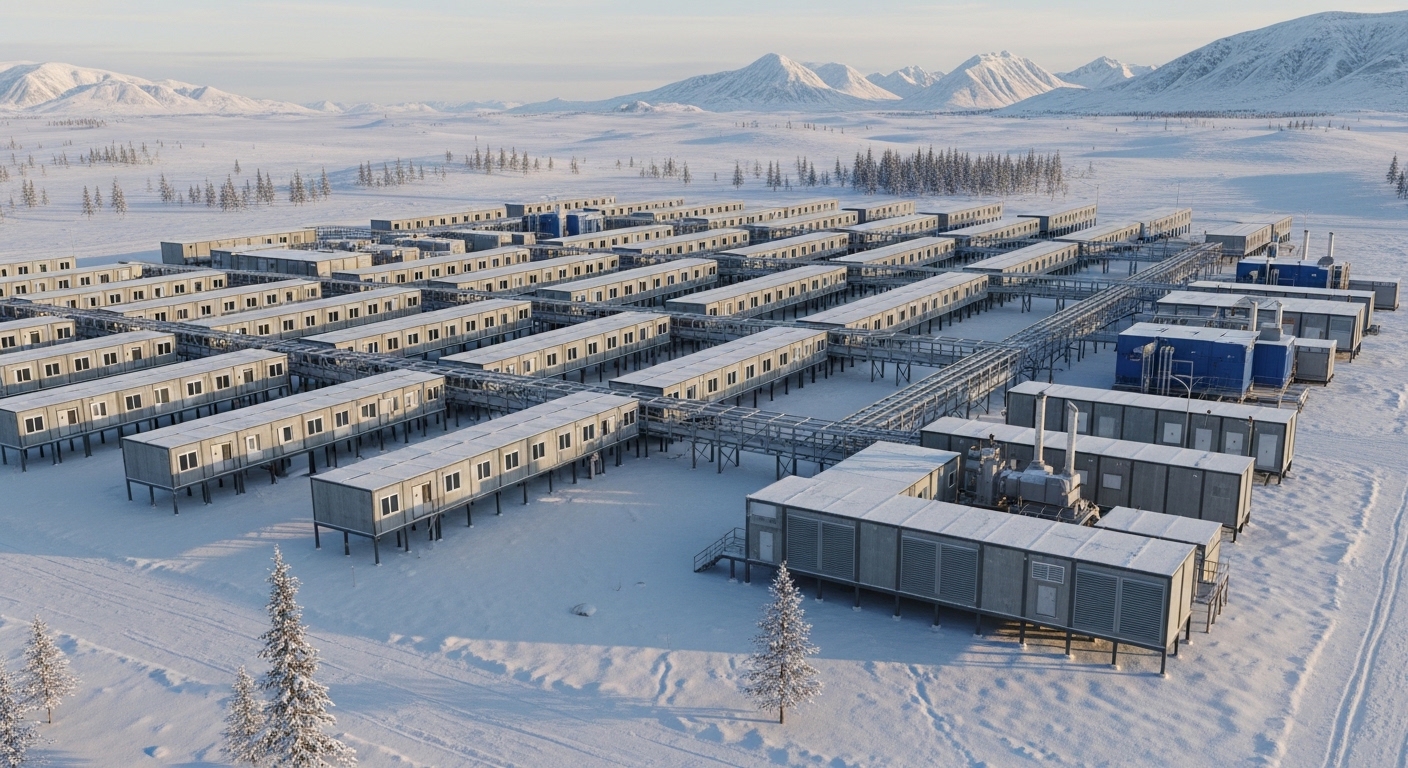
The Alaska LNG Project represents one of the most logistically complex energy infrastructure developments in North America. With pipelines spanning more than 800 miles, liquefaction facilities, compressor stations, and remote construction zones, workforce accommodation becomes a critical operational requirement. Housing approximately 7,000 workers in Arctic and sub-Arctic conditions demands infrastructure that can be deployed rapidly, scaled efficiently, and maintained reliably under extreme environmental stress.
Traditional construction methods struggle in environments where short building seasons, frozen ground, and logistical isolation significantly limit site productivity. As a result, scalable modular construction has become one of the most viable solutions for delivering large workforce housing systems in remote energy projects such as Alaska LNG.
Workforce Accommodation Requirements in Large Energy Projects
Major LNG developments require large temporary populations of engineers, construction crews, technical staff, and operational personnel. Housing systems must support not only sleeping quarters but also the full ecosystem of life support services.
Typical infrastructure components include:
• Workforce housing units
• Dining halls and industrial kitchens
• Recreation facilities and fitness centers
• Medical clinics and emergency treatment areas
• Laundry buildings and hygiene facilities
• Administrative offices and training rooms
• Warehouses and maintenance workshops
• Utility infrastructure such as power generation, water treatment, and waste systems
In a project of this scale, the camp essentially functions as a self-contained temporary city.
Environmental Challenges in Alaska
Alaska presents several conditions that directly influence camp design and construction strategy.
Key environmental factors include:
• Winter temperatures that can reach −40°C
• Permafrost soil conditions
• High wind loads and snow accumulation
• Limited seasonal construction windows
• Restricted transport routes and logistics capacity
These constraints require housing infrastructure that minimizes on-site labor while maintaining structural resilience and thermal performance.
Modular Construction as a Strategic Solution
Modular construction addresses many of the logistical limitations of Arctic projects by shifting most construction activity away from the jobsite.
Key advantages include:
• Off-site manufacturing in controlled environments
• Parallel progress between site preparation and module production
• Reduced exposure to weather delays
• Higher quality control during fabrication
• Faster installation once modules arrive on site
For a workforce population of 7,000, this approach allows accommodation units and camp facilities to be produced simultaneously while civil infrastructure is prepared.
Camp Master Planning for Large Workforce Populations
Housing thousands of workers requires careful planning to ensure operational efficiency, safety, and habitability.
Key planning considerations include:
• Zoning of accommodation blocks by workforce groups
• Separation between residential and industrial areas
• Efficient pedestrian circulation between buildings
• Emergency evacuation routes and muster zones
• Snow management corridors and service access roads
A well-designed camp layout reduces travel time between facilities and improves operational productivity.
Thermal Performance and Building Envelope Design
In Arctic environments, heating demand far exceeds cooling requirements. Prefabricated buildings used for workforce housing must therefore achieve exceptional insulation performance.
Critical design elements include:
• High-performance insulated wall panels
• Triple-glazed window systems
• Vapor barriers preventing moisture accumulation
• Reinforced roofing structures capable of handling snow loads
• Elevated foundation systems protecting permafrost
These envelope systems reduce energy demand and improve indoor comfort during extreme winters.
Utility Infrastructure for Remote Workforce Camps
A 7,000-person workforce camp requires substantial utility capacity.
Key systems typically include:
• Centralized power generation plants
• District heating systems
• Water treatment and potable water storage
• Wastewater treatment facilities
• Fire protection systems
• Telecommunications and data infrastructure
Modular utility buildings allow these systems to be delivered as prefabricated packages that integrate quickly into the camp’s infrastructure network.
Logistics and Transportation Strategy
One of the biggest challenges for large remote camps is transportation.
Modules must often travel through a combination of:
• Ocean freight
• Rail transport
• Long-distance trucking
• Seasonal ice roads or specialized heavy transport routes
Modular construction reduces the number of shipments compared to traditional building methods by consolidating multiple building components into complete modules.
Workforce Well-Being and Productivity
Housing thousands of workers in remote environments requires more than functional shelter. Worker well-being directly influences safety and productivity.
Modern workforce camps therefore include:
• Recreational areas and gyms
• Social lounges and communication spaces
• High-quality dining services
• Medical care facilities
• Reliable internet and communications
Comfortable living conditions help reduce fatigue, improve morale, and support long-term workforce retention.
Phased Deployment Strategy
Large projects rarely require full workforce capacity immediately. Modular construction supports phased expansion.
Typical deployment stages include:
• Early scout camps for survey teams
• Medium-scale camps for early construction phases
• Full-capacity camps during peak construction
• Downscaled accommodation during operational phases
This flexibility allows infrastructure to grow alongside project demand.
Safety and Structural Resilience
Workforce housing must also meet strict safety standards, especially in environments where evacuation options are limited.
Structural design must account for:
• Extreme snow loads
• Wind pressure in open Arctic landscapes
• Fire protection and emergency response planning
• Structural stability on frozen ground
Modular steel structures provide consistent load-bearing capacity while maintaining adaptability for remote installation.
Dorçe Prefabrik’s Approach to Large Workforce Camps
Dorçe Prefabrik has extensive experience delivering large-scale workforce accommodation systems using modular and prefabricated construction methods. The company’s integrated approach combines design, engineering, production, logistics planning, and installation within a coordinated project framework.
Key capabilities include:
• Scalable modular workforce housing systems
• Integrated Life Support Areas including dining, recreation, medical, and service buildings
• Prefabricated steel structures designed for extreme climates
• Off-site manufacturing enabling rapid mobilization
• Turnkey EPC delivery from design to commissioning
These capabilities allow Dorçe to support complex energy infrastructure projects where speed, scalability, and reliability are essential.
Dorçe-related conclusion
Large LNG developments require workforce accommodation infrastructure that can be deployed rapidly, expanded as project demand grows, and maintained reliably in extreme environments. Modular construction offers a practical solution by shifting construction into controlled factory environments while enabling rapid installation in remote locations. Through integrated design, engineering, manufacturing, and logistics coordination, Dorçe Prefabrik delivers scalable workforce housing systems that support large energy projects such as LNG developments, providing safe, efficient, and adaptable accommodation solutions for thousands of workers.
Tags
Tags