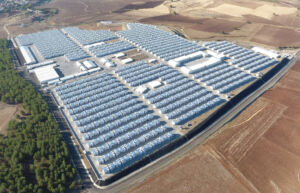
Beyond Tents: Why Prefabricated Containers are the Best Solution for Crisis Zones
Beyond Tents: Why Prefabricated Containers are the Best Solution for Crisis Zones
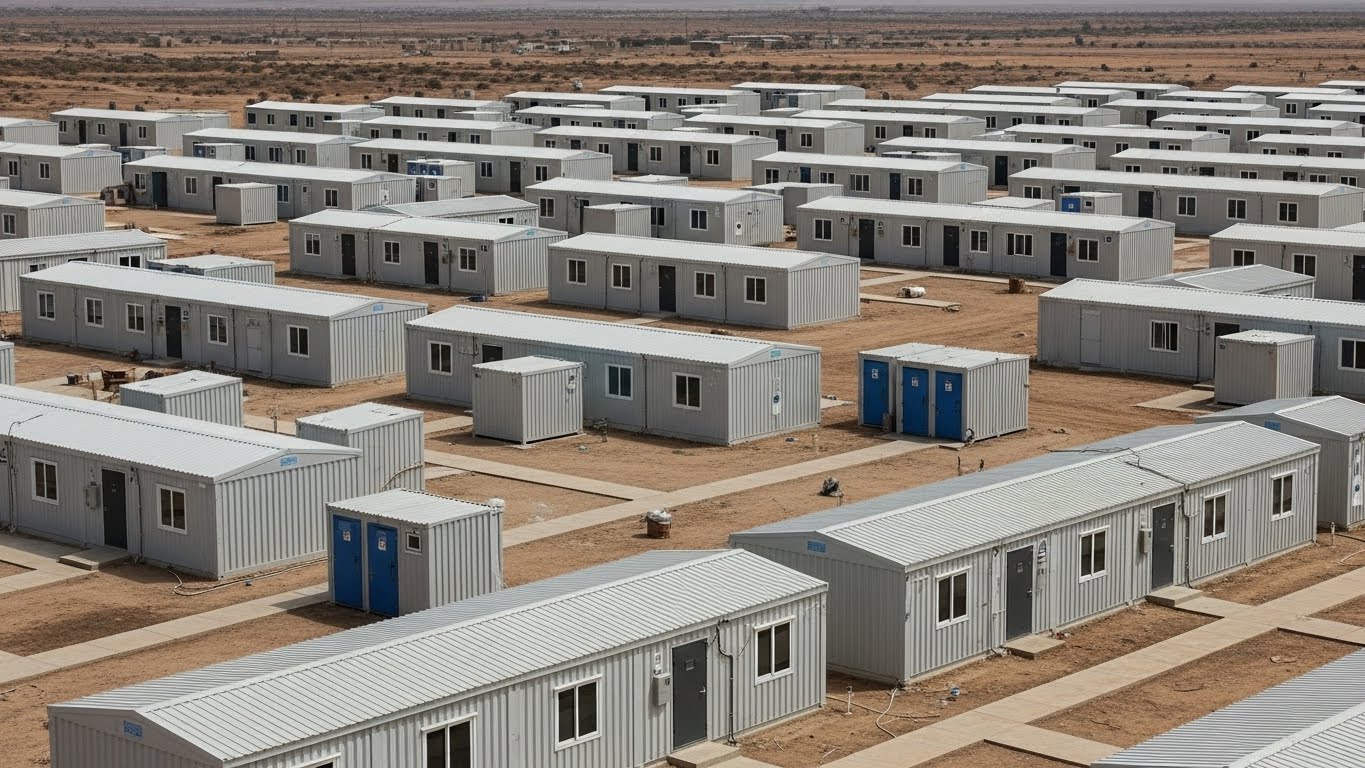
In crisis zones, shelter is never just about covering space. It is about safety, health, dignity, and the ability to sustain life under extreme and uncertain conditions. While tents have traditionally been the first response in humanitarian emergencies, prolonged conflicts, climate extremes, and large scale displacement have exposed their limitations. As crises extend from weeks into years, prefabricated container systems have emerged as the most effective alternative, offering durability, hygiene, security, and long term operational stability that tents cannot provide.
Prefabricated containers are no longer viewed as temporary industrial units. They are engineered living and service spaces designed to perform in demanding humanitarian environments. For crisis zones across the Middle East, Africa, and Eastern Europe, these systems have become a critical upgrade from short term shelter toward sustainable emergency infrastructure.
What Are Prefabricated Container Solutions?
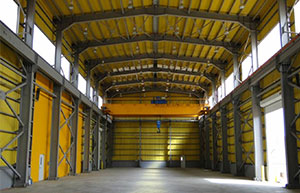
Prefabricated container solutions are factory produced modular steel units designed for rapid deployment and immediate use in crisis environments. Unlike tents, which rely on fabric membranes and lightweight frames, container units are rigid structures with integrated insulation, electrical systems, sanitary installations, and secure openings.
These units can be configured for accommodation, sanitation, healthcare, administration, storage, and technical support. They are delivered either fully equipped or semi equipped, allowing fast installation with minimal on site work. Their modular nature enables settlements to expand, reorganize, or upgrade over time without dismantling existing infrastructure.
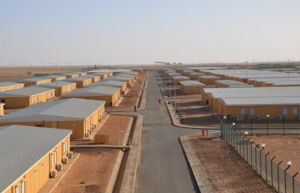
In crisis zones where displacement becomes long term, prefabricated containers form the backbone of organized, functional, and resilient settlements.
Advantages
- Prefabricated container systems provide decisive advantages over tents in humanitarian and emergency contexts.
- Durability and lifespan are significantly higher. Steel structures withstand harsh weather, wind, heat, cold, and repeated use without rapid degradation.
- Thermal comfort and climate protection are vastly improved. Insulated walls, roofs, and floors protect occupants from extreme temperatures, reducing health risks and energy demand.
- Hygiene standards are easier to control. Integrated WC, shower, and handwashing units enable proper sanitation, reducing the spread of disease in densely populated camps.
- Security and privacy are enhanced through rigid walls, lockable doors, and defined internal spaces. This is particularly important for families, women, and vulnerable groups.
- Operational efficiency increases as maintenance needs are reduced. Unlike tents, containers do not require constant replacement or repair.
- Scalability allows camps to evolve. Units can be added, relocated, or repurposed as population sizes and functional needs change.
- Infrastructure integration becomes possible. Containers support electrical grids, water networks, wastewater systems, and even renewable energy installations.
Usage Areas
Prefabricated container solutions are widely used across crisis zones for multiple humanitarian functions.
- Family accommodation units for displaced populations
- Sanitary containers including WC, showers, and laundry facilities
- Medical containers for clinics, triage, and field hospitals
- Isolation and hygiene control units
- Administrative and coordination offices for aid agencies
- Food distribution and storage units
- Technical containers for power generation, water treatment, and waste management
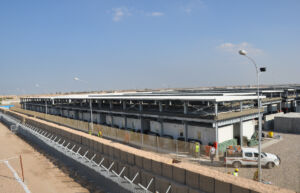
These units can operate individually or be combined into fully planned emergency settlements that restore basic living conditions and service access.
Dorçe’s Difference
Dorçe brings extensive experience in delivering prefabricated container solutions for crisis zones, humanitarian operations, and large scale emergency settlements. With a strong background in modular construction across defense, healthcare, energy, and humanitarian sectors, Dorçe understands the realities of operating in unstable and resource constrained environments.
Dorçe’s container systems are engineered for durability, climate performance, and rapid deployment. Each unit is produced in controlled factory environments with integrated MEP systems, high quality insulation, and robust structural design. This ensures consistent performance, fast commissioning, and long term reliability.
By managing design, engineering, manufacturing, logistics, installation, and commissioning under a single integrated delivery model, Dorçe provides accountability and speed where both are critical. Settlements can be deployed progressively, starting with life saving sanitary and accommodation units and expanding into fully functional communities.
Moving beyond tents is not just a technical upgrade. It is a shift toward more humane, resilient, and sustainable crisis response. Through prefabricated container solutions, Dorçe supports humanitarian efforts by delivering safe, hygienic, and secure environments that protect lives today while enabling structured recovery for tomorrow.