Disaster-Resilient Housing: Why Prefabricated Steel is the Safest Choice

2025-12-19T13:41:13+03:00

Disaster-Resilient Housing: Why Prefabricated Steel is the Safest Choice As climate events, seismic risks, and large scale emergencies continue to challenge built environments worldwide, the demand for disaster resilient housing has never been greater. Safety, structural reliability, and rapid construction are critical factors when rebuilding homes and communities under high risk conditions. Prefabricated steel construction has emerged as one of the safest and most reliable solutions for disaster resilient housing. Dorce Prefabricated Construction delivers engineered steel housing systems designed to protect lives while enabling fast and sustainable recovery. What Is Disaster-Resilient Housing? Disaster resilient housing refers to buildings specifically more..

Disaster-Resilient Housing: Why Prefabricated Steel is the Safest Choice2025-12-19T13:41:13+03:00

Turnkey Emergency Settlements: From Logistics to Assembly

2025-12-19T11:47:16+03:00

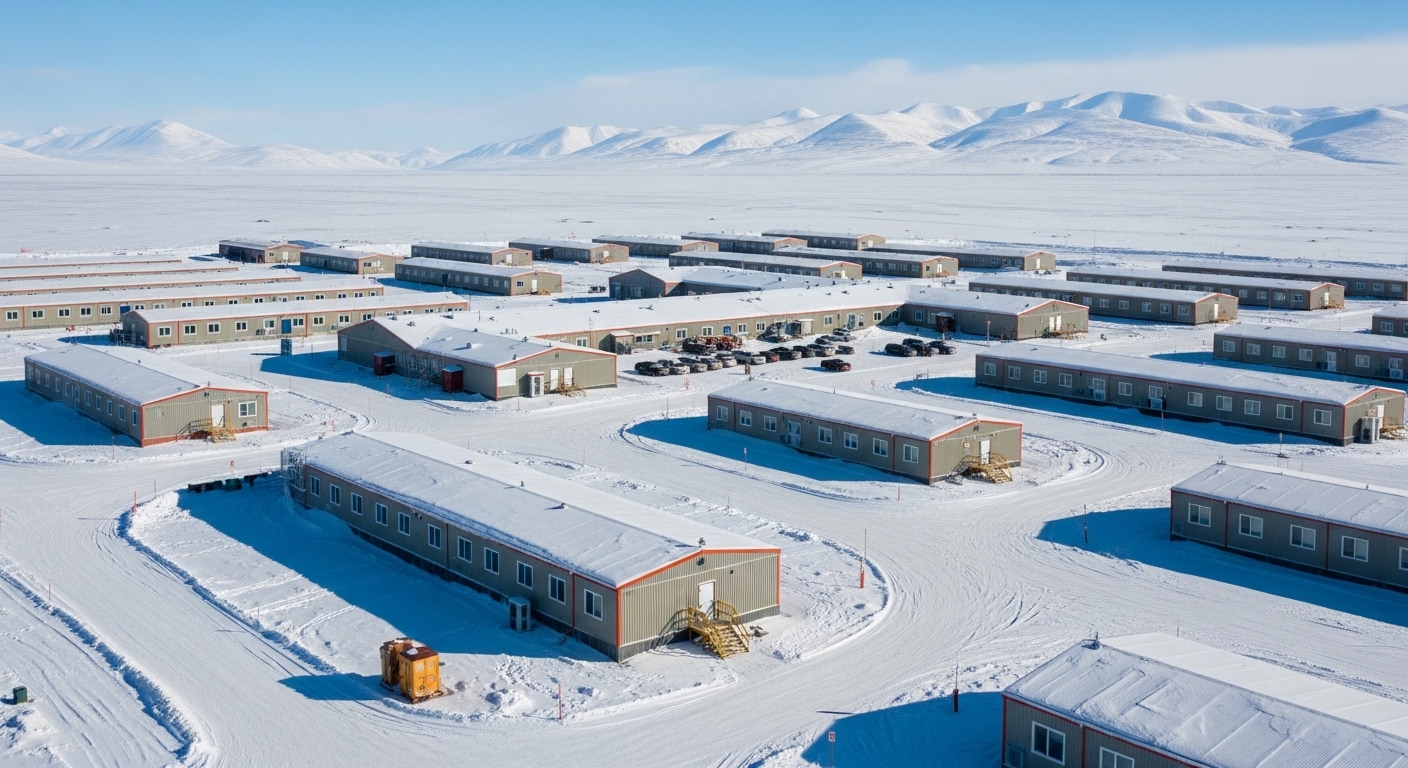
Turnkey Emergency Settlements: From Logistics to Assembly What are Turnkey Emergency Settlements? Turnkey emergency settlements refer to a comprehensive construction service model where a single contractor manages the entire lifecycle of a relief project, delivering a fully functional facility ready for immediate occupation. Unlike simple material supply, a turnkey solution encompasses engineering, manufacturing, packing, multimodal logistics, site preparation, installation, and commissioning. This approach ensures that vital components—such as accommodation units, water treatment systems, power generation, and security infrastructure—are integrated seamlessly. It transforms the chaotic requirements of a crisis zone into an organized, engineered response, providing not just shelter but more..

Turnkey Emergency Settlements: From Logistics to Assembly2025-12-19T11:47:16+03:00

Modular Construction for Disaster Relief: Rebuilding Communities Fast

2025-12-19T11:22:35+03:00

Modular Construction for Disaster Relief: Rebuilding Communities Fast In the aftermath of natural disasters and large scale emergencies, restoring safe living environments becomes an urgent priority. Speed, reliability, and structural safety are essential to support displaced communities and stabilize affected regions. Modular construction has emerged as one of the most effective building methods for disaster relief, offering rapid deployment, predictable quality, and scalable solutions. Dorce Prefabricated Construction delivers modular systems designed to rebuild communities quickly while ensuring durability and long term performance. What Is Modular Construction for Disaster Relief? Modular construction for disaster relief is a building approach where more..

Modular Construction for Disaster Relief: Rebuilding Communities Fast2025-12-19T11:22:35+03:00

Emergency Housing Solutions: Speed and Durability in Crisis Zones

2025-12-19T10:48:16+03:00

Emergency Housing Solutions: Speed and Durability in Crisis Zones The Critical Need for Speed in Crisis Management In the wake of natural disasters, the first 72 hours are crucial. Whether responding to earthquakes, floods, or humanitarian crises, the immediate priority for governments and NGOs is stabilizing the affected population. This is where Rapid Deployment Housing shifts from being a logistical option to a humanitarian necessity. Traditional construction methods are too slow to meet the urgent demands of emergency relief. As a global leader in prefabricated and modular construction, Dorce Prefabrik is redefining how the world responds to crises. By more..

Emergency Housing Solutions: Speed and Durability in Crisis Zones2025-12-19T10:48:16+03:00

Rapid Deployment Housing The Future of Disaster Relief Operations

2025-12-19T09:36:14+03:00

Rapid Deployment Housing: The Future of Disaster Relief Operations Introduction: The Critical Need for Speed in Crisis Management In the wake of natural disasters, the first 72 hours are crucial. Whether responding to earthquakes, floods, or humanitarian crises, the immediate priority for governments and NGOs is stabilizing the affected population. This is where Rapid Deployment Housing shifts from being a logistical option to a humanitarian necessity. Traditional construction methods are too slow to meet the urgent demands of emergency relief. As a global leader in prefabricated and modular construction, Dorçe Prefabrik is redefining how the world responds to crises. more..

Rapid Deployment Housing The Future of Disaster Relief Operations2025-12-19T09:36:14+03:00

Dorce’s Global Reach: Case Studies on Emergency Settlements from the Middle East to Eastern Europe

2025-12-16T15:28:11+03:00

Dorce’s Global Reach: Case Studies on Emergency Settlements from the Middle East to Eastern Europe Emergency settlements are no longer simple clusters of temporary shelters. In today’s crisis landscape, they are complex, multi service environments that must deliver housing, sanitation, healthcare, power continuity, and operational control under tight timelines and difficult logistics. Dorce’s experience across multiple regions shows how modular and prefabricated systems can be deployed at different scales, in different climates, and under very different access and security constraints, while still achieving predictable quality and rapid activation. What Is a Turnkey Emergency Settlement? A turnkey emergency settlement is more..

Dorce’s Global Reach: Case Studies on Emergency Settlements from the Middle East to Eastern Europe2025-12-16T15:28:11+03:00

Cost-Benefit Analysis: Prefabricated Structures vs. Traditional Building in Post-War Reconstruction

2025-12-16T15:16:34+03:00

Cost-Benefit Analysis: Prefabricated Structures vs. Traditional Building in Post-War Reconstruction Post war reconstruction is a race against time, funding constraints, and operational risk. The real question is rarely “which method is better” in general. It is which method delivers safe, code compliant buildings at scale, with the least schedule uncertainty, the lowest lifecycle cost, and the fastest return to normal life. Prefabricated construction, including modular buildings, panelized systems, and container based solutions, often outperforms traditional site built construction in post war contexts because it transfers risk away from unstable sites into controlled production, and it compresses schedules in a more..

Cost-Benefit Analysis: Prefabricated Structures vs. Traditional Building in Post-War Reconstruction2025-12-16T15:16:34+03:00

The Future of Humanitarian Aid: The Role of Modular Construction in Crisis Management

2025-12-16T15:08:18+03:00

The Future of Humanitarian Aid: The Role of Modular Construction in Crisis Management Humanitarian aid is undergoing a fundamental transformation. Prolonged conflicts, climate related disasters, mass displacement, and fragile infrastructure are pushing response systems beyond short term emergency models. Today’s crises demand solutions that are not only fast but also scalable, durable, and capable of supporting communities for months or even years. In this evolving landscape, modular construction is emerging as one of the most influential tools shaping the future of crisis management, redefining how shelter, healthcare, education, and life support infrastructure are delivered. Unlike traditional emergency responses that more..

The Future of Humanitarian Aid: The Role of Modular Construction in Crisis Management2025-12-16T15:08:18+03:00

Scalable Emergency Housing: How to Build a Camp for 10,000 People Quickly

2025-12-16T15:02:24+03:00

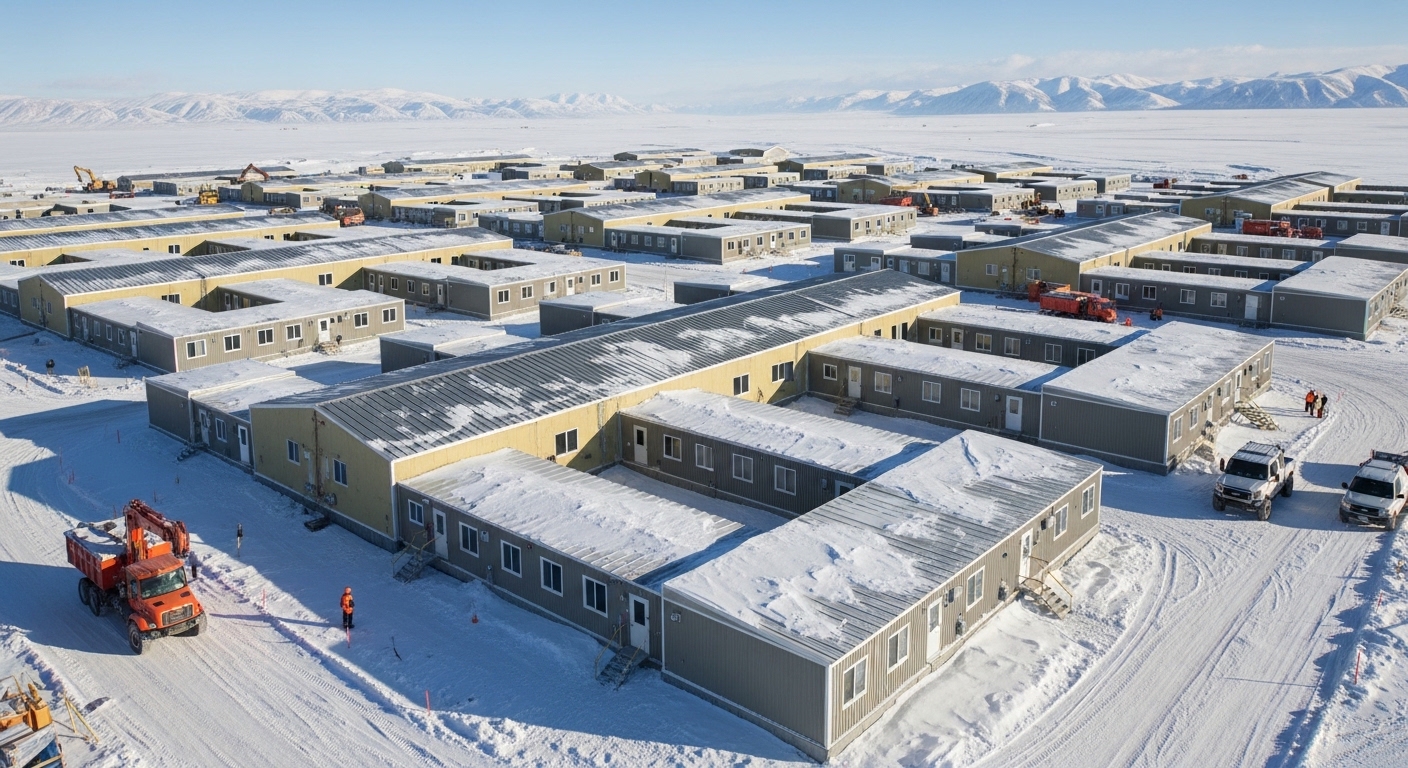
Scalable Emergency Housing: How to Build a Camp for 10,000 People Quickly Large scale displacement requires solutions that go far beyond individual shelters. When populations reach tens of thousands, emergency housing becomes a matter of systems engineering, logistics management, and coordinated planning rather than isolated construction activities. Building a camp for 10,000 people quickly demands speed, scalability, and operational reliability, while ensuring safety, hygiene, and long term usability. Modular and prefabricated construction provides the only realistic approach to meeting these requirements under crisis conditions. Scalable emergency housing relies on industrialized production, standardized layouts, and phased deployment strategies. Instead of more..

Scalable Emergency Housing: How to Build a Camp for 10,000 People Quickly2025-12-16T15:02:24+03:00

From Factory to Field: The Supply Chain of Emergency Settlement Units

2025-12-16T14:55:45+03:00

From Factory to Field: The Supply Chain of Emergency Settlement Units In emergency response, the effectiveness of shelter solutions is defined not only by design quality but by how efficiently they move from production to deployment. Emergency settlement units must travel through complex supply chains under extreme time pressure, unstable access conditions, and limited infrastructure. The journey from factory to field is therefore a critical process that determines whether shelters arrive on time, function as intended, and provide immediate relief to affected populations. A well structured supply chain transforms modular construction into a true life saving capability. Unlike conventional more..

From Factory to Field: The Supply Chain of Emergency Settlement Units2025-12-16T14:55:45+03:00
Go to Top