
Designing Safe and Hygienic Living Spaces for Emergency Settlements
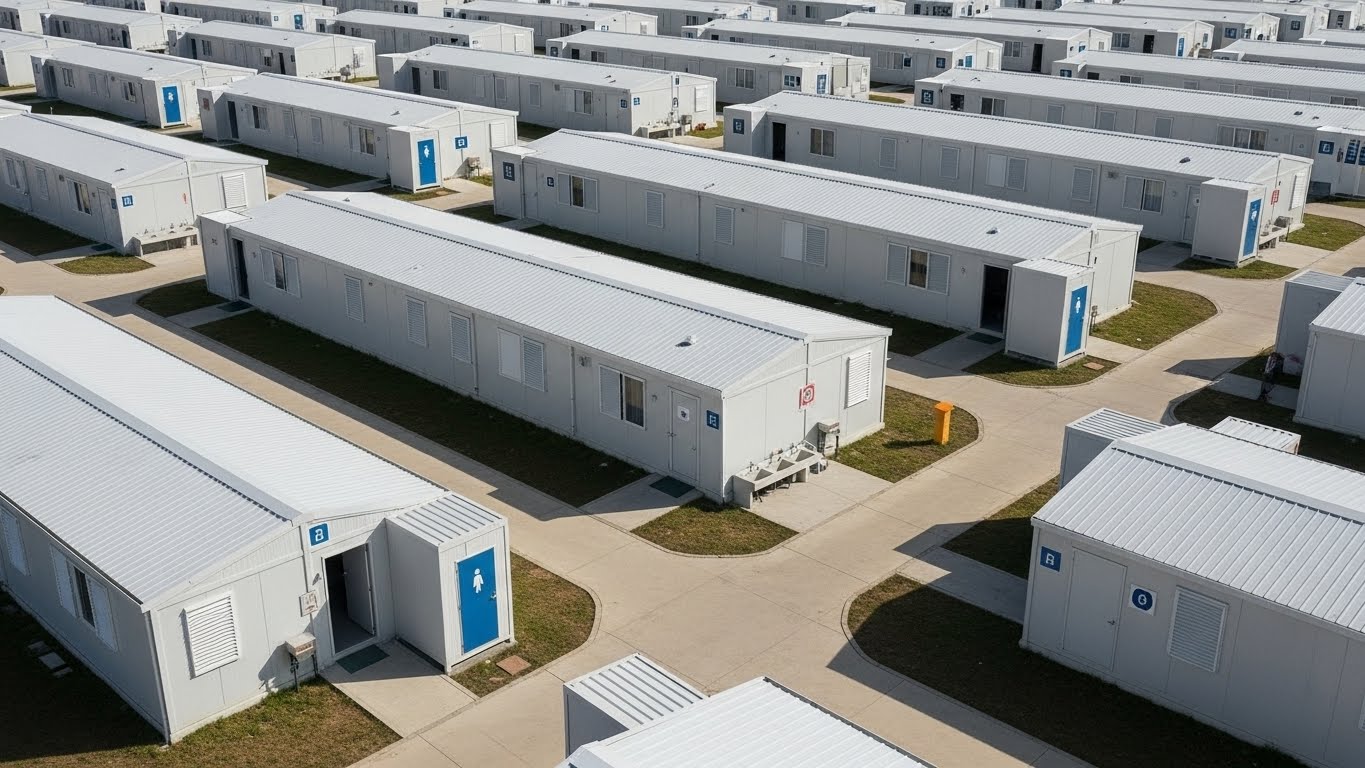
What Are Safe and Hygienic Living Spaces in Emergency Settlements?
Safe and hygienic living spaces are purpose designed accommodation units that meet essential health, safety, and environmental standards in emergency contexts. These spaces are planned to reduce health risks, support personal dignity, and enable efficient sanitation and maintenance.
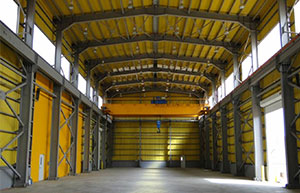
Modular and prefabricated systems are manufactured in controlled factory environments, allowing hygiene related elements such as ventilation, insulation, plumbing, and surface finishes to be integrated during production. Steel based structural systems ensure stability and durability, while standardized layouts support effective circulation, separation of clean and service zones, and organized settlement planning.
Advantages of Modular Design for Safety and Hygiene
One of the key advantages of modular construction is controlled quality. Factory based manufacturing ensures consistent installation of sanitary systems, moisture barriers, and ventilation components. This reduces the risk of contamination and construction defects that can compromise hygiene in emergency settlements.
Speed of deployment also plays a critical role in health protection. Rapid installation reduces the time occupants are exposed to unsafe temporary conditions and allows sanitation systems to become operational quickly.
Durability and ease of maintenance further enhance hygiene. Steel based modular structures resist mold, pests, and environmental degradation. Smooth interior finishes and accessible service systems support regular cleaning and long term sanitation management.
Design flexibility is another advantage. Modular units can be configured to include separate sleeping areas, sanitation blocks, and medical support spaces. This separation improves infection control and overall living conditions within dense settlements.
Usage Areas of Safe and Hygienic Emergency Living Spaces
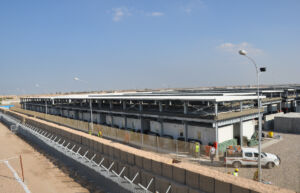
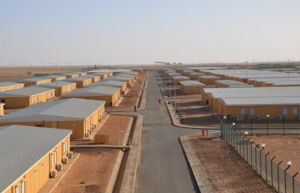
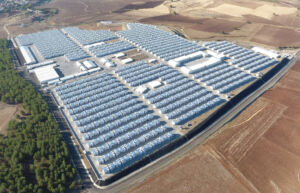
Safe and hygienic modular living spaces are widely used in emergency housing settlements for displaced populations. These units provide reliable accommodation while supporting organized sanitation and waste management systems.
They are also applied in emergency healthcare support environments, such as accommodation for medical staff and patients, where hygiene standards are especially critical.
Public authorities and international organizations use modular hygienic living spaces in transitional settlements that operate for extended periods. These systems can be upgraded or expanded as settlements evolve into more permanent communities.
Dorce’s Difference in Emergency Settlement Design
Dorce Prefabricated Construction delivers emergency settlement projects through a fully integrated Design Build and EPC approach. From planning and engineering to manufacturing, logistics, installation, and commissioning, all processes are managed under a single coordinated framework.
Dorce designs living spaces with health and safety as core priorities. Advanced manufacturing facilities, digital engineering tools, and strict quality control ensure that sanitation, ventilation, and structural performance meet international standards. Modular systems are adapted to local climatic conditions to maintain indoor comfort and hygiene.
With extensive international experience in large scale emergency and settlement projects, Dorce provides safe and hygienic living environments that support dignity, resilience, and operational efficiency. By combining modular engineering with health focused design, Dorce Prefabricated Construction contributes to healthier and more sustainable emergency settlements.