Dorce’s Global Reach: Case Studies on Emergency Settlements from the Middle East to Eastern Europe
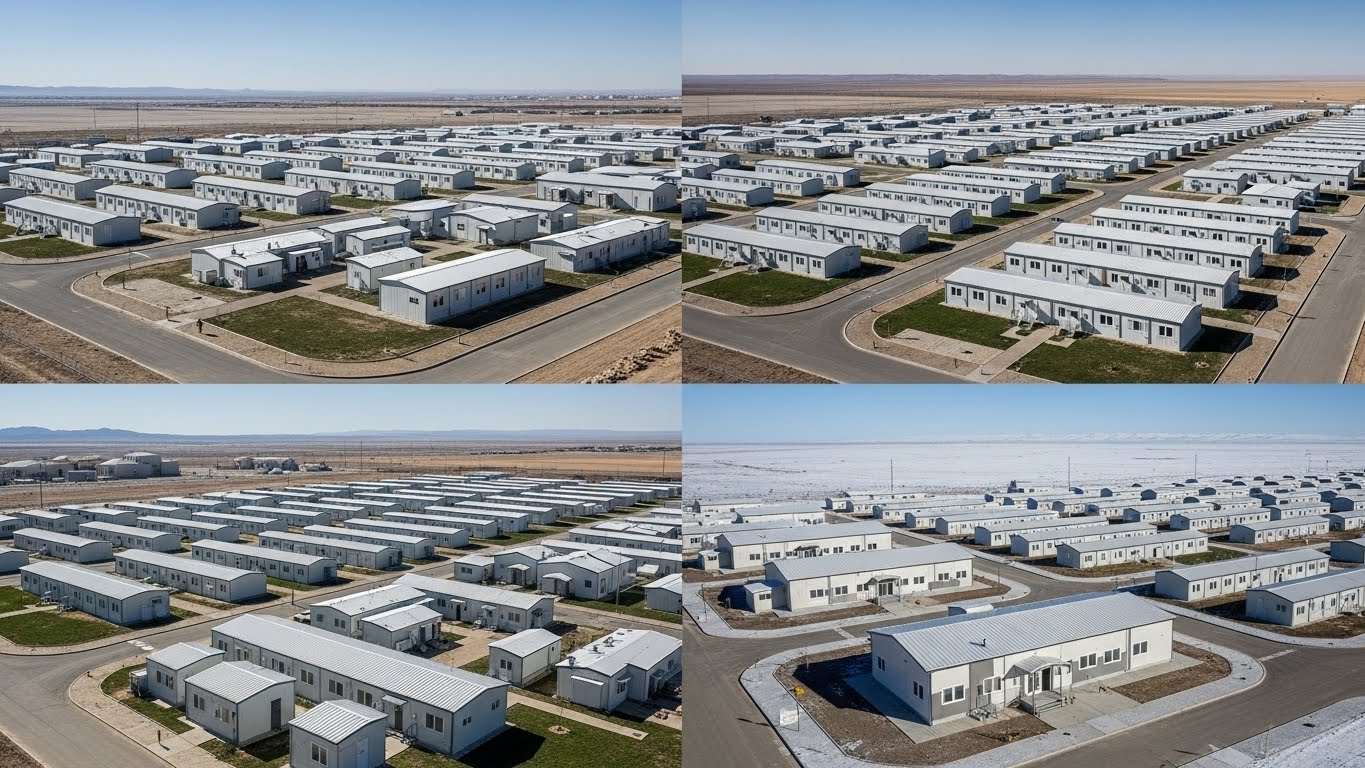
Emergency settlements are no longer simple clusters of temporary shelters. In today’s crisis landscape, they are complex, multi service environments that must deliver housing, sanitation, healthcare, power continuity, and operational control under tight timelines and difficult logistics. Dorce’s experience across multiple regions shows how modular and prefabricated systems can be deployed at different scales, in different climates, and under very different access and security constraints, while still achieving predictable quality and rapid activation.
What Is a Turnkey Emergency Settlement?
A turnkey emergency settlement is an integrated living and service environment delivered under a coordinated model that covers planning, engineering, manufacturing, logistics, installation, and commissioning. The goal is not only to place units on the ground, but to create a functional settlement that can operate immediately.
A typical turnkey settlement includes accommodation, sanitary and hygiene facilities, clinics or health points, kitchens and dining, storage and logistics areas, administrative and security functions, and the technical backbone needed to keep everything running, including power distribution, water supply, wastewater handling, internal circulation, and site safety measures.
Advantages
- Speed through parallel execution is the core advantage. While the site is prepared, buildings and systems are manufactured offsite, reducing overall delivery time and allowing early occupancy.
- Operational predictability is improved through standardization. Repeating unit types and predefined installation sequences reduce on site uncertainty and allow phased activation, which is critical when access windows are limited.
- Quality control is stronger because production happens in controlled environments. This reduces defects, improves fit and finish consistency, and accelerates commissioning of electrical, mechanical, and sanitary systems.
- Logistics efficiency increases when design is aligned with shipping formats. Flat pack, panelized kits, and containerized transport reduce volume, simplify handling, and support delivery into constrained regions.
- Scalability is built in. Settlements can start as an initial lifesaving package and expand into full communities with education, healthcare, and social infrastructure as the situation stabilizes.
Usage Areas
Emergency settlement delivery differs by region, climate, and mission. The following case studies illustrate how settlement strategy changes across the Middle East and Eastern Europe, while relying on the same modular and prefabricated fundamentals.
- Case study 1 Eastern Europe, Ukraine, modular clinics and health facilities
In Ukraine, rapid deployment healthcare capacity is often as urgent as housing. Prefabricated clinic and health center projects delivered across multiple critical regions show a model where medical compliance, hygiene, and speed are prioritized. Offsite manufacturing supports consistent quality in clinical finishes and MEP integration, while transport efficient formats enable deployment under constrained conditions. The result is faster access to essential services in areas where conventional construction is slowed by risk, disruption, or capacity limitations. - Case study 2 Middle East, Iraq, relocatable base and support infrastructure
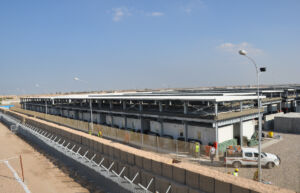
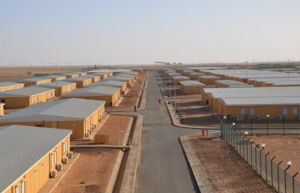
In high security environments, camps are not only about accommodation. They also require command, control, protected circulation, reliable utilities, and disciplined installation sequencing. Military style camp deployments demonstrate the importance of modular container units and prefabricated steel systems that can be installed rapidly, integrated with power and water systems, and operated under strict access control. These environments place a premium on durability, rapid mobilization, and the ability to expand or reconfigure without disrupting ongoing operations. - Case study 3 North Africa, Libya, desert logistics and hybrid camp strategy
Desert operations introduce different constraints: heat exposure, dust, long supply lines, and limited infrastructure corridors. A hybrid approach using both fixed and mobile camp functions supports pipeline and remote workfront activities. Shading strategies, external envelope resilience, and robust MEP integration become as important as speed. In this context, prefabricated modular buildings, container units, and supporting technical structures create a settlement that can sustain long duration operations while remaining adaptable to changing work locations. - Case study 4 Southern Africa, Mozambique, large scale workforce city near critical energy assets
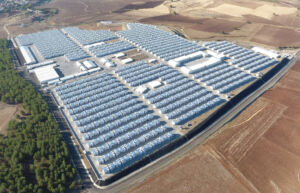
Large energy projects demand settlement solutions that function like a small city, with accommodation, clinics, HSE facilities, logistics buildings, and industrial support structures. A large workforce camp deployment model typically requires a mix of building systems: accommodation delivered through modular or kit based strategies, social and administrative facilities delivered through panelized or light steel systems, and industrial service buildings delivered through heavy steel structures. Logistics planning becomes a project within the project, especially where port limitations and last mile transport constraints require staged delivery, transshipment methods, and disciplined inventory control to keep installation running continuously. - Case study 5 Central Asia, Kazakhstan, extreme cold and volumetric modular strategy
Extreme cold environments change the economics of construction because on site working time is reduced and quality risk increases. Cold climate settlements benefit strongly from factory controlled assembly and volumetric modular strategies that reduce exposed site labor. High insulation performance, controlled thermal bridging, and reliable mechanical systems become central design requirements. A logistics and staging strategy that protects materials, supports safe handling, and maintains installation productivity in sub zero conditions is essential for schedule certainty. - Case study 6 Asia, ultra cold megacamp delivery under compressed schedule
Very large population camps in severe winter conditions require industrial level scheduling discipline and tight interface control between site works, building erection, utilities, and commissioning. In these environments, camp delivery becomes a phased activation program: early accommodation blocks, then social facilities and clinics, then industrial and technical functions, then final commissioning. Risk management is closely tied to HSE performance, workforce rotation, and weather driven productivity planning. Prefabrication reduces variance and protects quality where on-site work is heavily constrained.
These case studies highlight a consistent pattern: emergency settlement success depends on aligning building systems with climate, logistics, and operational requirements, then delivering under a unified execution model that controls interfaces and commissioning.
Dorce’s Difference
Dorce delivers emergency settlements with a deployment first engineering mindset. This means transport format, installation sequence, commissioning strategy, and long term operability are considered from the earliest design stage.
Dorce combines multiple construction systems within a single settlement program. Modular container units, panelized systems, light steel, and heavy steel structures can be integrated to match each function’s requirements rather than forcing one building method across every use case. This helps optimize cost, schedule, and logistics while improving operational performance.
Dorce’s turnkey capability also reduces interface risk. In emergency environments, delays often happen at the boundaries between designers, suppliers, installers, and operators. A single coordinated delivery model supports faster decisions, cleaner handover, and more reliable activation of utilities and services.
Dorce’s global experience across varied climates and constraints supports predictable execution in complex environments, from cold weather performance planning to desert durability strategies and high tempo mobilization for sensitive missions.
Emergency settlements are ultimately about restoring safety, dignity, and continuity of life under extreme pressure. By combining industrialized production with logistics driven delivery and integrated commissioning, Dorce helps stakeholders move faster from immediate shelter to functional communities with healthcare, hygiene, and operational stability built in from day one.