
Engineering for Extremes: Sandstorm-Proof Modular Designs for the Libyan Desert
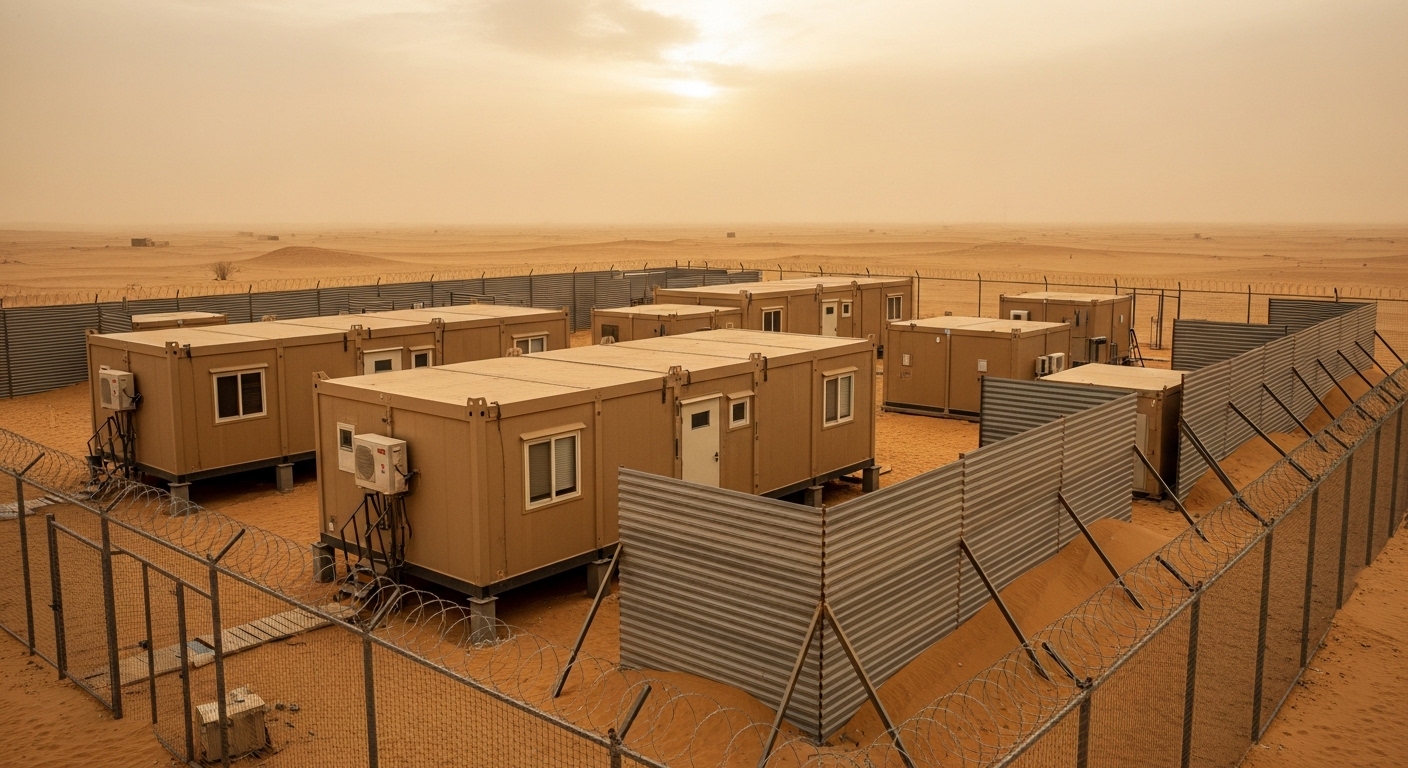
Operating in Libya’s desert basins requires more than structural compliance. It requires engineering systems specifically designed to withstand extreme sandstorms, temperature fluctuations, abrasive dust, and long logistics corridors. In regions such as the Sirte Basin and Murzuq Basin, where NOC Libya tenders frequently involve exploration and oil field services, infrastructure durability directly affects operational continuity.
Modular construction and prefabricated buildings engineered for sandstorm resistance have become essential components of workforce housing, man camps, Life Support Areas (LSA), and temporary site facilities across Libya.
The Desert Threat Profile in Libya
Libya’s desert conditions create a unique combination of environmental stressors:
• High-velocity sandstorms exceeding operational wind thresholds
• Fine dust infiltration affecting HVAC and electrical systems
• Day-night temperature swings exceeding 25 to 30 degrees Celsius
• UV radiation exposure degrading materials
• Wind-driven abrasion on façades and mechanical components
Infrastructure that performs well in temperate climates can degrade rapidly in the Sahara without appropriate engineering modifications.
Structural Engineering for Sandstorm Resistance
Sandstorm-proof modular construction begins with structural integrity.
Key structural considerations include:
• Reinforced steel frames designed for high wind loads
• Wind load calculations aligned with desert gust conditions
• Enhanced anchoring systems to prevent uplift
• Continuous base connections and foundation stabilization
• Reinforced corner and joint assemblies
Prefabricated buildings deployed in Libya must comply with wind load scenarios that account for both sustained winds and gust factors.
Elevated skid systems or reinforced concrete pad foundations are often used to stabilize modules against sand-driven erosion and foundation displacement.
Envelope Design: Sealing Against Dust Infiltration
The building envelope is the primary defense against sand penetration.
Critical engineering features include:
• High-performance gasket systems around doors and windows
• Multi-layer sealing at panel joints
• Dust-rated external doors
• Positive pressure HVAC systems
• Filtered air intake systems with replaceable cartridge filters
Sand infiltration can damage sensitive electronics, reduce HVAC efficiency, and compromise indoor air quality. Sandstorm-proof modular designs incorporate layered protection rather than relying on single-seal barriers.
HVAC and Mechanical Systems in Desert Conditions
Mechanical systems must function reliably under dust-heavy air and extreme temperatures.
Engineering adaptations include:
• Industrial-grade air filtration systems
• Sand-resistant louvers
• Redundant cooling units
• High-efficiency insulation panels
• Sealed ductwork systems
In oil field accommodation and LSAs, thermal control directly impacts workforce productivity and safety. Proper insulation reduces cooling loads and fuel consumption, improving operational sustainability.
Material Selection for Abrasion Resistance
Desert sand acts as a natural abrasive, accelerating material wear.
Preferred materials include:
• Corrosion-resistant steel coatings
• UV-stabilized external finishes
• Reinforced sandwich panels
• High-durability roof membranes
• Impact-resistant glazing
Prefabricated buildings manufactured with protective coatings maintain structural and aesthetic performance despite prolonged sand exposure.
Utility Protection and Infrastructure Resilience
Sandstorms can disrupt exposed utility networks. Protective design strategies include:
• Underground cable routing where feasible
• Shielded external generator housings
• Enclosed electrical panels
• Protected fuel storage units
• Reinforced water storage tanks
Blast-resistant containers used for control rooms or sensitive equipment also provide enhanced structural security against wind-borne debris.
Camp Layout and Wind Mitigation
Engineering for extremes extends beyond individual modules to overall camp planning.
Strategic layout considerations include:
• Windbreak positioning using storage units or reinforced walls
• Orientation of buildings perpendicular to dominant wind directions
• Elevated ground preparation to reduce sand accumulation
• Segregated vehicle circulation paths to minimize dust clouds
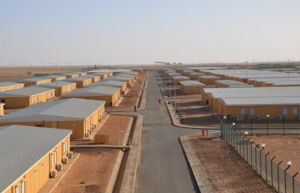
Man camps and workforce housing clusters are often arranged to reduce crosswind impact and protect central operational areas.
Logistics and Rapid Mobilization Under Desert Conditions
Rapid mobilization remains critical for Libya’s energy sector. Modules staged at the Tripoli logistics base can be engineered and inspected before desert deployment.
Transport considerations include:
• Secure container fastening systems
• Protective wrapping during convoy transport
• Pre-commissioning of mechanical systems
• On-site fast-assembly anchoring kits
Turnkey EPC execution models allow seamless transition from staging to installation without prolonged desert exposure.
Compliance and International Standards
Sandstorm-proof designs must also meet international oil and gas safety expectations.
Compliance frameworks typically address:
• Structural wind load standards
• Fire resistance classifications
• Electrical safety certifications
• HSE performance benchmarks
• Environmental performance documentation
These standards are particularly relevant under NOC Libya tenders and international joint venture agreements.
Turkish Contractors in Libya and Desert Engineering Experience
Turkish contractors in Libya have accumulated extensive experience in desert infrastructure, including energy projects and workforce accommodation.
Many ENR Top 250 contractors leverage:
• Familiarity with sandstorm mitigation techniques
• Regional logistics expertise
• Integrated modular construction capability
• Adaptation to remote operational conditions
This experience strengthens the reliability of prefabricated building deployment in harsh environments.
Dorçe Prefabrik Capabilities for Desert-Ready Modular Design
Dorçe Prefabrik engineers modular construction systems specifically adapted to extreme climates.
Core strengths include:
• High wind-load structural engineering
• Sand-resistant envelope detailing
• Industrial-grade HVAC integration
• Prefabricated buildings optimized for oil field accommodation
• Blast-resistant container solutions
• Turnkey EPC delivery from Tripoli logistics staging to inland installation
By integrating engineering, manufacturing, logistics, and on-site commissioning under a unified system, Dorçe delivers sandstorm-proof modular designs that support operational continuity in Libya’s most demanding environments.
Conclusion: Engineering Resilience as a Strategic Asset
In Libya’s desert basins, infrastructure must do more than exist. It must endure. Sandstorm-proof modular construction transforms environmental risk into controlled engineering performance.
Through reinforced structural systems, sealed envelopes, protected utilities, and rapid mobilization frameworks, prefabricated buildings enable workforce housing and LSAs to function reliably under extreme conditions. Dorçe Prefabrik’s desert-adapted modular engineering approach supports Libya’s oil exploration and production programs with durable, compliant, and operationally resilient infrastructure.
Tags
Tags