
HVAC Efficiency in Arid Climates: Sustainable Energy Management for Remote Man Camps
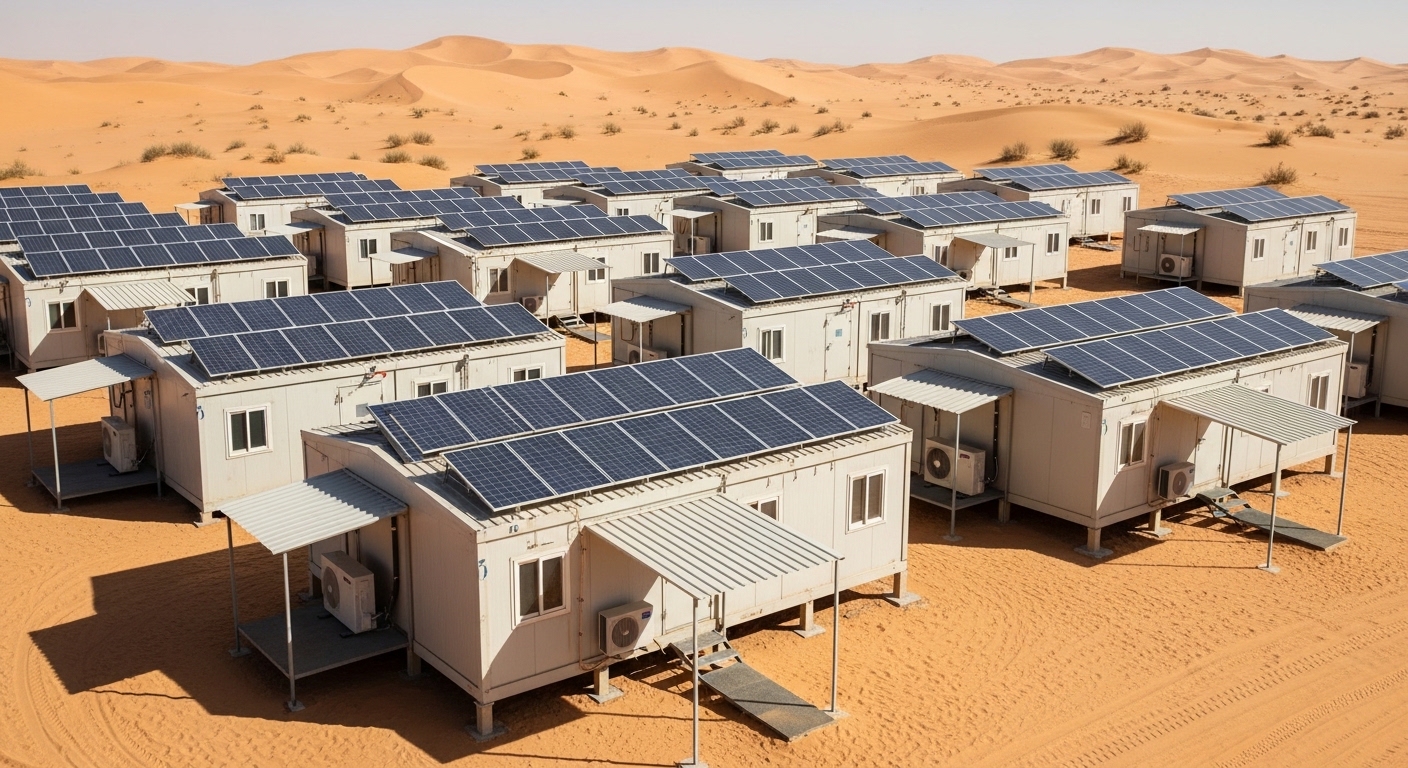
In North Africa and the Middle East, remote man camps supporting oil, gas, mining, and infrastructure operations operate under some of the harshest climatic conditions on earth. In Libya’s Sirte Basin, Murzuq Basin, and other desert regions connected to NOC Libya tenders, ambient temperatures frequently exceed 45°C, while extreme diurnal temperature swings strain building systems.
In such environments, HVAC efficiency is not a comfort upgrade. It is a strategic energy management decision that directly affects fuel consumption, generator sizing, logistics frequency, and long-term operating costs. Sustainable HVAC design integrated into modular construction and prefabricated buildings has become essential for oil field accommodation and Life Support Areas (LSA).
The Energy Reality of Remote Man Camps
Remote workforce housing and temporary site facilities often operate fully off-grid. Energy systems typically rely on:
• Diesel generator sets
• Redundant power backup systems
• Fuel storage and distribution units
• Standalone water and wastewater infrastructure
In these environments, HVAC systems can account for 50 to 70 percent of total electricity consumption during peak summer months.
Poor HVAC design leads to:
• Oversized generator dependency
• Increased fuel convoy frequency
• Higher maintenance cycles
• Reduced equipment lifespan
• Elevated carbon footprint
Efficiency therefore becomes a financial and operational priority.
Thermal Stress in Arid Climates
Arid climates impose unique engineering challenges:
• High daytime solar radiation
• Low nighttime temperatures
• Fine dust infiltration
• Low humidity levels
• Strong wind-driven heat loads
Unlike humid tropical climates, arid zones require systems optimized for sensible cooling loads rather than latent moisture removal.
Engineering solutions must reflect this difference.
Building Envelope as the First Line of Defense
Sustainable HVAC performance begins with reducing cooling demand at the source.
Key envelope strategies include:
• High-performance insulated sandwich panels
• Low thermal conductivity wall systems
• Reflective roofing membranes
• Thermal break structural details
• Double-sealed door and window assemblies
Prefabricated buildings designed for desert conditions significantly reduce heat transfer before mechanical systems engage.
In modular construction, factory-controlled panel manufacturing ensures consistent insulation quality, eliminating field variability.
Optimized HVAC System Design
Remote man camps require systems engineered for durability and energy efficiency.
Effective approaches include:
• High-efficiency split or VRF systems
• Zonal temperature control
• Programmable thermostatic management
• Variable-speed compressors
• Demand-based ventilation control
Zoning allows unoccupied areas to reduce energy consumption during off-peak hours.
In workforce housing clusters, centralized cooling plants may be combined with distributed units to balance load and redundancy.
Dust Management and Air Filtration
Dust infiltration is a primary threat to HVAC performance in Libya’s desert basins.
Design adaptations include:
• Multi-stage air filtration systems
• Easily replaceable filter cartridges
• Sand-resistant louvers
• Positive internal air pressure design
• Sealed duct networks
Without proper filtration, cooling coils and compressors degrade rapidly, increasing maintenance frequency and downtime.
Generator Optimization Through Load Reduction
HVAC efficiency directly impacts generator sizing.
When building envelope performance and cooling systems are optimized:
• Smaller generator sets can be specified
• Fuel consumption decreases
• Reduced heat stress on equipment
• Extended generator lifespan
• Lower maintenance costs
For camps supplied from the Tripoli logistics base, reduced fuel demand lowers convoy frequency and security exposure.
Renewable Integration in Remote Camps
Hybrid energy strategies enhance sustainability.
Possible integrations include:
• Solar photovoltaic systems
• Solar-assisted water heating
• Battery energy storage units
• Smart energy monitoring systems
Solar panels reduce daytime generator load, especially during peak cooling hours. Integration with BESS units allows load balancing and reduced nighttime generator runtime.
Camp Layout and Passive Cooling Strategies
Beyond mechanical systems, site planning influences thermal efficiency.
Effective strategies include:
• Building orientation to minimize direct solar exposure
• Shaded walkways and façade shading systems
• Strategic spacing for airflow circulation
• Use of windbreak structures
• Elevated foundations to reduce ground heat transfer
Proper camp layout reduces cooling demand before mechanical intervention.
Turnkey EPC and Integrated Energy Planning
Sustainable HVAC performance requires coordinated engineering.
Turnkey EPC execution ensures:
• Envelope and HVAC system compatibility
• Electrical load optimization
• Generator and distribution integration
• Energy modeling during design phase
• Lifecycle cost forecasting
In oil field accommodation projects linked to NOC Libya tenders, integrated energy planning reduces long-term operational expenditure.
Turkish Contractors in Libya and Climate Adaptation
Turkish contractors in Libya have extensive experience delivering modular construction systems under desert conditions. Many ENR Top 250 contractors operate with in-house engineering capacity capable of designing climate-adapted energy solutions.
Regional expertise enables:
• Accurate heat load calculations
• Fuel logistics planning
• Durable material selection
• Long-term maintenance forecasting
Dorçe Prefabrik Capabilities in Sustainable Man Camp Design
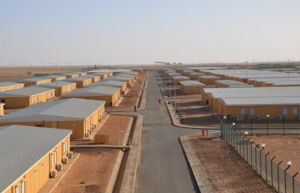
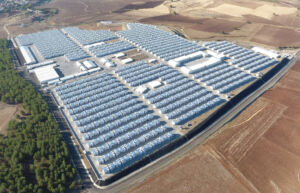
Dorçe Prefabrik integrates HVAC efficiency into modular construction systems for oil field accommodation and LSAs across arid regions.
Key strengths include:
• High-performance prefabricated building envelopes
• Climate-specific insulation engineering
• Energy-efficient HVAC integration
• Hybrid renewable compatibility
• Turnkey EPC coordination from Tripoli logistics staging to remote installation
• Scalable workforce housing configurations
By combining envelope optimization, mechanical efficiency, and integrated energy planning, Dorçe reduces fuel dependency and operational risk in remote man camps.
Economic and Environmental Impact
Improving HVAC efficiency delivers measurable benefits:
• Lower fuel consumption
• Reduced carbon emissions
• Extended equipment lifespan
• Fewer maintenance shutdowns
• Reduced logistics exposure
• Improved workforce comfort and productivity
Sustainable energy management strengthens both operational performance and environmental responsibility.
Conclusion: Efficiency as Infrastructure Strategy
In Libya’s arid climate, HVAC systems define both energy consumption and workforce well-being. Sustainable energy management in remote man camps requires engineering precision at every level, from envelope design to generator integration.
Through modular construction, prefabricated buildings optimized for extreme heat, and integrated Turnkey EPC execution, infrastructure transforms from energy-intensive liability into operational advantage. Dorçe Prefabrik supports this transformation by delivering desert-adapted, energy-efficient accommodation systems that enhance reliability, reduce fuel dependency, and improve long-term performance across North Africa’s most demanding environments.
Tags
Tags