
Hygienic Sanitation Containers (WASH): Critical Infrastructure for Gaza Aid Camps
Hygienic Sanitation Containers (WASH): Critical Infrastructure for Gaza Aid Camps
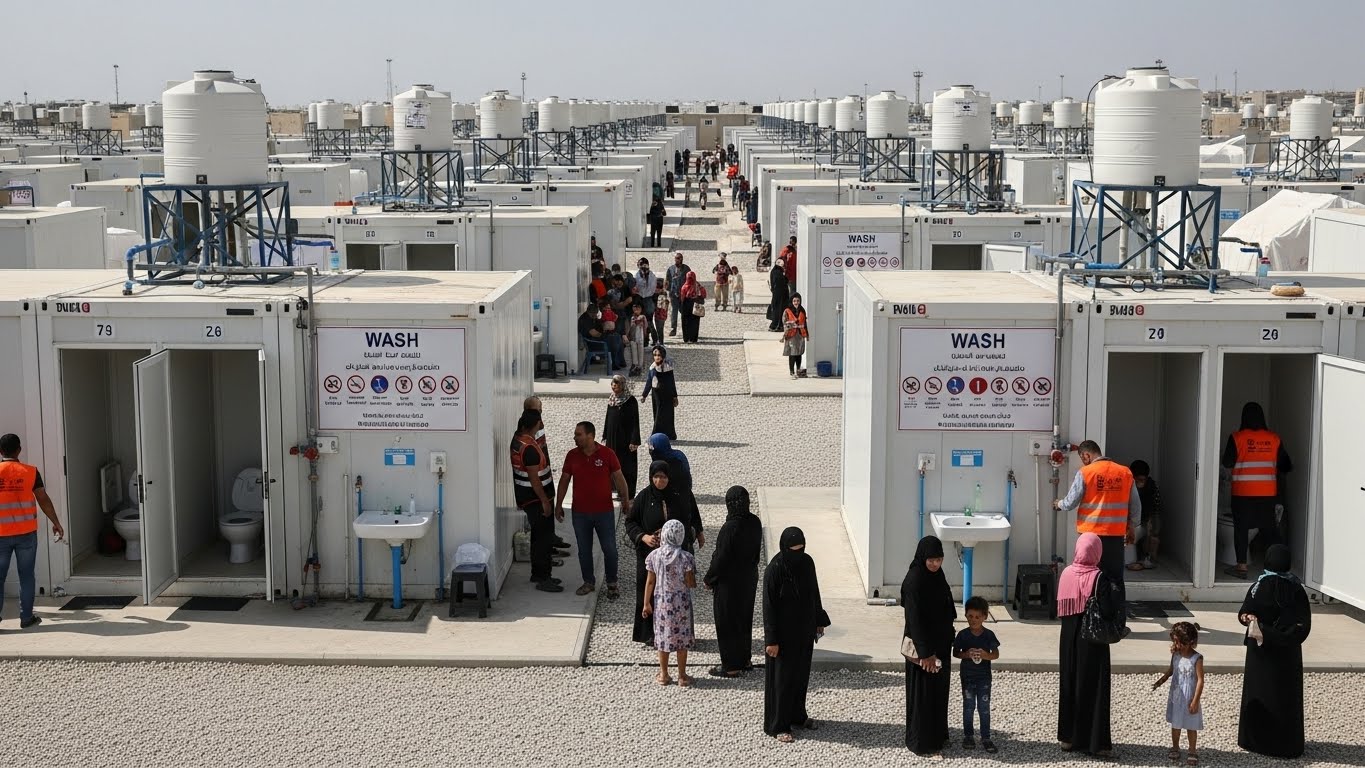
What is hygienic sanitation containers?
Hygienic sanitation containers, commonly referred to as WASH units (Water, Sanitation and Hygiene), are prefabricated modular facilities designed to provide safe, clean and dignified access to toilets, showers, hand washing areas and wastewater systems in humanitarian aid environments. In Gaza aid camps, where population density is high and infrastructure is severely limited, these modular sanitation containers form the backbone of public health protection.
Built in factory controlled environments, WASH containers are engineered to meet international humanitarian standards for hygiene, user safety, accessibility and infection control. They can include toilets, showers, water storage and distribution systems, grey and black water management, lighting, ventilation, non slip flooring and privacy features to ensure safe and comfortable use for all age groups and vulnerable populations.
Advantages
Sanitation containers significantly reduce the risk of disease outbreaks by ensuring proper waste disposal and supporting hygiene routines such as hand washing and bathing. They are sealed, durable and easy to clean, unlike improvised sanitation setups that can expose communities to contamination, odors and unsafe conditions.
Their modular design allows rapid deployment and scalability. Units can be added as population needs grow and can be separated into male, female, family or disabled accessible facilities to enhance safety and privacy.
Because they are prefabricated, WASH containers arrive on site with plumbing, electrical and structural components preinstalled. This minimizes field work and ensures consistent quality. They are also designed for long term use, with weather resistant exteriors, insulated structures and robust fixtures suitable for high frequency operation in demanding environments.
Sustainability features such as water saving fixtures, grey water recovery and efficient wastewater treatment systems can also be incorporated to reduce environmental impact and operational costs.
Usage Areas
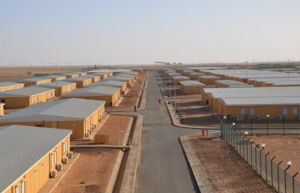
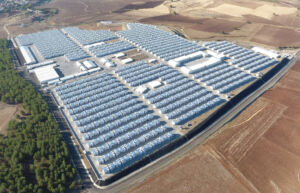
In Gaza aid camps, hygienic sanitation containers are used to support displaced families, temporary settlements and humanitarian field bases. They are installed in residential camp areas, health facilities, education centers, communal service points and staff compounds to ensure safe and equitable access to sanitation.
They also play a critical role in emergency response phases, where the immediate establishment of hygienic services is essential to prevent waterborne and communicable diseases. Beyond emergency contexts, WASH containers support longer term stabilization projects, improving living conditions while permanent infrastructure is rebuilt.
Their mobility and modularity also make them suitable for temporary relocations, seasonal demand increases and humanitarian operations requiring flexible infrastructure.
Dorce’s Difference/Conclusion
Dorce designs and manufactures hygienic sanitation containers in line with international WASH and humanitarian guidelines, ensuring high performance, safe operation and user dignity. Each unit is engineered to withstand intensive daily use, harsh environmental conditions and complex field logistics.
With turnkey capability, Dorce supports humanitarian partners from design and production to delivery, installation and commissioning, ensuring that critical sanitation infrastructure is in place quickly and reliably. Attention to layout, privacy, accessibility, safety and hygiene ensures that these facilities truly meet community needs.
By delivering robust, compliant and rapidly deployable WASH solutions for Gaza aid camps, Dorce helps protect public health, strengthen humanitarian response capacity and improve daily living conditions for vulnerable communities who depend on safe sanitation as a fundamental human need.