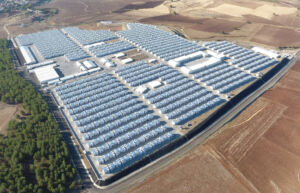
Integrated Facilities for Refugee Camps: Clinics, Schools, and Housing
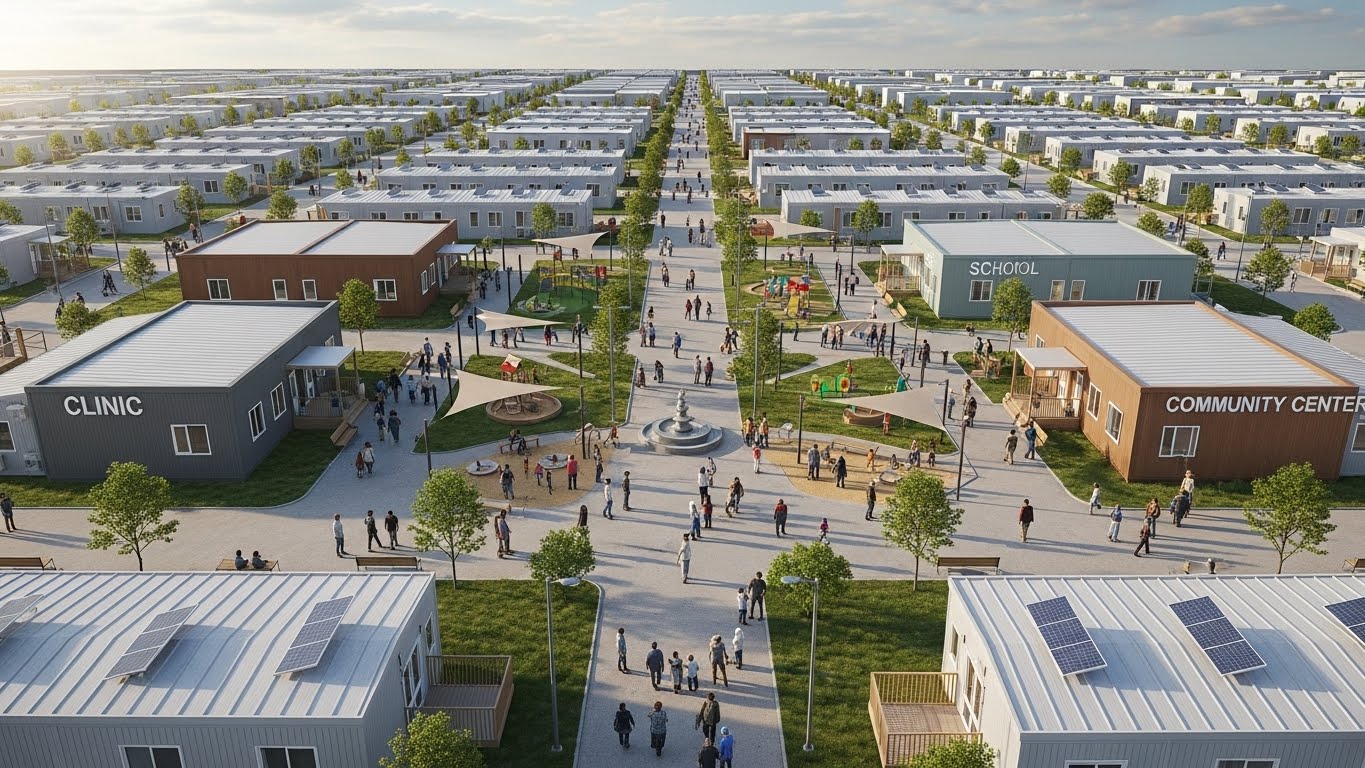
What Are Integrated Facilities for Refugee Camps?
Integrated facilities for refugee camps are modular building systems designed to operate together as a complete settlement. Instead of isolated structures, housing units, healthcare facilities, educational buildings, administrative offices, and support infrastructure are planned and delivered as a unified system.
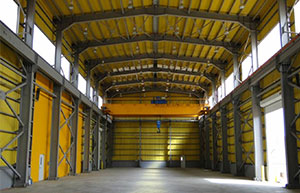
These facilities are manufactured offsite in controlled factory environments using steel based modular and prefabricated construction technologies. Once transported to site, buildings are assembled quickly with minimal disruption. This approach ensures consistent quality, coordinated functionality, and compliance with international safety and performance standards across all facilities.
Advantages of an Integrated Modular Camp Approach
Speed of deployment is one of the most important advantages of integrated modular facilities. While site preparation is underway, housing units, clinics, and schools can be produced simultaneously. This parallel workflow allows camps to become operational in a short timeframe.
Operational efficiency is another key benefit. Integrated planning ensures that buildings are technically compatible and function together effectively. Utilities, circulation routes, and service areas are designed as part of a single master plan, improving usability and maintenance.
Scalability and flexibility are essential for camps that must adapt to changing population sizes. Modular systems allow facilities to be expanded, relocated, or reconfigured in phases without interrupting daily operations.
Safety and durability are ensured through steel based structural systems that resist harsh weather conditions and intensive use. Factory controlled production provides consistent quality and reliable long term performance.
Usage Areas of Integrated Camp Facilities
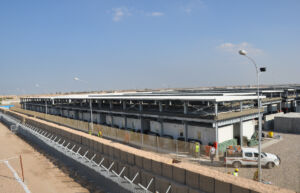
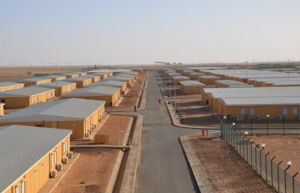
Integrated modular facilities are widely used in large scale refugee camps where long term operation is expected. Housing units provide dignified living conditions while clinics and schools support essential health and education services.
These solutions are also applied in transitional settlements where camps may evolve into semi permanent communities. Modular clinics and schools can continue operating as part of permanent urban infrastructure.
International organizations and public authorities use integrated modular facilities to establish organized camps that meet humanitarian standards while enabling efficient management and service delivery.
Dorce’s Difference in Integrated Refugee Camp Solutions
Dorce Prefabricated Construction delivers integrated refugee camp facilities through a fully coordinated Design Build and EPC approach. From master planning and engineering to manufacturing, logistics, installation, and commissioning, all processes are managed under a single responsibility.
Dorce designs modular housing, clinics, and schools to international standards, ensuring safety, comfort, and long term usability. Advanced manufacturing facilities and digital engineering tools enable fast production with consistent quality across all building types.
With extensive experience in large scale modular settlements, Dorce provides integrated solutions that prioritize dignity, functionality, and resilience. By delivering clinics, schools, and housing as a unified system, Dorce Prefabricated Construction supports healthier, more stable, and better organized refugee camps.