
Meeting the Housing Demand for 2,500+ Workers in Alaska’s Newest Oil Fields
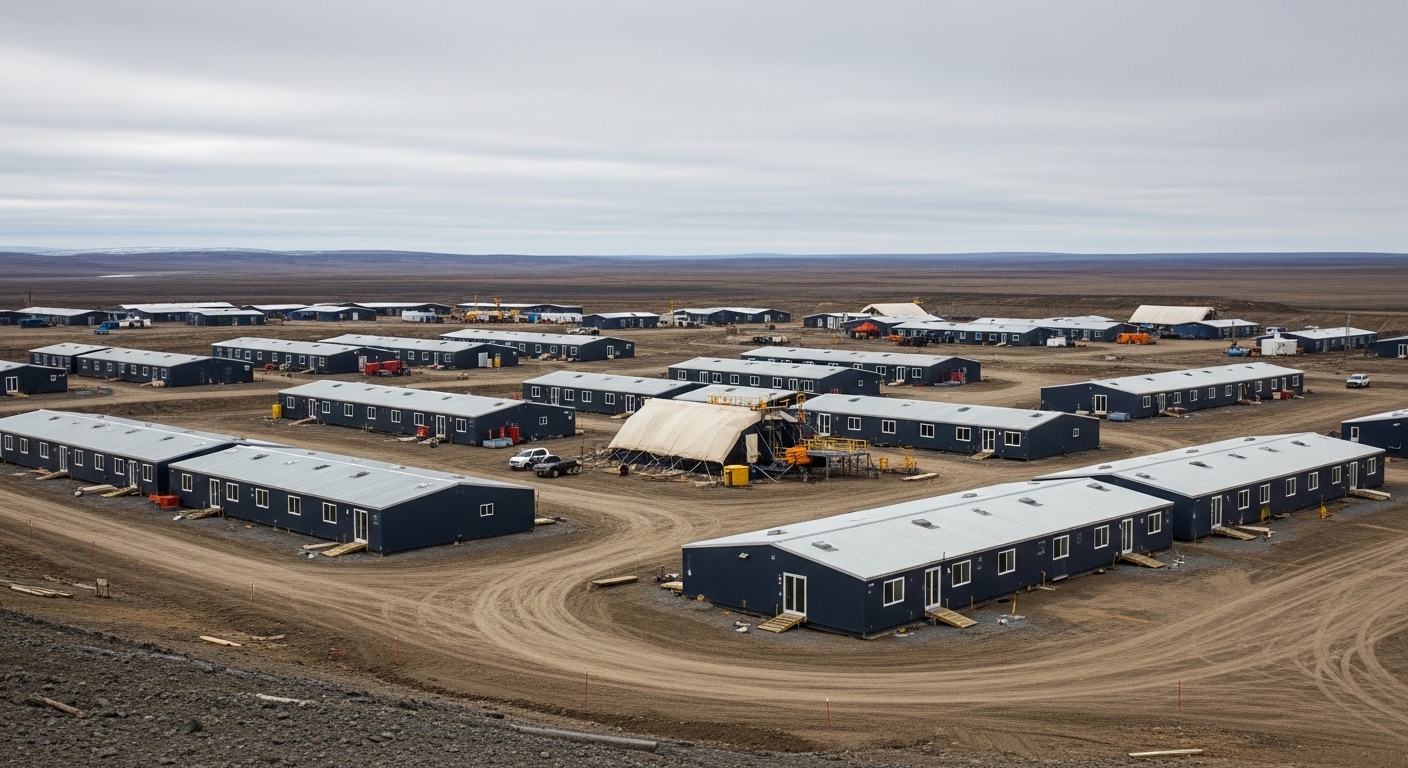
Alaska’s North Slope is entering a new phase of energy development as several oil projects move from exploration to construction and early production. Developments across regions such as the National Petroleum Reserve in Alaska and nearby North Slope fields require extensive infrastructure capable of supporting large construction workforces. One of the most immediate operational challenges for these projects is providing safe, reliable, and scalable housing for thousands of workers in remote Arctic environments.
During peak construction periods, major oil developments can require accommodation for more than 2,500 personnel including engineers, drilling crews, construction workers, logistics specialists, and support staff. In locations where permanent settlements are scarce and municipal infrastructure does not exist, workforce housing must be delivered as a fully integrated and self-sufficient system. Modular construction has become one of the most practical approaches to meeting this demand, allowing project developers to deploy large workforce settlements rapidly while maintaining high standards of safety, durability, and operational efficiency.
What is Large-Scale Workforce Housing for Remote Oil Fields
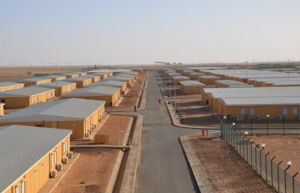
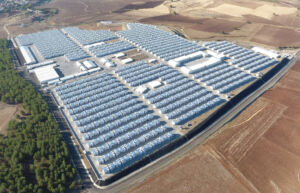
Large-scale workforce housing refers to modular accommodation systems designed to support thousands of personnel working in isolated industrial environments. In Arctic oil fields, these systems function as complete operational communities where workers live, eat, receive medical services, and access basic amenities while deployed on project assignments.
A typical large workforce settlement may include:
• Residential accommodation buildings designed for multi-person occupancy
• Large dining halls and industrial kitchen facilities
• Medical clinics and emergency response units
• Recreation and wellness buildings supporting worker well-being
• Administrative offices and project management facilities
• Laundry, sanitation, and hygiene infrastructure
• Power generation and electrical distribution systems
• Water supply, treatment, and wastewater management systems
These integrated settlements allow energy companies to maintain operational continuity while ensuring workforce safety and comfort in challenging environments.
Advantages
Developing workforce accommodation for thousands of personnel in remote Arctic locations requires construction solutions that are both efficient and resilient. Modular construction provides several advantages for large workforce housing developments.
• Rapid deployment of housing infrastructure
Prefabricated modules can be manufactured in factory environments while site preparation work is underway. This parallel process allows workforce camps to be deployed much faster than traditional construction methods.
• Reliable performance in extreme climates
Prefabricated steel modular buildings can be engineered with high insulation values, reinforced structural systems, and weather-resistant materials capable of withstanding Arctic temperatures, heavy snow loads, and strong winds.
• Reduced logistical complexity
Transporting individual construction materials to remote regions can be difficult and expensive. Modular units consolidate construction components into transportable structures, simplifying logistics planning.
• Scalable settlement design
Workforce numbers fluctuate throughout different project phases. Modular camps allow housing capacity and support facilities to expand as workforce demand increases.
• Improved quality control
Factory-based manufacturing ensures consistent construction quality and reduces the risk of weather-related construction defects.
These benefits make modular construction an effective solution for rapidly establishing large workforce settlements in remote oil fields.
Usage Areas
Large modular workforce housing systems are widely used across industries that operate in remote environments with limited local infrastructure.
Common applications include:
• Oil and gas exploration and production projects
• Arctic pipeline and energy infrastructure construction
• LNG development projects requiring large construction crews
• Mining operations and mineral extraction sites
• Remote industrial construction zones
In Alaska’s newest oil fields, workforce accommodation settlements often function as fully operational camps supporting thousands of personnel over extended project timelines. Reliable housing, utilities, and welfare infrastructure are essential to maintaining productivity and ensuring safe working conditions in these isolated regions.
Dorçe Prefabrik has extensive experience delivering modular infrastructure solutions for large industrial developments in remote environments. Through advanced prefabricated steel construction technologies, integrated engineering capabilities, and turnkey EPC delivery models, Dorçe develops scalable workforce accommodation systems designed to support energy, mining, and infrastructure projects worldwide. By combining factory-based modular production with efficient logistics planning and rapid installation methods, Dorçe enables large workforce settlements to be deployed quickly while maintaining high standards of durability, safety, and operational performance.
Tags
Tags