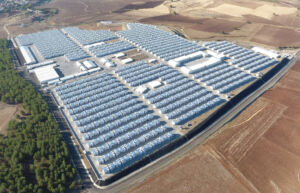
Mobile Education Units: Prefabricated Schools for Children in Conflict Regions
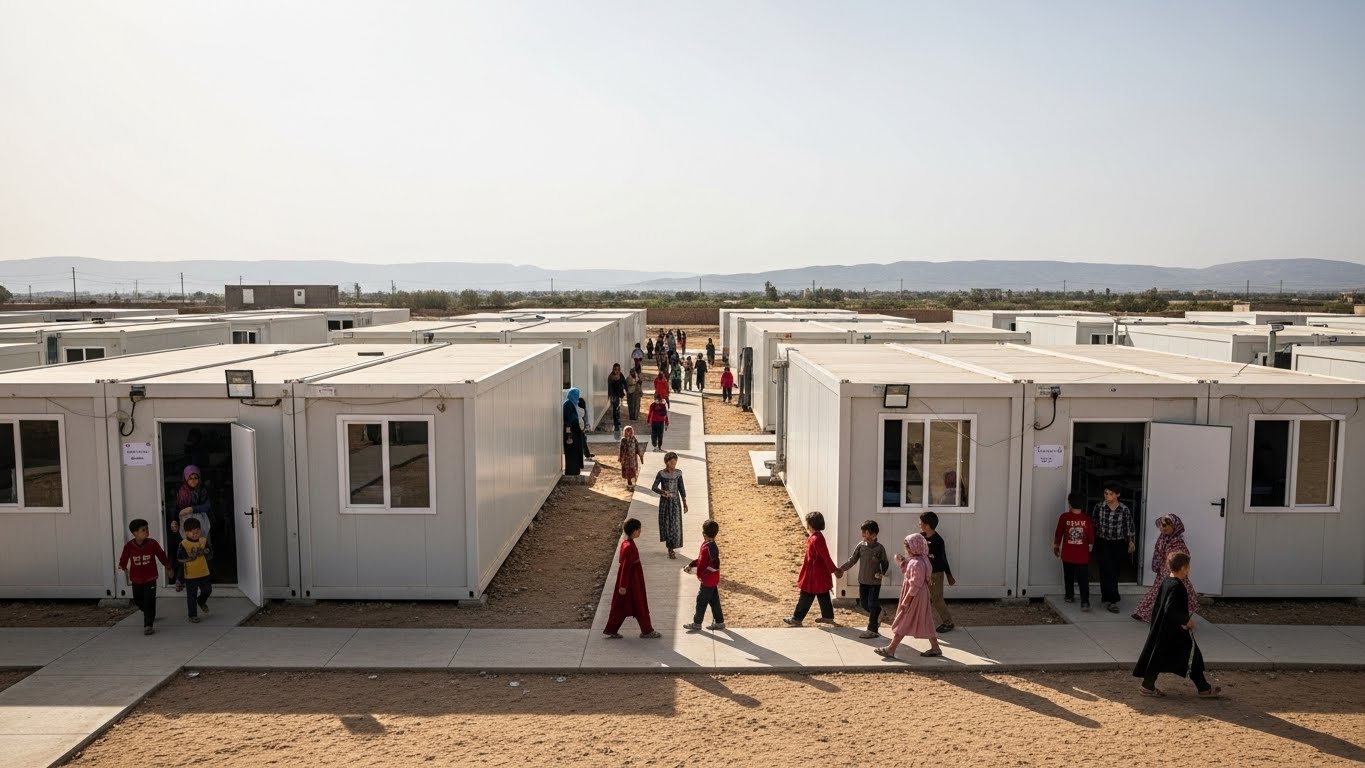
Access to education is one of the first and most deeply affected services in conflict regions. Schools are often damaged, occupied, or rendered unsafe, leaving children without structured learning environments for extended periods. Yet education remains critical not only for academic development but also for psychological stability, social continuity, and long term recovery. Mobile education units built with prefabricated construction systems provide a practical and resilient solution, enabling safe and functional schools to be deployed rapidly wherever children are displaced.
Prefabricated schools are not temporary classrooms in the traditional sense. They are engineered learning environments designed to operate under challenging conditions while meeting educational, safety, and comfort standards. By relying on offsite manufacturing and modular design, mobile education units can restore access to schooling quickly, even in areas where conventional construction is not feasible.
What Are Mobile Education Units?
Mobile education units are prefabricated modular school buildings designed for rapid deployment and immediate use in conflict and post conflict environments. These units are manufactured in factory settings with integrated structural systems, insulation, electrical infrastructure, lighting, and ventilation already installed.
They can be delivered as complete classroom modules or as modular components assembled on site. Layouts typically include classrooms, teacher rooms, administrative spaces, sanitary facilities, and storage areas. The modular nature of these units allows schools to expand or adapt based on student numbers and educational needs, making them suitable for both temporary and long term use.
In conflict regions, mobile education units enable schooling to resume close to where displaced families are located, reducing travel risks and improving attendance.
Advantages
- Prefabricated mobile schools offer several sector specific advantages that address the realities of conflict affected regions.
- Rapid deployment allows classrooms to become operational within weeks or even days, minimizing learning disruption for children.
- Safe and controlled environments are created through factory installed insulation, secure doors and windows, and stable structural systems that protect students and teachers.
- Climate performance ensures year round usability. Insulated walls and roofs provide protection against heat and cold, supporting concentration and comfort.
- Scalability enables education capacity to grow as communities stabilize. Additional classrooms or support units can be added without interrupting ongoing lessons.
- Logistics efficiency supports delivery into remote or restricted areas. Standardized modules and flat pack options simplify transportation and installation.
- Consistency and quality are maintained through industrial production, ensuring that educational facilities meet defined standards across multiple locations.
Usage Areas
Mobile education units are deployed across a wide range of conflict and displacement contexts.
- Temporary schools in refugee and displacement camps
- Replacement classrooms for damaged or destroyed schools
- Education facilities in remote or insecure regions
- Child friendly learning spaces integrated into humanitarian settlements
- Training and vocational education units for youth and adults
- Temporary examination and assessment centers
These units can operate independently or as part of larger community hubs that include healthcare, social services, and recreational spaces.
Dorçe’s Difference
Dorçe brings extensive experience in delivering prefabricated education facilities in crisis and high risk environments. With a background in modular construction for humanitarian, healthcare, and large scale camp projects, Dorçe understands the importance of speed, safety, and durability when restoring education services.
Dorçe’s mobile education units are engineered for fast installation, long term use, and low maintenance. Factory integrated electrical and mechanical systems ensure immediate functionality, while high quality insulation and robust structural design support daily use in demanding conditions. Layouts are designed to optimize natural light, acoustics, and ventilation, creating healthy learning environments for children.
By managing design, engineering, manufacturing, logistics, installation, and commissioning under a single integrated delivery model, Dorçe ensures reliability and accountability throughout the project lifecycle. This turnkey approach reduces coordination challenges and allows education programs to be implemented quickly and consistently.
Education is one of the strongest foundations for recovery in conflict regions. Through mobile education units and prefabricated school solutions, Dorçe supports children and communities by delivering safe, adaptable, and dignified learning environments that restore routine, hope, and opportunity even in the most difficult circumstances.