
Post-Disaster Reconstruction in Conflict Zones: Lessons from The Middle East & Europe
Post-Disaster Reconstruction in Conflict Zones: Lessons from The Middle East & Europe
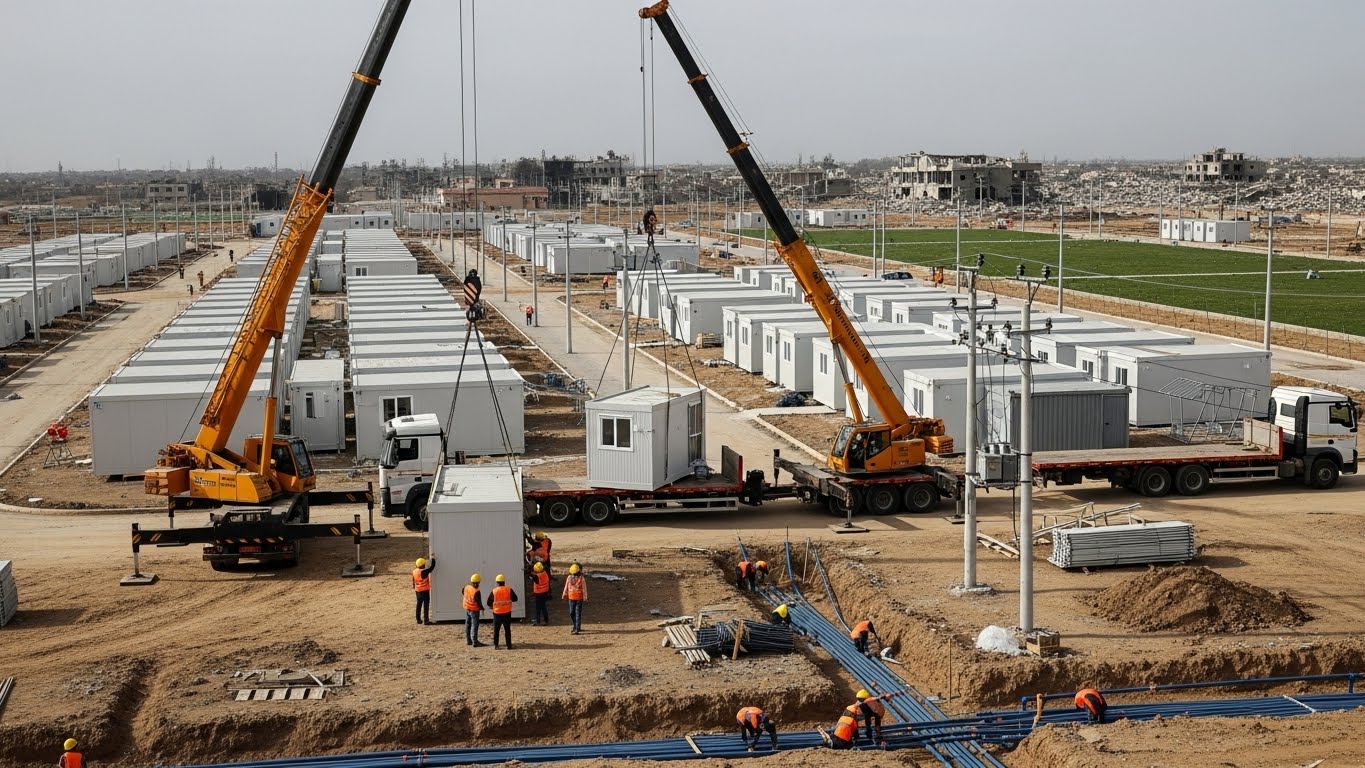
Rebuilding after a disaster is complex in any setting, but in conflict zones the challenge multiplies. Damaged infrastructure, disrupted supply chains, security constraints, population displacement, and limited governance capacity turn reconstruction into a high risk, high urgency operation. Across the Middle East and parts of Europe, repeated crises have shown that success depends on more than construction speed. It requires disciplined planning, resilient delivery methods, standards based quality, and infrastructure first thinking. Modular and prefabricated systems have become increasingly relevant because they reduce on site exposure, accelerate timelines, and provide repeatable performance under unpredictable conditions.
What is post-disaster reconstruction in conflict zones?
Post disaster reconstruction in conflict zones refers to the restoration of housing, public facilities, and essential infrastructure in areas where security risks and operational uncertainty remain active. Unlike conventional reconstruction, the environment is often characterized by restricted access routes, fragmented utilities, damaged municipal capacity, and volatile demand patterns as people move in and out of affected areas.
A defining feature is the need to deliver functional assets quickly while designing for adaptability. Reconstruction must often start with transitional solutions that can evolve into permanent use. It must also prioritize life support systems such as water, sanitation, power, healthcare, and logistics hubs before full neighborhood regeneration becomes possible.
Advantages
Speed with reduced exposure is the first major lesson. In conflict zones, every extra day on site increases risk and cost. Off site manufacturing shifts labor intensive activities into controlled facilities, allowing faster installation windows and fewer personnel in high risk areas.
Infrastructure first planning prevents settlement failure. Housing without water, sanitation, drainage, and power quickly becomes uninhabitable. Successful programs treat utilities and site engineering as a core deliverable, not an afterthought. Modular infrastructure blocks such as sanitation units, water storage, power distribution rooms, and technical containers enable early operational readiness.
Standardization improves quality and simplifies maintenance. In unstable environments, maintenance capabilities are limited. Using standardized components, repeatable details, and modular spare parts reduces long term breakdowns. Factory controlled production also minimizes inconsistency that can lead to heat loss, moisture issues, and premature deterioration.
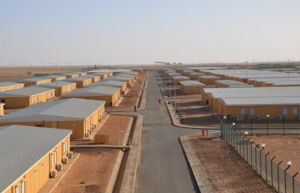
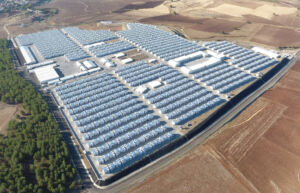
Phased delivery supports unpredictable demand. Displacement patterns can change rapidly due to security conditions. A scalable, modular master plan enables phased expansion, densification, or reconfiguration without abandoning earlier investments. The best settlements are designed as expandable clusters with clear circulation, safe zones, and modular service corridors.
Durability must match extended occupancy reality. Many “temporary” settlements last for years. Lessons from both regions show the need for robust structural systems, weather resistant envelopes, and insulation packages appropriate for local climate extremes. Durable steel systems and engineered panels reduce lifecycle cost and improve safety.
Compliance accelerates coordination and funding. International donors and humanitarian actors require clear documentation, traceability, and standards compliance. Projects that embed quality control, HSE procedures, and reporting from day one move faster through approvals and reduce rework.
Usage areas
These lessons apply across a wide range of post crisis rebuilding missions in the Middle East and Europe.
Transitional to permanent housing for displaced families
Rapid replacement housing for partially destroyed districts
Modular public facilities such as clinics, schools, and administration buildings
Workforce accommodation and life support camps for reconstruction contractors
Community infrastructure packages including kitchens, sanitation blocks, laundry, and storage
Stabilization settlements designed to evolve into long term neighborhoods
In each use case, the winning approach is integrated delivery. Housing, services, and infrastructure must be deployed as one coherent system.
Dorce’s approach
Dorce supports post disaster reconstruction in conflict zones through an integrated modular delivery model that prioritizes speed, safety, and long term usability. Projects are structured around three principles.
First, design is logistics driven. Building formats, packaging, and transport planning are developed together to work within restricted corridors and limited handling capacity. Flat pack and modular formats are selected to maximize shipment efficiency while preserving structural performance and comfort standards.
Second, settlement thinking comes before individual buildings. Dorce plans housing alongside essential infrastructure such as sanitation, water networks, power distribution, technical rooms, and communal facilities. This reduces the risk of non functional deployments and enables faster commissioning of complete living environments.
Third, quality and compliance are built into production and installation. Factory based manufacturing supports consistent performance, documented inspections, and traceable materials. On site assembly follows standardized installation procedures that reduce error rates and shorten critical path activities in sensitive environments.
In conflict affected regions, reconstruction is a test of execution discipline. The most successful programs combine modular speed with infrastructure readiness, phased scalability, and durable engineering. By delivering integrated modular settlements and facilities, Dorce helps partners restore safe living conditions faster while building a foundation that can support long term recovery.