
Scaling Workforce Housing for the Willow Project: Rapid Modular Deployment on the North Slope
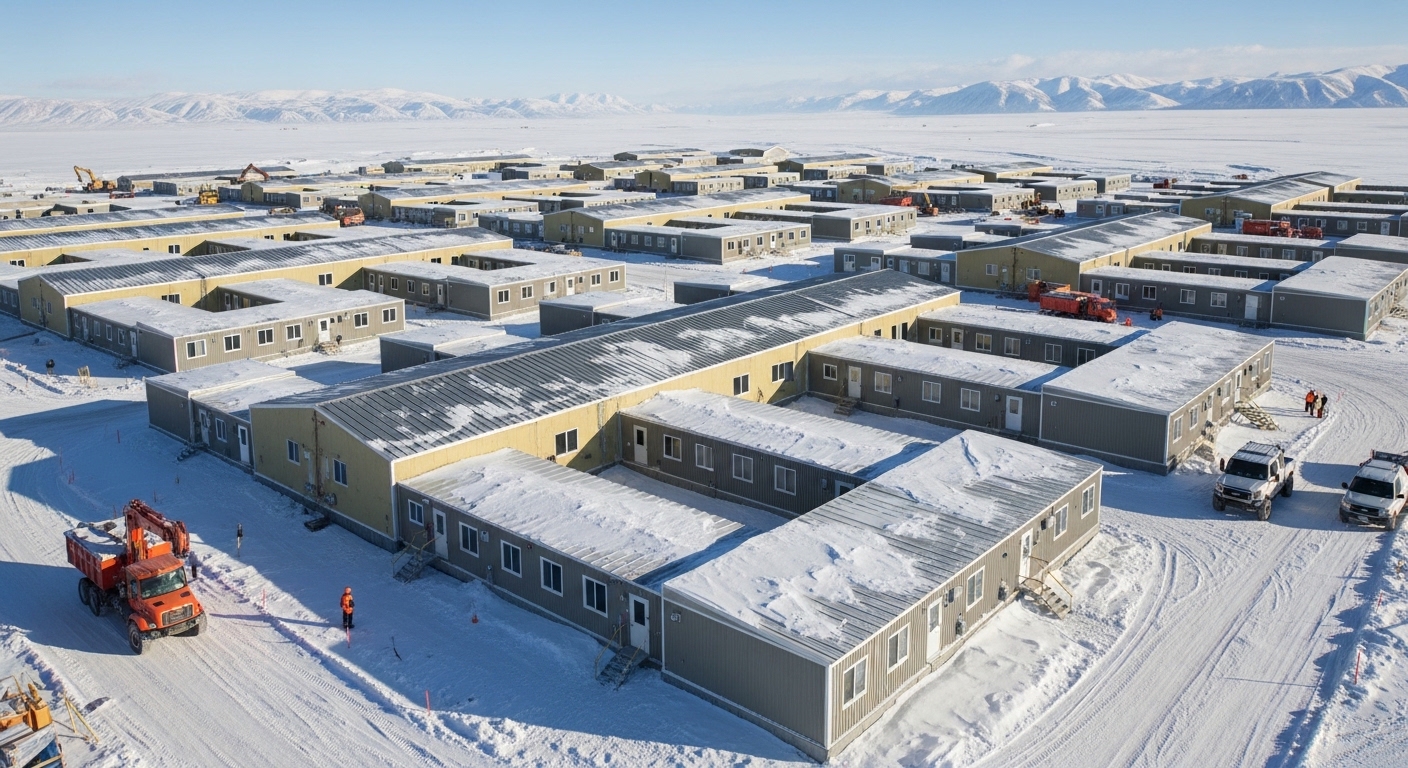
Large energy developments in Arctic environments require infrastructure capable of supporting thousands of workers in remote locations where permanent settlements and public utilities are limited. Alaska’s North Slope represents one of the most challenging regions for industrial development due to extreme cold, logistical isolation, and strict environmental regulations. For projects such as the Willow development, which involves large-scale oil infrastructure and long construction timelines, workforce housing must be delivered rapidly while maintaining high standards of safety, comfort, and operational reliability.
Modular construction has become one of the most effective approaches for delivering workforce accommodation in such environments. By combining off-site manufacturing with rapid on-site installation, modular systems allow project developers to deploy scalable housing infrastructure quickly while maintaining consistent construction quality and predictable project schedules.
What is Modular Workforce Housing for Arctic Energy Projects
Modular workforce housing refers to prefabricated building systems designed to accommodate large numbers of workers operating in remote industrial environments. These systems are manufactured in controlled factory environments and then transported to project sites where they are installed as complete accommodation facilities.
For Arctic energy developments such as those on Alaska’s North Slope, modular camps often include fully integrated infrastructure that supports both living and operational needs.
Typical modular workforce camp components include:
• Accommodation buildings for workers and technical staff
• Central dining facilities capable of serving large workforces
• Medical clinics and emergency response units
• Recreation and wellness buildings
• Administrative offices and operational control centers
• Utility infrastructure including power generation, water treatment, and wastewater systems
Because modular structures are produced off-site, construction activities at the project location are significantly reduced, which is particularly valuable in regions with limited construction seasons.
Advantages
Modular construction offers several major advantages for workforce housing projects in remote Arctic regions.
• Rapid deployment
Factory manufacturing allows accommodation units to be produced simultaneously with site preparation. This parallel workflow significantly shortens the time required to establish operational workforce housing.
• Reduced on-site labor requirements
Remote environments often lack large local construction workforces. Modular installation requires fewer workers on-site compared to traditional construction methods.
• Consistent construction quality
Controlled factory environments allow for better quality control, precise manufacturing, and reduced risk of construction defects caused by weather conditions.
• Improved performance in extreme climates
Modular buildings designed for Arctic environments incorporate high-performance insulation systems, airtight building envelopes, and reinforced structural frames capable of withstanding snow loads and strong winds.
• Scalability for project expansion
Energy developments often expand during construction phases. Modular systems allow additional housing units and support facilities to be added as workforce numbers grow.
• Logistical efficiency
Prefabricated modules consolidate materials into transportable units, reducing the number of shipments required to remote locations.
These advantages make modular construction particularly suited for large energy infrastructure projects operating in isolated regions.
Usage Areas
Modular workforce housing systems are widely used in remote industrial sectors where traditional construction is impractical or too slow.
Key applications include:
• Oil and gas field development camps
• LNG infrastructure construction projects
• Arctic pipeline construction operations
• Mining exploration and extraction sites
• Remote infrastructure development zones
• Temporary construction settlements supporting large industrial projects
In Alaska, these systems are especially valuable on the North Slope where severe climate conditions and limited transportation infrastructure require efficient and reliable building solutions.
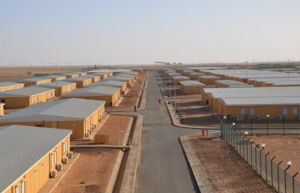
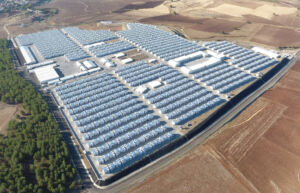
Workforce camps deployed in such environments often function as self-contained communities, providing housing, services, and utilities for personnel operating far from established towns.
Dorçe Prefabrik has extensive experience delivering modular infrastructure solutions for remote industrial environments. Through integrated engineering, prefabricated steel building technologies, and turnkey EPC delivery capabilities, Dorçe develops scalable workforce accommodation systems that support energy and infrastructure projects operating in challenging climates. By combining factory-based manufacturing with efficient logistics planning and rapid installation methods, Dorçe enables large workforce housing settlements to be deployed quickly while maintaining high standards of durability, safety, and operational performance.
Tags
Tags