
Strategic Camp Locations in Libya: Connecting Tripoli Logistics to Remote Oil Fields
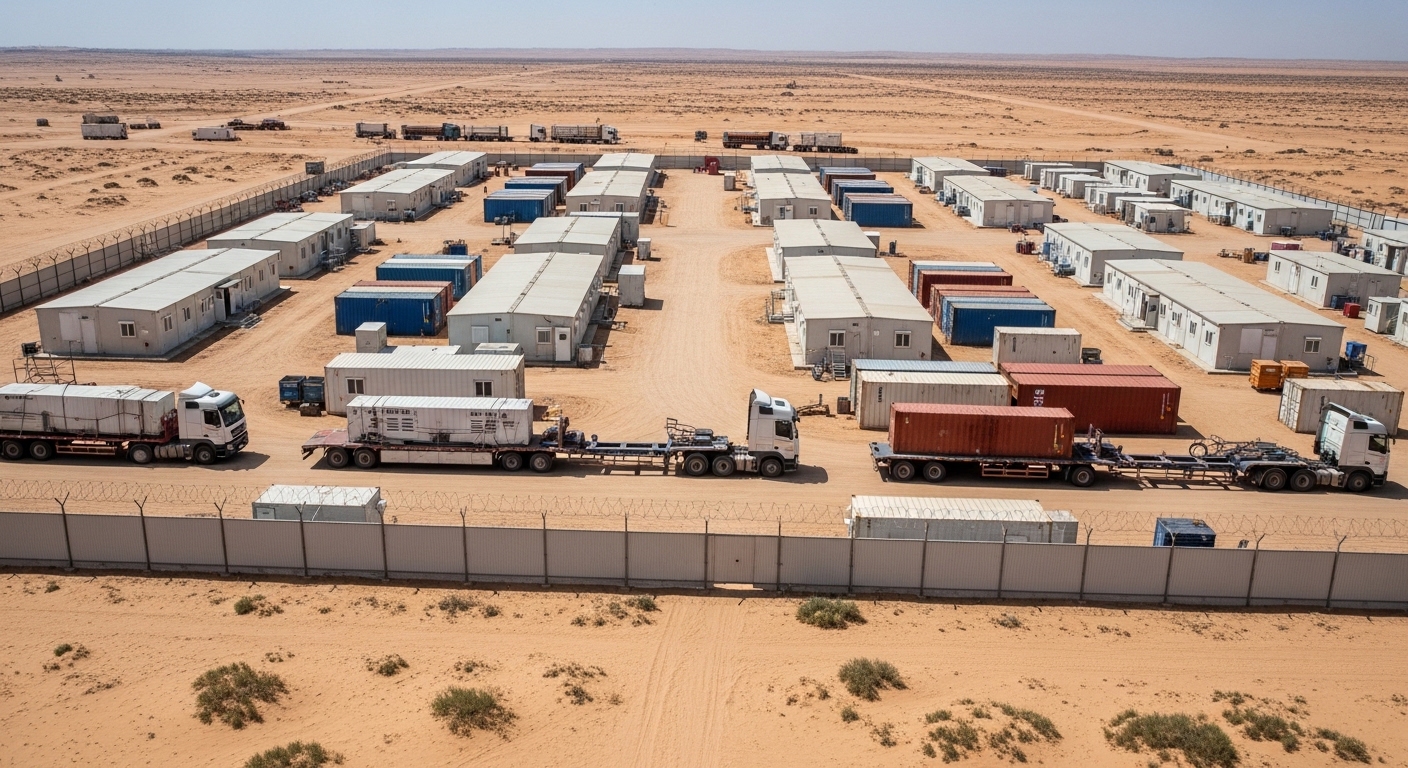
Libya’s upstream oil and gas sector operates across geographically dispersed basins where logistics, infrastructure, and security conditions vary significantly. As NOC Libya tenders increasingly target production recovery, exploration expansion, and infrastructure rehabilitation, the placement of man camps, Life Support Areas (LSA), and workforce housing has become a strategic decision rather than a temporary construction task. Strategic camp locations act as operational bridges, linking the Tripoli logistics base with remote oil fields such as the Sirte Basin and Murzuq Basin.
For operators, EPC contractors, and Turkish contractors in Libya, the ability to plan, fabricate, and mobilize modular construction solutions efficiently across these corridors directly impacts project viability.
Libya’s Oil Geography and Infrastructure Corridors
Libya’s major oil producing zones are divided into key basins:
• Sirte Basin in the north-central region
• Murzuq Basin in the southwest
• Ghadames Basin in the west
• Offshore Mediterranean blocks
Each region presents distinct logistical profiles. While coastal areas benefit from proximity to Tripoli logistics base and port infrastructure, inland desert operations require extended supply chains and convoy coordination.
Strategic camp placement reduces exposure to:
• Long-distance daily workforce transport
• Fuel inefficiencies
• Security vulnerabilities along transit routes
• Delays caused by desert road conditions
The Role of Tripoli Logistics Base
Tripoli serves as the primary import and staging hub for oil field accommodation, temporary site facilities, and modular construction systems. Its advantages include:
• Access to maritime shipping routes
• Customs clearance infrastructure
• Warehousing and consolidation facilities
• Fabrication and pre-assembly zones
• Centralized procurement and material control
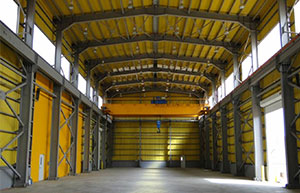
Most prefabricated buildings, blast-resistant containers, and camp modules are either imported through or fabricated near the Tripoli logistics base before inland transport.
Effective camp strategy begins in Tripoli, not in the desert.
Camp Typologies in Libyan Oil Operations
Strategic camp planning depends on operational duration and project phase.
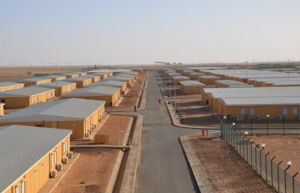
Forward Operating Man Camps
Located closest to drilling rigs or production clusters, these camps support:
• Drilling crews
• Well intervention teams
• Maintenance personnel
• Security units
They prioritize rapid mobilization and high thermal insulation due to extreme desert temperatures.
Centralized Life Support Areas (LSA)
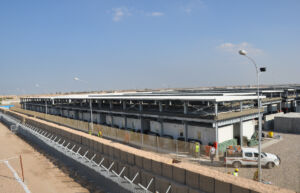
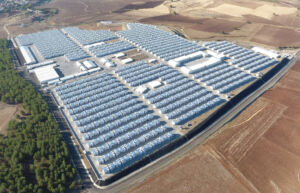
LSAs function as multi-service hubs for larger field developments.
Core components include:
• Workforce housing blocks
• High-capacity dining halls
• Medical clinics
• Workshops and technical units
• Laundry and sanitation buildings
• Recreation facilities
These camps often operate for multi-year production programs.
Transit and Staging Camps
Located between Tripoli and inland basins, transit camps reduce convoy pressure and support phased mobilization. They enable:
• Equipment staging
• Temporary workforce accommodation
• Maintenance checkpoints
• Fuel and supply redistribution
Transit locations significantly reduce operational risk in extended desert corridors.
Sirte Basin Camp Strategy
The Sirte Basin benefits from relatively improved road networks compared to southern basins. Strategic placement here typically focuses on:
• Proximity to pipeline infrastructure
• Access to coastal export terminals
• Reduced daily transport distances
Modular construction is frequently used to expand capacity quickly in response to NOC Libya tenders focused on production increases.
Murzuq Basin Camp Strategy
Murzuq operations require more robust logistics planning due to distance from coastal infrastructure.
Strategic considerations include:
• Convoy scheduling and security coordination
• Sandstorm-resistant prefabricated buildings
• Integrated water and power generation systems
• Reduced reliance on daily supply runs
Turnkey EPC delivery models are particularly effective in Murzuq due to minimized contractor interface risks.
Modular Construction as a Strategic Enabler
Traditional construction methods expose projects to significant schedule and environmental risk in Libya’s remote basins. Modular construction addresses these constraints through:
• Off-site fabrication at controlled facilities
• Reduced on-site labor requirements
• Shorter desert installation periods
• Predictable structural performance
• Enhanced durability against sand and heat
Prefabricated buildings can be engineered for:
• High insulation performance
• Fire-rated partitions
• Blast-resistant applications
• Flexible expansion
Rapid mobilization ensures drilling schedules remain aligned with operational milestones.
Workforce Housing and Oil Field Accommodation Standards
Modern oil field accommodation must balance durability with habitability. Strategic camp planning includes:
• Insulated sleeping quarters
• Ventilated mechanical systems
• Redundant power supply
• Wastewater treatment integration
• Secure perimeter planning
Life Support Areas designed with modular construction allow phased expansion in alignment with production growth.
Blast-Resistant and Secure Infrastructure
Certain strategic oil locations require enhanced protective solutions.
• Blast-resistant containers for control rooms
• Reinforced accommodation modules
• Segregated hazardous storage zones
• Controlled access checkpoints
These systems comply with international oil and gas HSE expectations and align with global contractor standards.
Turkish Contractors in Libya and ENR Top 250 Experience
Turkish contractors in Libya have decades of experience navigating the country’s infrastructure and logistics landscape. Many ENR Top 250 contractors maintain established supply networks and operational familiarity in Libyan energy projects.
This presence provides:
• Knowledge of inland transport routes
• Local subcontractor coordination
• Experience with regulatory requirements
• Adaptation to desert climatic extremes
Such expertise strengthens the execution of NOC Libya tenders and field accommodation programs.
Dorçe Prefabrik Capabilities in Libya
Dorçe Prefabrik delivers modular construction and prefabricated building solutions designed specifically for remote oil field operations.
Key capabilities include:
• Design and engineering of man camps and Life Support Areas
• Rapid mobilization through off-site manufacturing
• Blast-resistant container systems
• Workforce housing for desert climates
• Turnkey EPC execution from Tripoli logistics staging to inland installation
Dorçe integrates design, production, transport, and site installation under a single operational framework, minimizing schedule fragmentation.
Conclusion: Infrastructure Placement as an Operational Multiplier
In Libya’s oil and gas sector, strategic camp location is as critical as drilling technology. Connecting Tripoli logistics base to remote oil fields through structured modular construction planning ensures:
• Reduced logistical exposure
• Faster mobilization
• Lower operational risk
• Improved workforce stability
• Scalable infrastructure for long-term production
As NOC Libya tenders continue to stimulate upstream investment, modular construction remains a decisive tool for transforming logistical complexity into operational efficiency. Companies that align camp placement strategy with robust prefabricated building systems gain a measurable advantage in Libya’s evolving energy landscape.
Tags
Tags