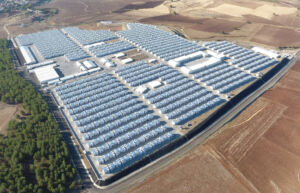
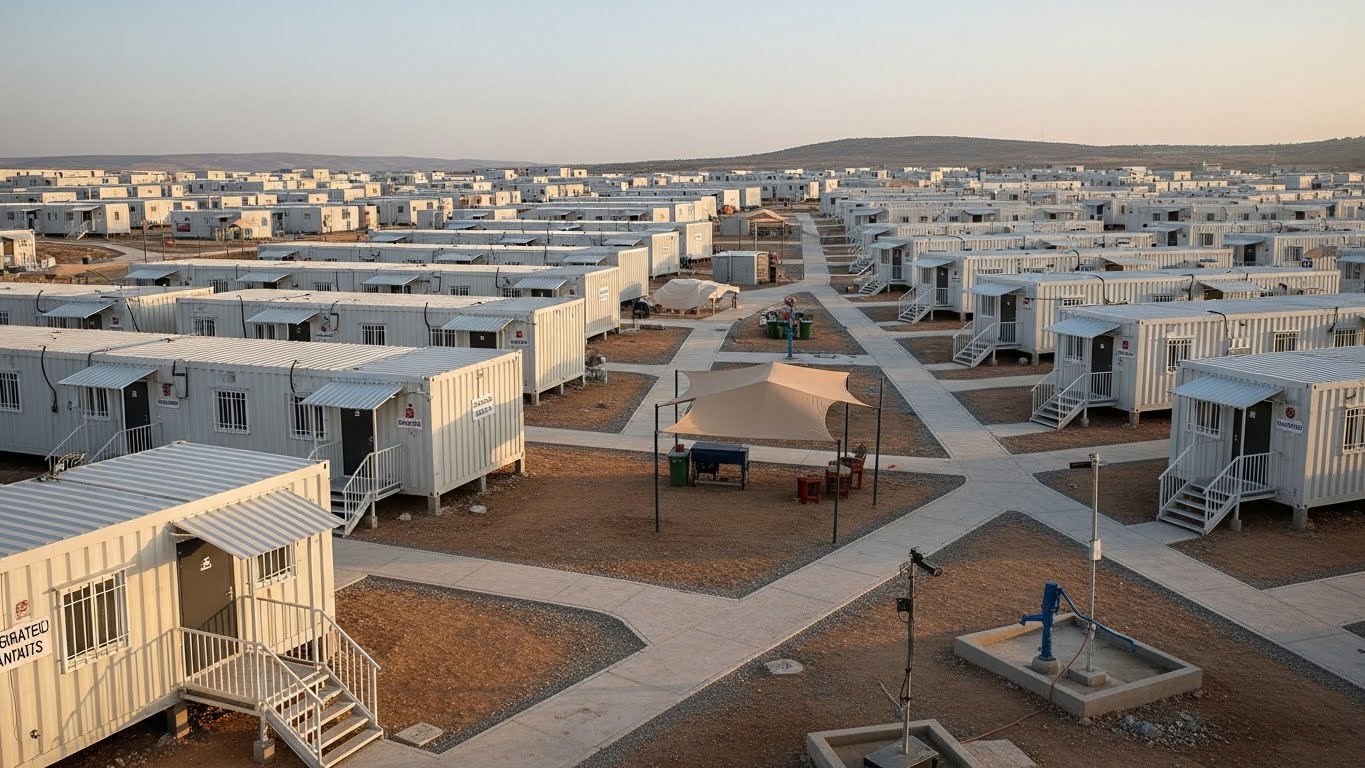
Refugee settlements in Syria have evolved from short term emergency responses into long term living environments for millions of displaced people. What were once tent based camps designed for temporary shelter now function as permanent communities requiring durability, hygiene, security, and social infrastructure. In this context, upgrading from tents to prefabricated container systems has become a critical step toward sustainability, dignity, and long term resilience. Prefab container settlements offer a structured and scalable alternative that responds to both humanitarian needs and operational realities on the ground.
Unlike tents, which degrade quickly and offer limited protection from climate extremes, prefabricated container units are engineered buildings. They provide controlled living conditions, improved sanitation, and the ability to integrate essential services, making them suitable for extended use in complex and fragile environments such as Syria.
What Are Sustainable Refugee Settlements?
Sustainable refugee settlements are planned living environments designed to support displaced populations over extended periods while maintaining acceptable standards of safety, hygiene, and comfort. These settlements move beyond emergency shelter by incorporating durable housing units, infrastructure networks, and community facilities.
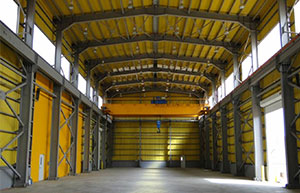
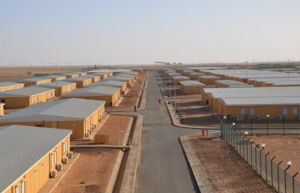
Prefab container based settlements form the backbone of this approach. Units are manufactured in factory environments with integrated structural systems, insulation, electrical infrastructure, and sanitary provisions. They can be deployed rapidly, arranged in organized layouts, and connected to centralized water, power, and wastewater systems. This enables camps to function as stable communities rather than temporary encampments.
In Syria, where displacement has persisted for years, sustainability also means reducing maintenance demands, improving energy efficiency, and creating environments that can adapt to seasonal and demographic changes.
Advantages
- Upgrading from tents to prefabricated container units delivers significant sector specific advantages.
- Durability and lifespan are substantially improved. Steel container units withstand heat, wind, rain, and long term exposure far better than fabric based shelters.
- Thermal comfort is enhanced through insulated walls, roofs, and floors. This reduces exposure to extreme temperatures and lowers health risks for vulnerable populations.
- Hygiene and sanitation standards improve through integrated WC, shower, and handwashing units, reducing disease transmission and supporting public health.
- Safety and security are increased with lockable doors, rigid structures, and organized settlement layouts that improve control and visibility.
- Operational efficiency is achieved through standardized units that simplify maintenance, replacement, and expansion as populations change.
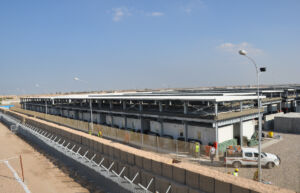
- Infrastructure integration becomes possible. Container settlements can support schools, clinics, distribution centers, and administrative buildings within the same modular system.
Usage Areas
Prefab container settlements in Syria support a wide range of humanitarian and social functions.
- Family accommodation units for long term displacement
- Sanitary containers including WC, shower, and laundry facilities
- Medical clinics and basic healthcare units
- Temporary schools and child friendly spaces
- Food distribution and storage facilities
- Administrative and coordination offices
- Technical units for power generation, water storage, and waste treatment
These elements can be deployed incrementally, allowing settlements to grow and improve without disrupting existing living arrangements.
Dorçe’s Difference
Dorçe brings extensive experience in delivering prefabricated container settlements for humanitarian and crisis affected regions. With a strong background in large scale camps, modular housing, and life support infrastructure, Dorçe understands the operational, logistical, and social challenges of long term displacement environments.
Dorçe’s prefab container solutions are engineered for durability, climate performance, and efficient installation. Units are produced with high quality materials, robust structural systems, and factory integrated electrical and sanitary infrastructure. Layouts are designed to support safe circulation, service access, and future expansion.
By managing design, engineering, manufacturing, logistics, installation, and commissioning under a single integrated delivery model, Dorçe ensures consistency, speed, and accountability. This approach is particularly important in Syria, where access constraints and limited resources demand reliable and low maintenance solutions.
Upgrading refugee settlements from tents to prefabricated containers is not only a technical improvement but a humanitarian imperative. Through sustainable prefab container settlements, Dorçe supports displaced communities in Syria by delivering safer, more dignified, and resilient living environments that respond to immediate needs while creating a foundation for long term stability.