
The Evolution of Modular Construction: From Temporary Shelters to Permanent High-Rises
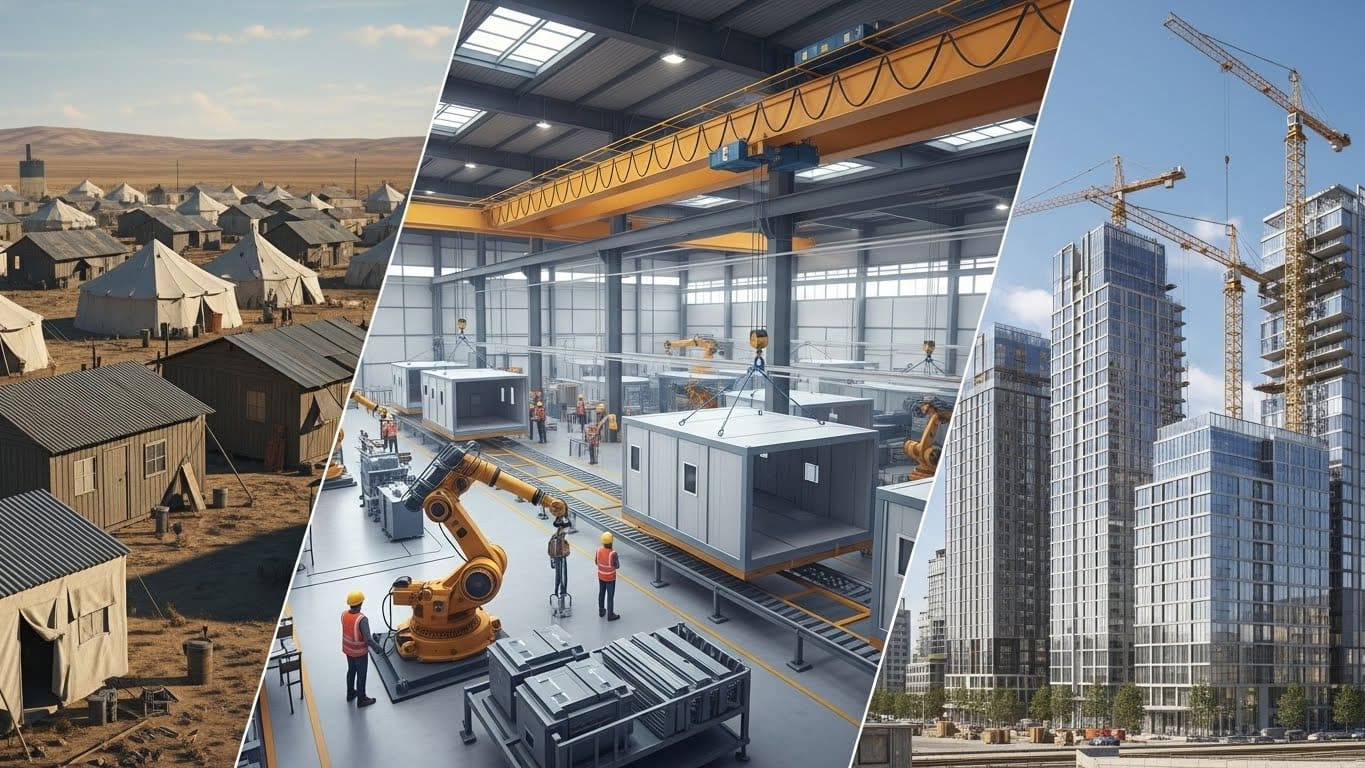
Modular construction has undergone one of the most significant technological transformations in the built environment over the last century. What began as a practical solution for temporary shelters and emergency accommodation has expanded into a sophisticated industrialized construction methodology capable of delivering hospitals, schools, industrial facilities and even multi story high rise buildings. This evolution reflects growing demand for speed, precision, sustainability and scalable building solutions across global markets. Today, modular construction sits at the intersection of modern manufacturing, digital engineering and advanced logistics, offering unprecedented control over cost, time and performance.
Early Beginnings: Temporary and Emergency Structures
The origins of modular construction trace back to wartime and post disaster housing needs. Temporary shelters were developed for rapid deployment, mobility and cost efficiency. These early units relied on simple framing, panelized systems and minimal insulation. Their value was purely functional, providing quick accommodation for displaced populations, military personnel or workers on remote sites.
At this stage, modular buildings were intentionally temporary. They lacked long term structural durability, advanced mechanical systems or architectural sophistication. However, they introduced the key concept that buildings could be manufactured, transported and assembled rather than constructed entirely on site.
Industrial Expansion: Workforce Camps and Remote Infrastructure
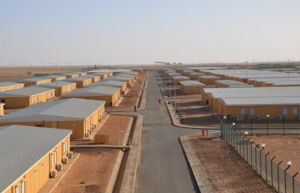
As industrial activity expanded globally, modular construction found its next major application in resource extraction, infrastructure development and large scale workforce housing. Mining operations, oil and gas facilities and large civil engineering projects required rapid mobilization of thousands of workers in remote locations where traditional construction was impractical.
Modular systems evolved to deliver:
• Worker dormitories
• Site offices and administrative buildings
• Dining facilities and commercial kitchens
• Sanitary units and utility infrastructure
• Technical buildings and containerized power systems
These solutions demonstrated that modular buildings could be robust, scalable and long lasting. Improved insulation, heavier steel framing, advanced HVAC integration and standardized footprints paved the way for modular systems to be seen as viable long term assets rather than disposable structures.
The Digital Revolution: Modern Methods of Construction
The next stage in modular construction’s evolution emerged alongside the rise of digital engineering. The integration of BIM, DfMA (Design for Manufacture and Assembly), automated production lines and parametric design transformed modular construction into a precision manufacturing discipline.
Key advancements included:
• CNC cut steel and timber frames
• Fully integrated MEP modules
• High performance façades and glazing systems
• Factory installed fire protection and acoustic systems
• Robotic welding, assembly automation and advanced QA processes
• Standardized building platforms enabling mass customization
These upgrades unlocked modular construction’s potential for permanent, code compliant, architecturally sophisticated buildings.
Modular Construction Enters the Mainstream
By the 2000s and 2010s, the global construction market began adopting modular solutions for competitive advantages in time, safety and consistency. Governments facing housing shortages, healthcare capacity challenges and ambitious infrastructure programs turned to modular construction for large scale deployment.
Sectors now relying heavily on permanent modular buildings include:
• Education: classrooms, school wings, campus buildings
• Healthcare: clinics, surgical units, diagnostic centres
• Residential: mid rise apartment blocks, student housing, co living
• Hospitality: hotels and extended stay accommodations
• Industrial and energy: technical rooms, data centres, BESS units
• Public facilities: police stations, community centres, administrative buildings
Performance improvements, strong warranties, design flexibility and proven track records gradually shifted public perception away from “temporary units” toward “high quality industrialized buildings”.
The Leap to High-Rise Modular Construction
One of the most transformative milestones has been the rise of volumetric modular high-rise buildings. Advances in structural engineering, lightweight steel framing, seismic performance and connection detailing have enabled modular towers exceeding 30, 40 and even 50 stories in some markets.
These high rise modular buildings demonstrate:
• Fully finished modules stacked around reinforced concrete or steel cores
• Hybrid systems combining volumetric units with precast or steel frames
• Improved acoustic and fire performance for multi-unit structures
• Significant reductions in onsite labour and construction noise
• Greater schedule certainty in dense urban areas
• Safer and more predictable erection processes
Modular skyscrapers are now viable assets in major cities, bringing manufacturing efficiency to urban construction.
Why Modular Construction Will Continue to Expand
Several global trends are accelerating the shift toward modular systems:
Severe Skilled Labour Shortages
Traditional construction relies heavily on trades that are aging out of the workforce. Modular factories require fewer, more specialized workers, reducing labour risk.
Demand for Speed and Predictability
Public and private developers prioritize schedule certainty. Modular construction reduces weather delays, improves sequencing and compresses programme durations.
Sustainability and Carbon Reduction
Factory precision minimizes waste, enhances airtightness and supports low carbon building materials. Fewer site deliveries reduce emissions.
Standardization at Scale
Large organisations can deploy standard building platforms across multiple sites, lowering cost and simplifying operation.
Urbanization and Density
Cities need fast, low disruption construction methods for infill and redevelopment projects. Modular solutions minimize site disturbance and noise.
Conclusion
Modular construction has evolved from an emergency shelter solution to a powerhouse of modern building technology. Today, it delivers high quality permanent buildings across nearly every sector and is setting new benchmarks for safety, speed, sustainability and cost control. From temporary camps to high rise towers, modular construction has proven its capacity to reshape the built environment through industrial precision and digital integration.
As the global construction industry shifts toward industrialized, off site manufacturing, modular construction will continue expanding into new markets and building types. The future of construction lies in scalable, repeatable and digitally enabled systems, and modular construction stands as the leading force driving that transformation.