
The Future of Humanitarian Aid: The Role of Modular Construction in Crisis Management
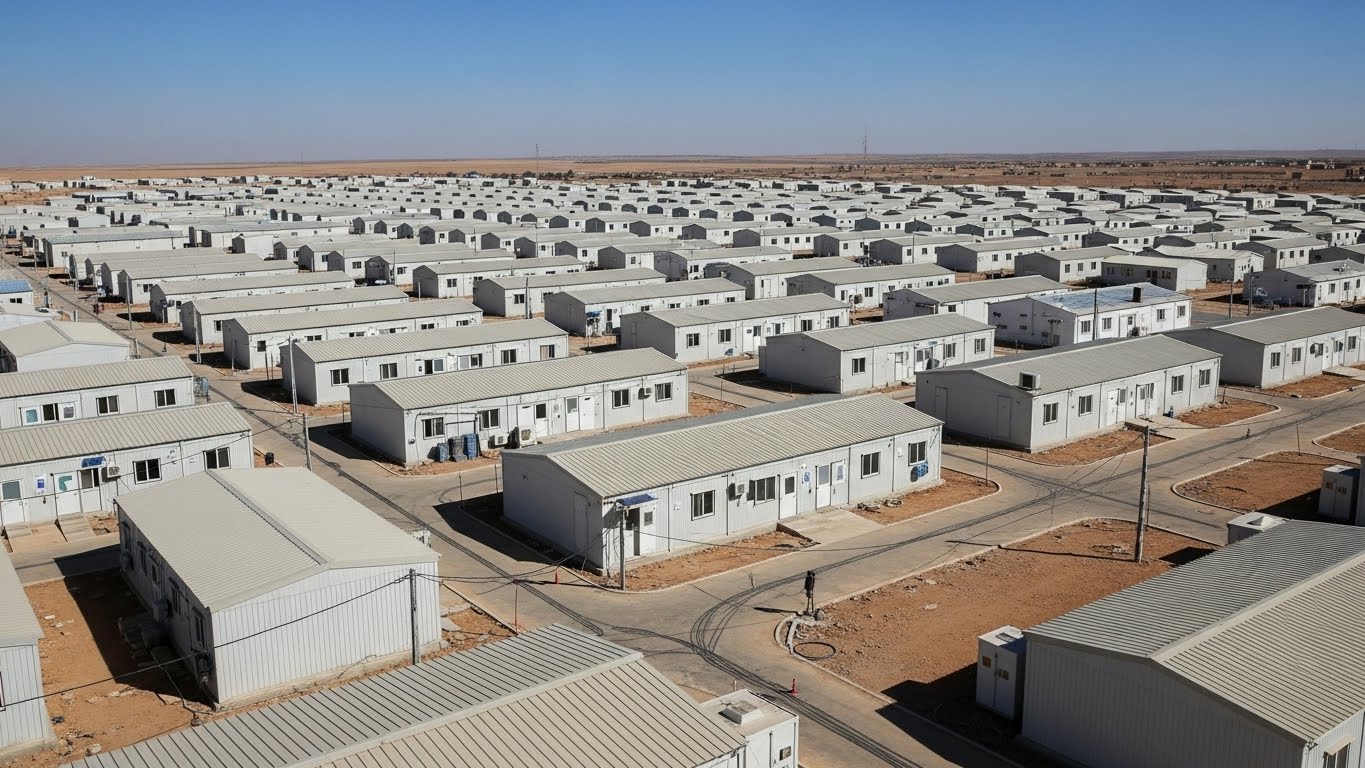
Humanitarian aid is undergoing a fundamental transformation. Prolonged conflicts, climate related disasters, mass displacement, and fragile infrastructure are pushing response systems beyond short term emergency models. Today’s crises demand solutions that are not only fast but also scalable, durable, and capable of supporting communities for months or even years. In this evolving landscape, modular construction is emerging as one of the most influential tools shaping the future of crisis management, redefining how shelter, healthcare, education, and life support infrastructure are delivered.
Unlike traditional emergency responses that rely heavily on tents and temporary facilities, modular construction introduces an industrialized, systems based approach. By shifting production away from unstable sites and into controlled factory environments, humanitarian actors gain speed, predictability, and quality control at a scale that conventional methods cannot achieve.
What Is Modular Construction in Humanitarian Crisis Management?
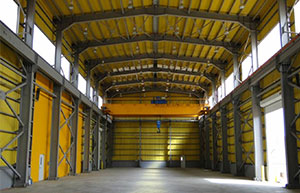
Modular construction in humanitarian aid refers to the offsite manufacturing of standardized building units that are rapidly transported and assembled in crisis affected areas. These units are designed as complete functional spaces, integrating structure, insulation, electrical systems, plumbing, and ventilation before deployment.
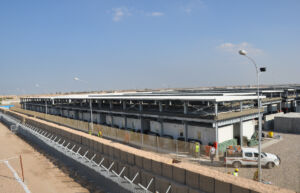
In crisis management, modular systems are used to deliver housing, medical facilities, schools, sanitation units, command centers, and technical infrastructure. Their standardized nature allows rapid replication, while flexible layouts enable adaptation to different terrains, climates, and population sizes. This approach supports both immediate emergency response and longer term recovery, bridging the gap between relief and reconstruction.
Advantages
- Modular construction delivers strategic advantages that are redefining humanitarian operations.
- Speed and readiness are critical. Modular facilities can be produced in parallel with site preparation, enabling deployment timelines measured in days or weeks rather than months.
- Scalability allows humanitarian responses to grow with demand. Camps and facilities can expand incrementally without disrupting ongoing operations or requiring redesign.
- Quality and compliance are ensured through factory controlled production. This is particularly important for healthcare, sanitation, and education facilities that must meet strict international standards.
- Logistical efficiency improves access to hard to reach regions. Flat pack systems, containerized modules, and air transportable designs optimize delivery through limited corridors.
- Durability and climate performance support long term use. Modular buildings are engineered for extreme heat, cold, wind, and dust, making them suitable for prolonged displacement scenarios.
- Risk reduction is achieved by minimizing onsite labor and shortening exposure in unstable or high risk environments.
Usage Areas
Modular construction now plays a central role across the full spectrum of humanitarian aid activities.
- Emergency and transitional housing for displaced populations
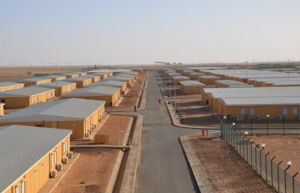
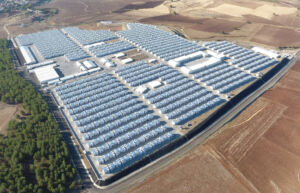
- Large scale refugee and displacement camps
- Field hospitals, clinics, and mobile healthcare facilities
- Sanitation, hygiene, and water management units
- Temporary and semi permanent schools and training centers
- Administrative, coordination, and command facilitiesLife support infrastructure including power, water, and waste systems
These applications can be deployed individually or integrated into fully planned humanitarian settlements that function as complete communities.
Dorçe’s Difference
Dorçe brings decades of experience in delivering modular solutions for humanitarian, defense, energy, and infrastructure projects worldwide. This multidisciplinary background allows Dorçe to approach crisis management not only as a construction challenge but as an operational system requiring speed, resilience, and long term reliability.
Dorçe’s modular humanitarian solutions are engineered for rapid deployment, high durability, and efficient operation. Buildings are produced with robust structural systems, high performance insulation, and factory integrated MEP infrastructure to ensure immediate functionality upon installation. Settlement layouts are designed to support phased expansion, efficient circulation, and integrated services.
By managing design, engineering, manufacturing, logistics, installation, and commissioning under a single turnkey delivery model, Dorçe provides accountability and control in complex humanitarian operations. This integrated approach reduces coordination risk and enables faster, more reliable responses across diverse crisis environments.
The future of humanitarian aid depends on solutions that can adapt to scale, complexity, and duration. Modular construction is no longer an alternative but a strategic necessity in crisis management. Through advanced modular systems and integrated delivery, Dorçe supports humanitarian organizations and governments in building faster, safer, and more resilient responses that protect lives today while laying the foundation for sustainable recovery tomorrow.