
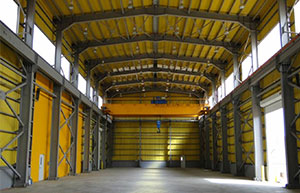
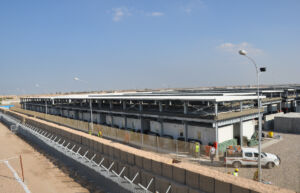
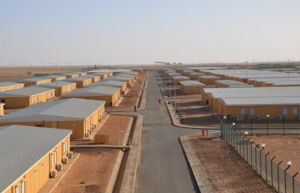
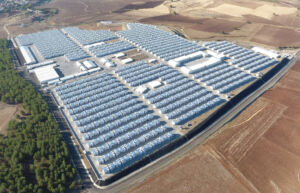
The Future of Remote Housing: Smart Modular Cities for the Alaska Energy Corridor
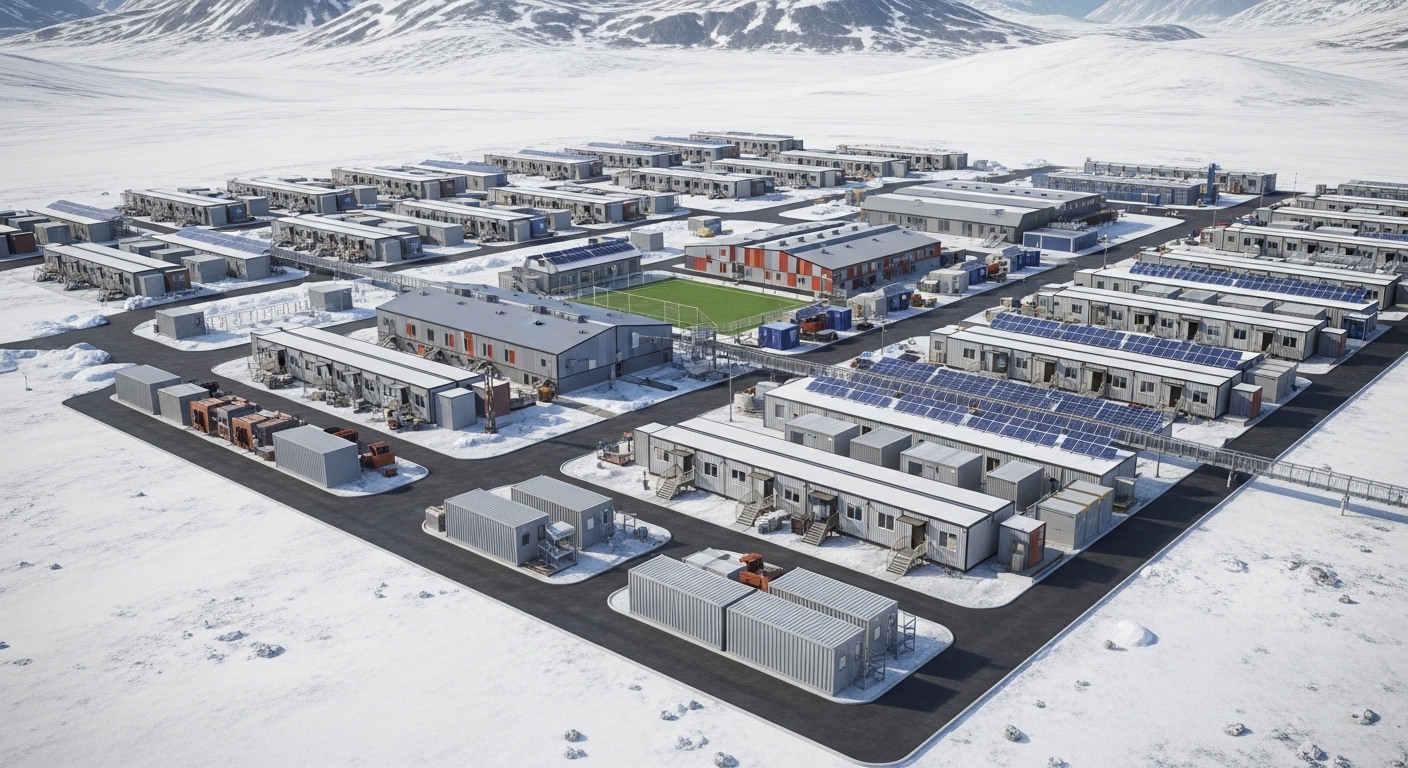
Alaska’s expanding energy corridor, driven by large-scale LNG developments, pipeline infrastructure, mining operations, and renewable energy initiatives, is creating an unprecedented demand for remote workforce accommodation. Unlike traditional temporary camps used in earlier industrial projects, the next generation of workforce housing must function as highly efficient, technologically integrated communities capable of supporting thousands of workers over extended project timelines. These emerging settlements are increasingly referred to as smart modular cities: scalable, digitally managed, and energy-efficient modular infrastructures designed for remote industrial environments.
In Alaska, where logistics, climate, and environmental protection requirements present unique constraints, modular construction combined with intelligent infrastructure systems offers a practical path forward for sustainable workforce housing.
Alaska’s Energy Corridor and the Demand for Large Workforce Settlements
The Alaska energy corridor includes multiple strategic development zones linked to oil, gas, and mineral extraction. Major projects such as LNG export terminals, long-distance pipeline construction, mining expansions, and Arctic energy developments require thousands of personnel during peak construction phases.
Typical workforce demands for large projects include:
• Construction crews during peak infrastructure deployment
• Technical and engineering staff supporting commissioning and operations
• Logistics personnel managing transport and supply chains
• Maintenance and operational teams supporting long-term facility performance
These projects may require accommodation for several hundred to several thousand workers simultaneously, often in locations far removed from established towns.
From Temporary Camps to Modular Communities
Historically, remote workforce camps were designed primarily as temporary accommodations. However, modern projects increasingly require long-term settlements capable of supporting workforce populations for many years.
Modern modular settlements now incorporate:
• Permanent-grade accommodation buildings
• Central dining and food service facilities
• Medical clinics and emergency response centers
• Recreation and wellness infrastructure
• Office buildings and operational control centers
• Utility infrastructure including power generation and water treatment
These integrated facilities transform remote camps into functioning communities capable of supporting large populations.
What Defines a Smart Modular City
A smart modular city is not simply a collection of prefabricated buildings. It is a fully integrated infrastructure system where buildings, utilities, and digital management technologies work together to optimize performance.
Core characteristics include:
• Modular buildings designed for scalable expansion
• Centralized utility systems supporting energy, water, and waste management
• Digital monitoring systems for infrastructure performance
• Smart energy management through microgrid systems
• Integrated logistics and supply chain coordination
These systems allow operators to manage workforce settlements more efficiently while improving sustainability and resilience.
Digital Infrastructure and Smart Camp Management
Modern workforce settlements increasingly rely on digital technologies to monitor and optimize infrastructure performance.
Smart modular camps may integrate:
• Building management systems controlling heating, ventilation, and lighting
• Energy monitoring systems tracking consumption across the camp
• Predictive maintenance tools for generators and mechanical systems
• Smart access control and security systems
• Data-driven logistics and supply chain coordination
These technologies help operators reduce operational costs while improving safety and reliability.
Microgrids and Energy Resilience
Energy generation is one of the most critical challenges for remote settlements in Alaska. Smart modular cities integrate hybrid microgrid systems that combine multiple energy sources to improve efficiency and reliability.
Typical microgrid components include:
• Diesel or gas-powered generator systems
• Solar photovoltaic installations during extended daylight seasons
• Battery energy storage systems for load balancing
• Intelligent grid management systems
By optimizing energy production and consumption, these systems reduce fuel dependency and improve overall camp sustainability.
High-Performance Modular Building Design
Extreme cold temperatures require buildings capable of maintaining stable indoor conditions throughout long winter seasons. Smart modular settlements rely on high-performance building envelopes designed for Arctic environments.
Key building features include:
• High-insulation wall and roof assemblies
• Airtight construction techniques
• Energy-efficient windows and doors
• Heat recovery ventilation systems
These technologies reduce heating demand and improve indoor comfort for workers living in remote environments.
Scalable Infrastructure for Multi-Phase Projects
Large energy and mining developments typically evolve through several stages, including exploration, construction, and long-term operations.
Smart modular settlements are designed with scalability in mind, allowing infrastructure to grow alongside project needs.
Scalable infrastructure may include:
• Additional accommodation modules for expanding workforce populations
• Expansion of dining and recreation facilities
• Modular healthcare and medical infrastructure
• Additional power generation and energy storage capacity
This flexible approach allows developers to adjust infrastructure capacity without disrupting operations.
Logistics and Supply Chain Integration
Transporting construction materials to remote regions of Alaska can be extremely complex. Smart modular construction simplifies logistics by shifting most building production to controlled manufacturing facilities.
Advantages include:
• Reduced material shipments to the site
• Faster installation once modules arrive
• Lower labor requirements in remote environments
• More predictable construction timelines
These logistical efficiencies significantly improve project delivery in difficult terrain.
Environmental Responsibility and ESG Alignment
Large industrial projects in Alaska operate under strict environmental regulations and increasing ESG expectations from investors and regulators.
Smart modular cities support sustainability goals by:
• Reducing construction waste through off-site manufacturing
• Minimizing land disturbance during installation
• Improving energy efficiency through advanced building systems
• Supporting renewable energy integration
These features help projects maintain compliance while reducing environmental impact.
Dorçe Prefabrik Capabilities in Large Modular Infrastructure
Dorçe Prefabrik has extensive experience delivering modular infrastructure solutions for large-scale industrial projects. The company specializes in prefabricated modular construction systems designed for energy, mining, defense, and infrastructure sectors operating in challenging environments.
Dorçe capabilities include:
• Engineering and production of modular workforce accommodation systems
• Development of integrated Life Support Areas for large industrial projects
• High-performance modular buildings suitable for extreme climates
• Off-site manufacturing enabling rapid mobilization
• Turnkey EPC project delivery including design, engineering, logistics, installation, and commissioning
These capabilities enable the development of scalable modular settlements capable of supporting large energy infrastructure projects.
As Alaska’s energy corridor continues to expand, workforce accommodation must evolve from temporary camps into fully integrated infrastructure systems capable of supporting thousands of personnel in remote environments. Smart modular cities represent the future of remote workforce housing by combining industrialized construction, digital infrastructure management, and scalable energy systems. Through advanced modular engineering, integrated logistics capabilities, and turnkey project delivery, Dorçe Prefabrik provides the modular infrastructure solutions required to support the next generation of large-scale energy and industrial developments across Alaska’s remote regions.
Tags
Tags