
Urgent Humanitarian Aid: Rapid Deployment Field Hospitals & Shelters for Gaza
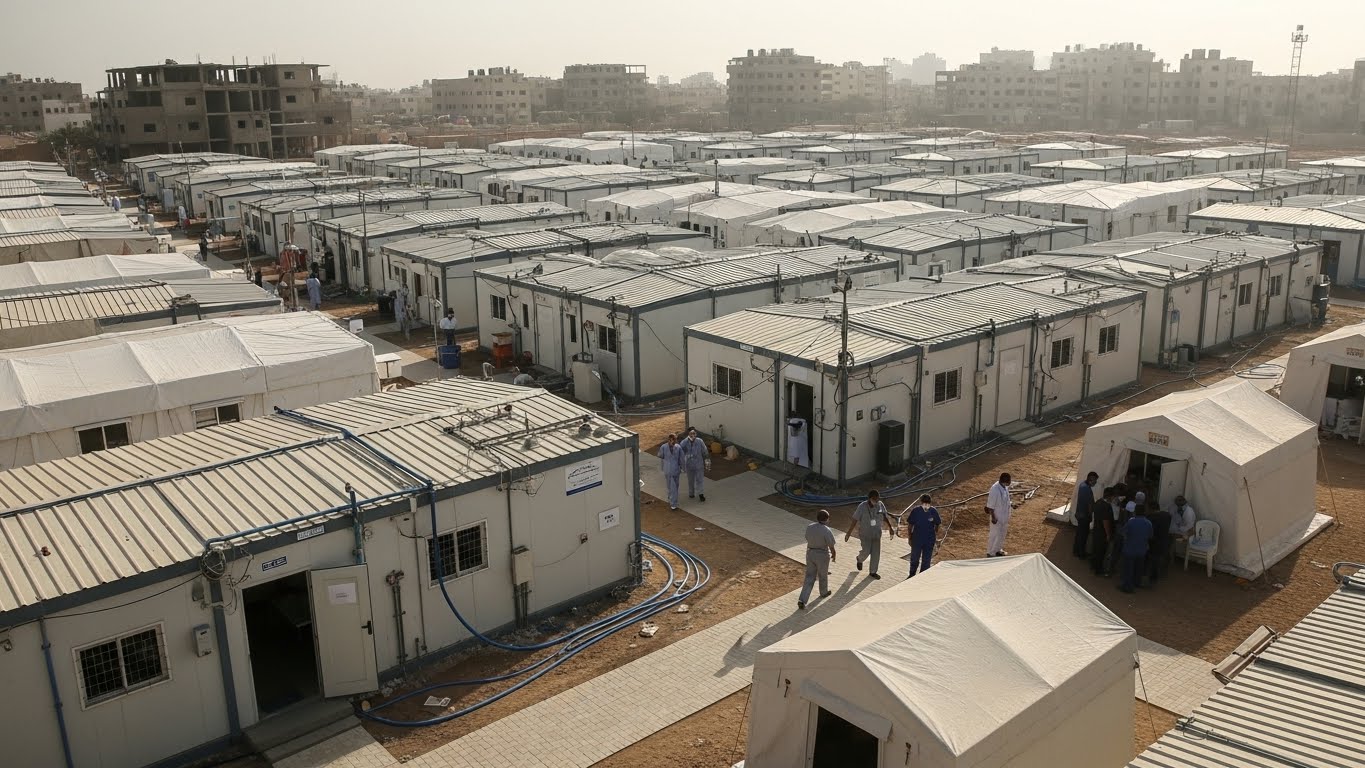
Humanitarian response in Gaza requires construction solutions that can be mobilized immediately, function reliably under extreme pressure, and adapt to rapidly changing conditions. Damage to healthcare infrastructure, shortages of safe shelter, and disruptions to utilities place civilians and aid workers at continuous risk. In this environment, rapid deployment field hospitals and emergency shelter systems play a decisive role in saving lives, stabilizing communities, and restoring access to essential services. Modular and prefabricated construction enables these facilities to be delivered with speed, predictability, and operational resilience that conventional building methods cannot achieve.
Unlike traditional construction, which depends on extended site activities and stable supply chains, prefabricated systems are produced in controlled factory environments and delivered ready for immediate installation. This approach allows humanitarian organizations to respond quickly while maintaining medical standards, hygiene requirements, and structural safety.
What Are Rapid Deployment Field Hospitals and Emergency Shelters?
Rapid deployment field hospitals and emergency shelters are prefabricated modular systems designed to provide immediate medical care and safe accommodation in crisis environments. Field hospitals typically include treatment wards, triage areas, operating rooms, intensive care units, laboratories, pharmacies, and staff facilities. Emergency shelters provide insulated living spaces that protect displaced families from weather exposure while supporting dignity and basic living needs.
These systems are engineered as plug in units with integrated electrical, mechanical, and plumbing infrastructure. They can operate independently using generators, water storage, and wastewater solutions, or be connected to available local networks. Their modular nature allows facilities to expand, relocate, or reconfigure as humanitarian needs evolve.
Advantages
- Rapid deployment modular systems offer critical advantages in humanitarian operations such as Gaza.
- Speed of response is the most important factor. Factory production and standardized designs allow facilities to be deployed within weeks or even days, dramatically reducing the gap between need identification and service delivery.
- Medical compliance and hygiene are ensured through factory controlled installation of finishes, ventilation systems, and infection control measures. This is essential for field hospitals operating in high risk health environments.
- Operational flexibility allows facilities to scale quickly. Additional treatment units, wards, or shelter modules can be added without disrupting ongoing operations.
- Logistical efficiency is achieved through containerized or flat pack transport formats that simplify border crossings and reduce shipment volume.
- Durability and climate performance ensure reliable operation under harsh conditions, including high temperatures, dust exposure, and intermittent utility supply.
- Reduced on site labor lowers safety risks and shortens installation time in sensitive or unstable areas.
Usage Areas
In Gaza, rapid deployment field hospitals and shelters are used across multiple humanitarian functions.
- Emergency and trauma care facilities
- Temporary hospitals supporting overwhelmed local healthcare systems
- Mobile clinics and outpatient treatment units
- Shelters for displaced families and vulnerable populations
- Accommodation for medical staff and aid workers
- Isolation units and infection control facilities
- Support buildings for storage, logistics, and coordination
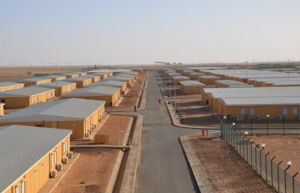
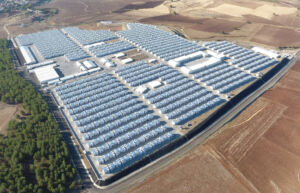
These units can function independently or be combined into integrated humanitarian compounds that deliver healthcare, shelter, and support services in a single coordinated layout.
Dorçe’s Difference
Dorçe brings extensive experience in delivering rapid deployment healthcare facilities and emergency shelter systems in crisis and high risk environments. With a strong background in modular hospitals, field clinics, and large scale camp solutions, Dorçe understands the operational realities of humanitarian response under severe constraints.
Dorçe’s modular field hospitals and shelters are engineered for fast installation, medical compliance, and long term reliability. High performance insulation, robust structural systems, and factory installed MEP infrastructure ensure safe and continuous operation. Medical layouts are designed to support efficient workflows, infection control, and patient safety.
By providing design, engineering, manufacturing, logistics, installation, and commissioning under a single integrated delivery model, Dorçe minimizes coordination delays and ensures accountability. This turnkey capability is critical in Gaza, where time, access, and reliability directly affect humanitarian outcomes.
Urgent humanitarian aid is ultimately about protecting lives and preserving human dignity. Through rapid deployment field hospitals and emergency shelter solutions, Dorçe supports humanitarian organizations by delivering resilient, scalable, and medically compliant facilities that respond immediately to crisis conditions while maintaining the standards required for effective care and safe shelter.