USAID Subcontractor Opportunities Turkey
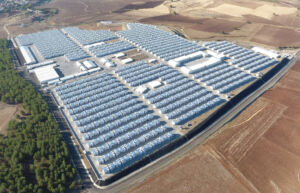
Turkey has become a strategic hub for international development delivery, particularly for programs implemented by the United States Agency for International Development. Its geographic location, advanced industrial base, strong construction and manufacturing capacity, and proximity to high priority regions such as the Middle East, Eastern Europe, Central Asia, and Africa position Turkey as a preferred subcontracting base for USAID funded projects. For Turkish companies operating in construction, modular buildings, logistics, engineering, WASH, energy, and humanitarian infrastructure, USAID subcontractor opportunities provide access to long term, technically complex, and high value international programs.
What are USAID subcontractor opportunities in Turkey?
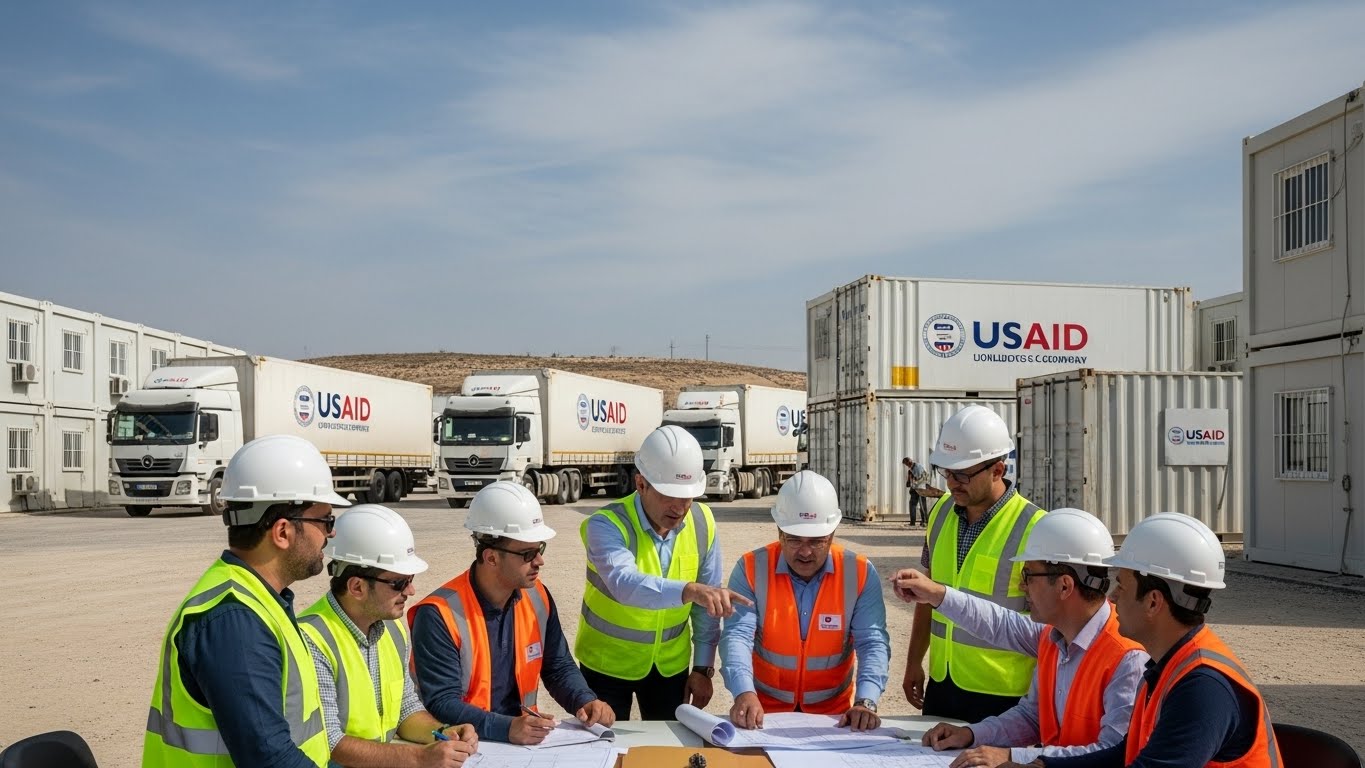
USAID subcontractor opportunities in Turkey refer to contracts awarded indirectly through USAID prime contractors rather than directly by USAID. USAID typically awards large scale contracts and cooperative agreements to international prime contractors such as global engineering firms, humanitarian NGOs, development consortia, and EPC companies. These primes then engage regional and technical subcontractors to execute defined scopes of work.
Turkey based companies are increasingly engaged as subcontractors in areas such as:
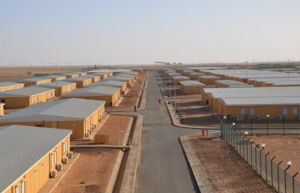
- Modular and prefabricated buildings for humanitarian settlements
• Worker, refugee, and IDP accommodation infrastructure
• WASH systems including sanitation blocks and water treatment solutions
• Medical facilities such as modular clinics and field hospitals
• Logistics, procurement, and regional supply chain management
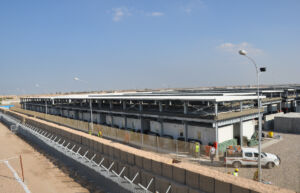
• Construction services for stabilization, recovery, and reconstruction projects
These opportunities are frequently linked to programs in Syria, Ukraine, Gaza, Iraq, Afghanistan, Africa, and Central Asia, where Turkey functions as a production, staging, and logistics hub rather than the final deployment country.
Why Turkey is strategically positioned for USAID subcontracting
Turkey offers a combination of structural advantages that closely align with USAID operational priorities.
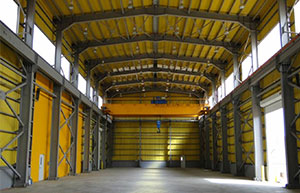
- Manufacturing depth enables rapid, large scale production of modular buildings, steel structures, containers, and technical systems, reducing dependency on distant supply chains and shortening delivery timelines
• Strong logistics reach through ports, highways, rail connections, and air cargo infrastructure supports fast mobilization into complex and high risk regions
• Cost efficiency combined with technical quality allows Turkish suppliers to remain competitive while meeting donor compliance and performance expectations
• Extensive experience in humanitarian and post conflict environments provides practical knowledge of crisis response, refugee settlements, emergency housing, and reconstruction funded by international donors
• High compliance readiness supported by ISO certifications, EN standards, and donor aligned quality, environmental, and HSE systems increasingly expected in USAID funded programs
Typical USAID subcontracting scopes relevant to Turkey
USAID funded programs are multidisciplinary by nature. Subcontractors are selected based on their ability to deliver defined technical scopes reliably, at scale, and under strict reporting requirements.
- In construction and modular infrastructure, subcontractors deliver prefabricated housing units, containerized facilities, clinics, schools, and support buildings designed for rapid deployment
• In WASH and utilities, subcontractors provide sanitation modules, wastewater treatment units, water storage systems, pumping solutions, and camp level infrastructure
• In logistics and procurement, Turkey based subcontractors manage sourcing, kitting, packaging, warehousing, cross border transport, and last mile delivery
• In health and education programs, subcontractors support the construction and installation of clinics, laboratories, mobile classrooms, and training facilities
• In stabilization and recovery projects, subcontractors contribute to transitional housing, community facilities, and infrastructure that bridges emergency response and long term reconstruction
How USAID subcontracting typically works
Understanding the contracting structure is essential for companies seeking to participate successfully.
- USAID awards prime contracts or cooperative agreements to large international organizations responsible for compliance, reporting, and overall program delivery
• Subcontractors are engaged by primes through competitive or negotiated processes based on technical capacity, past performance, compliance systems, pricing, and delivery capability
• Subcontracts may be project specific or structured as framework agreements allowing multiple task orders over several years
• Payment terms, audit requirements, and compliance obligations flow down from the prime contract, requiring subcontractors to meet USAID standards even without direct contractual relationship with USAID
Key compliance and qualification requirements
Although subcontractors do not contract directly with USAID, they remain subject to strict donor expectations.
- Strong financial transparency and traceability, including auditable cost structures
• Compliance with procurement origin and nationality rules applicable to each program
• Environmental and social compliance covering waste management, worker safety, and community impact
• Documented and consistently applied quality assurance systems, particularly for life safety infrastructure such as housing, clinics, and WASH facilities
• Ethics, anti corruption, and sanctions compliance, especially for projects in conflict affected regions
Common mistakes Turkish companies make and how to avoid them
Many technically capable companies fail to access USAID related work due to structural missteps.
- Focusing only on USAID tenders instead of engaging with prime contractors, despite most subcontracting opportunities never being published publicly
• Underestimating documentation and compliance requirements, creating risk exposure for primes
• Presenting domestic project experience without translating it into donor relevant language focused on scale, context, and operational complexity
• Lacking regional logistics and access planning, which weakens credibility in proposals where border constraints and last mile delivery are critical
Dorce’s position in USAID aligned subcontracting
Dorce operates as a Turkey based international delivery partner aligned with the technical, operational, and compliance expectations of USAID funded programs. With extensive experience in modular construction, humanitarian settlements, medical facilities, WASH infrastructure, and large scale workforce accommodation, Dorce supports prime contractors as a reliable execution partner rather than a single product supplier.
Off site manufacturing capacity in Turkey enables rapid production with consistent quality control. Integrated logistics planning supports delivery into constrained and high risk regions. Turnkey capability covering design, engineering, production, transport, installation, and commissioning reduces interface risk and execution uncertainty for prime contractors.
For USAID programs that demand speed, scale, and accountability in crisis and post crisis environments, Turkey based subcontractors with integrated capabilities are increasingly preferred. Within this landscape, Dorce positions itself as a long term partner capable of supporting complex development objectives through robust and deployable infrastructure solutions.