WASH Solutions in Emergency Camps: Sanitation Modules for Gaza
WASH Solutions in Emergency Camps: Sanitation Modules for Gaza
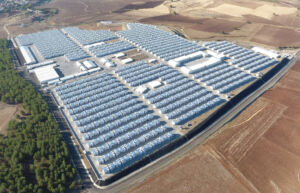
In emergency camps, WASH is the backbone of public health. When sanitation and hygiene systems fail, outbreaks spread fast, living conditions deteriorate, and humanitarian operations lose stability. In Gaza, the challenge is amplified by high population density, damaged water networks, limited access routes, and the need to deploy services rapidly with minimal on-site construction. Modular sanitation units offer a practical and scalable way to establish safe WASH capacity quickly, while keeping quality, durability, and maintainability under control.
What are modular WASH solutions in emergency camps?
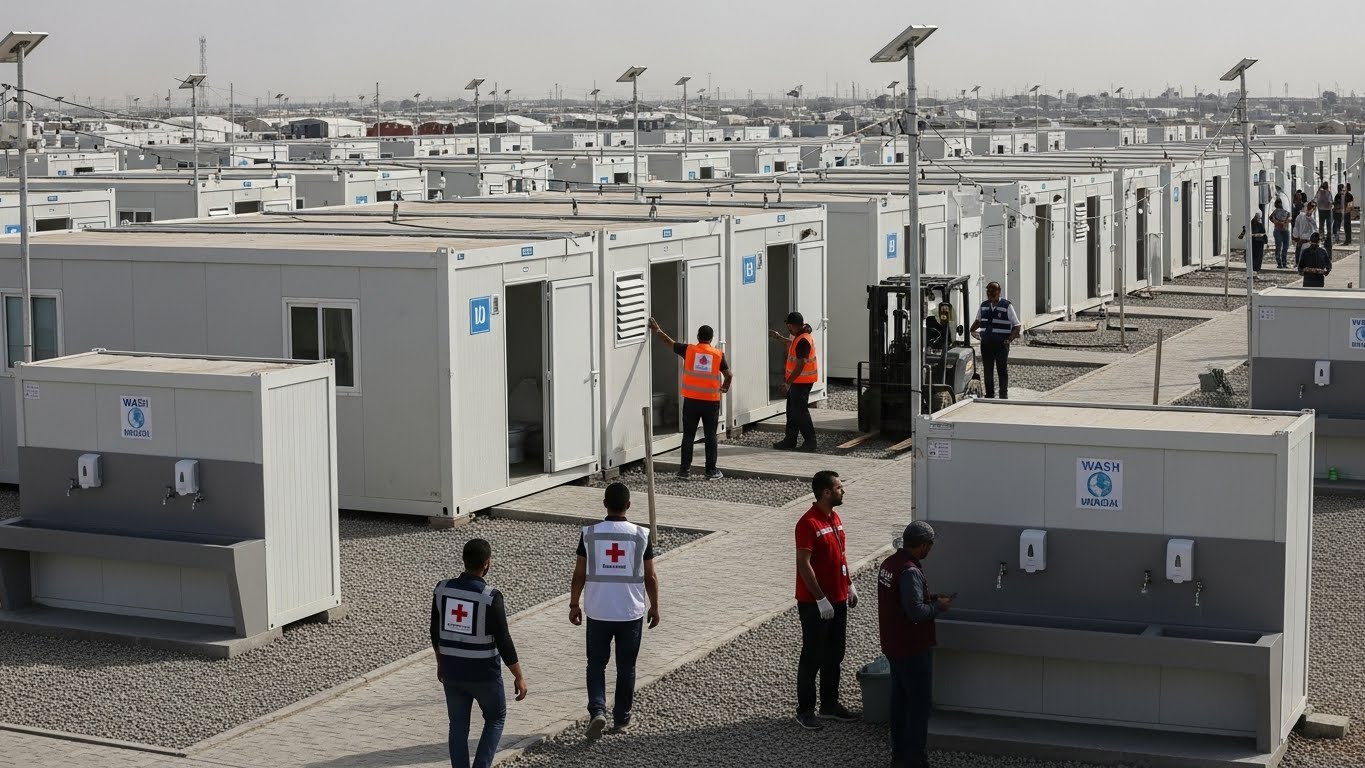
Modular WASH solutions are prefabricated sanitation and hygiene systems designed for rapid deployment and immediate operation. These solutions typically include toilet and shower blocks, handwashing stations, graywater and wastewater management modules, water storage units, and technical rooms for pumps, electrical controls, and monitoring.
Sanitation modules are engineered as standardized systems. They are manufactured off site with integrated plumbing, electrical provisions, and durable interior finishes suitable for heavy daily use. Once delivered to camp sites, modules can be installed quickly and connected to water supply, drainage, and power. Where centralized networks are not available, modular units can be paired with storage tanks, septic systems, or containerized treatment packages.
Advantages
Rapid deployment is essential in Gaza. Prefabricated sanitation modules arrive ready for connection and commissioning, reducing the time required to provide safe toilets, showers, and handwashing points.
Health and hygiene protection improves significantly. Proper separation of clean and dirty zones, durable washable surfaces, controlled ventilation, and reliable water access reduce the risk of contamination and disease spread.
Scalability supports changing population needs. Sanitation capacity can be expanded by adding additional blocks or upgrading treatment systems without interrupting ongoing camp operations.
Quality consistency is easier to maintain. Factory production ensures uniform plumbing installation, reliable sealing, and standardized fittings, reducing leakage, odor issues, and breakdowns common in improvised systems.
Logistics efficiency is achieved through optimized modular formats. Flat pack or containerized systems maximize transport capacity through limited entry routes and simplify staging on site.
Durability under intensive use reduces long term operational burden. Robust materials and engineered layouts extend service life and reduce maintenance frequency, which is critical in constrained environments.
Usage areas
Sanitation modules are deployed across multiple functions in emergency camps in Gaza.
Centralized toilet and shower blocks serving family shelter zones
Handwashing and hygiene stations near food distribution and clinics
Dedicated sanitation units for medical facilities and staff accommodation
Mobile or relocatable WASH blocks for temporary staging areas
Integrated WASH infrastructure for long term transitional settlements
Effective WASH planning also requires smart placement and circulation. Units must be accessible, well lit, and positioned to support safe use, maintenance, and waste collection.
Dorce’s approach
Dorce delivers modular WASH solutions through an integrated sanitation infrastructure model designed for rapid deployment and reliable operation. Sanitation units are engineered for heavy duty use with corrosion resistant components, durable interior finishes, and pre integrated plumbing and electrical systems. Design priorities include user flow, privacy, safe ventilation, and simplified maintenance access.
Logistics considerations are integrated from the start. Units are configured for efficient transport and fast on site installation, allowing camp operators to expand capacity quickly as population numbers change. Where local water and wastewater infrastructure is damaged or unavailable, modular sanitation blocks can be paired with water storage, pumping units, and containerized wastewater management systems to ensure functional independence.
WASH is not a supporting service. It is a core life support system in emergency camps. In Gaza, sanitation modules enable humanitarian actors to establish safe hygiene conditions rapidly while maintaining durability and operational control. Through integrated modular solutions, Dorce supports emergency camp operations with scalable WASH infrastructure that protects public health, improves dignity, and stabilizes daily life in crisis environments.