
Workforce Accommodation Strategies for Major Oil Developments in the National Petroleum Reserve (NPR-A)
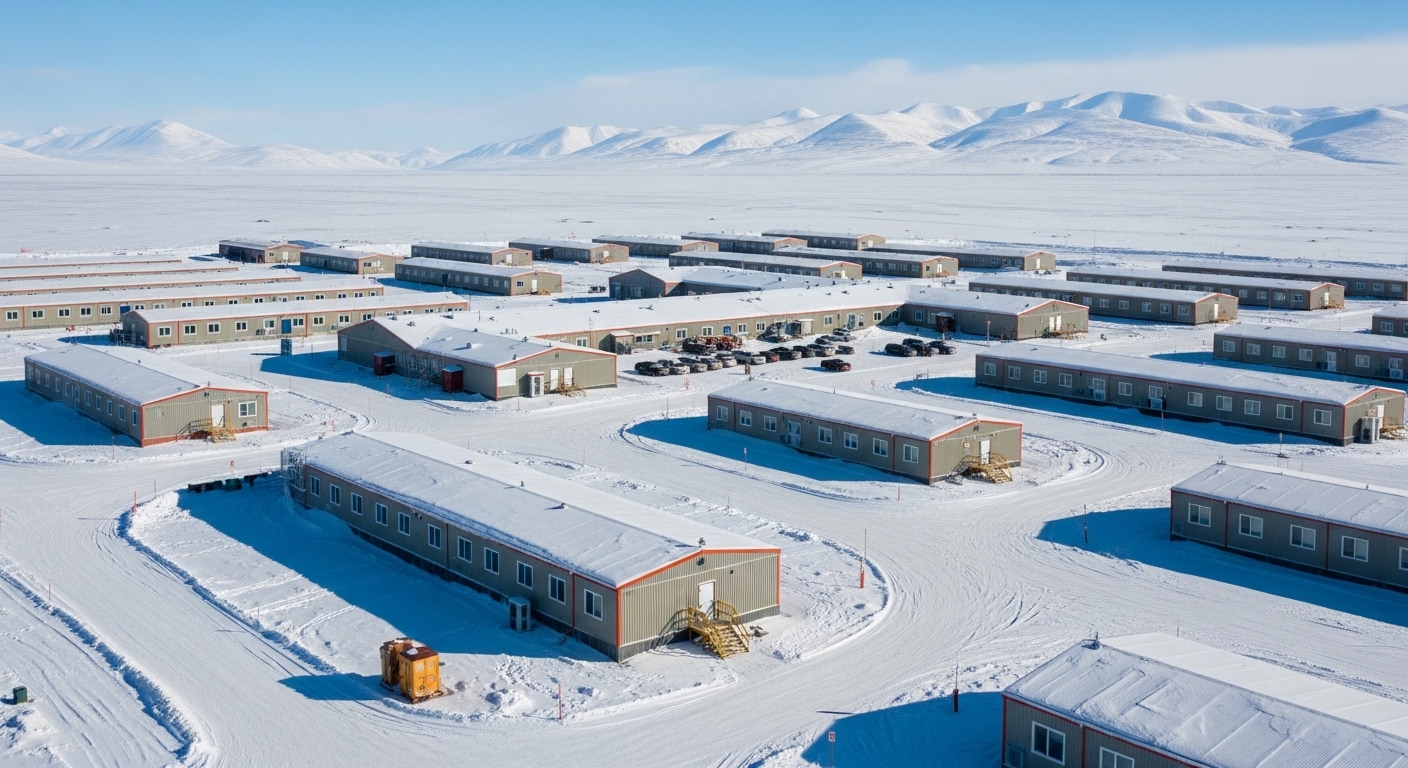
The National Petroleum Reserve in Alaska (NPR-A) represents one of the largest undeveloped energy regions in North America. Located on Alaska’s North Slope, the NPR-A contains vast oil and gas resources and is becoming increasingly important for new exploration and development activities. Projects within this region face unique operational challenges including extreme weather, limited transportation infrastructure, environmental protection requirements, and remote working conditions. One of the most critical aspects of successful project execution is the ability to establish reliable workforce accommodation infrastructure that supports large construction teams and operational staff throughout the lifecycle of the development.
Workforce accommodation strategies for NPR-A projects must balance rapid deployment, durability in Arctic conditions, logistical efficiency, and long-term operational reliability. Modular construction has emerged as one of the most effective approaches for delivering scalable housing and support infrastructure in such demanding environments.
What is Workforce Accommodation Infrastructure in Remote Oil Fields
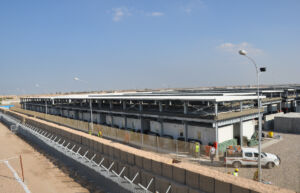
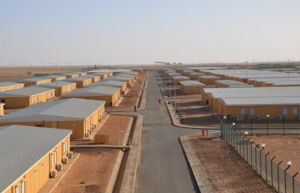
Workforce accommodation infrastructure refers to the integrated housing and support systems that enable personnel to live and work safely in remote industrial regions. In areas such as the NPR-A, these settlements must operate as fully self-sufficient communities because nearby towns and municipal services are often hundreds of kilometers away.
Typical workforce accommodation systems for Arctic oil developments include:
• Residential accommodation buildings for workers and technical staff
• Dining facilities and large-scale catering operations
• Medical clinics and emergency response facilities
• Recreation buildings supporting workforce welfare
• Administrative and operational offices
• Laundry, sanitation, and hygiene infrastructure
• Power generation systems and electrical distribution
• Water supply, treatment, and wastewater systems
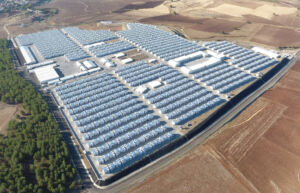
Because of the scale and complexity of these facilities, workforce camps are often designed as modular settlements that can expand as project workforce numbers increase.
Advantages
Effective workforce accommodation strategies provide several operational advantages for large energy infrastructure projects operating in remote Arctic environments.
• Rapid infrastructure deployment
Modular construction allows accommodation units to be manufactured in factories while site preparation work is taking place. This parallel process significantly shortens the time required to establish operational workforce settlements.
• Improved resilience in extreme climates
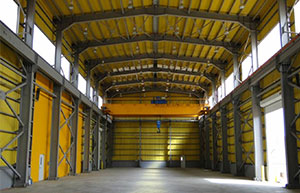
Prefabricated steel modular buildings are engineered with high-performance insulation systems, reinforced structural frames, and durable exterior materials capable of withstanding heavy snow loads and strong winds.
• Reduced on-site construction requirements
Remote regions often have limited local labor availability. Modular installation requires fewer workers on-site compared to traditional construction methods.
• Scalable infrastructure capacity
Workforce accommodation requirements often change during different phases of a project. Modular settlements allow additional housing units and support facilities to be added quickly as workforce numbers increase.
• Logistical efficiency
Prefabricated modules reduce the number of individual construction materials that must be transported to remote sites, simplifying logistics planning and improving project schedule reliability.
These advantages make modular workforce accommodation systems particularly well suited for large oil developments in isolated Arctic regions.
Usage Areas
Workforce accommodation strategies developed for NPR-A projects can be applied across a wide range of industrial sectors operating in remote environments.
Key usage areas include:
• Oil and gas exploration and field development projects
• LNG infrastructure construction operations
• Arctic pipeline construction corridors
• Mining exploration and extraction sites
• Remote infrastructure development zones
• Temporary industrial settlements supporting large construction projects
In these environments, workforce camps must function as self-contained operational hubs capable of supporting large personnel populations for extended periods of time. Reliable housing, utilities, and welfare facilities play a crucial role in maintaining worker safety, productivity, and overall project performance.
Dorçe Prefabrik has extensive experience delivering modular infrastructure solutions for remote industrial environments worldwide. Through advanced prefabricated steel building technologies, integrated engineering capabilities, and turnkey EPC project delivery, Dorçe develops scalable workforce accommodation systems that support energy, mining, and infrastructure developments operating in challenging climates. By combining off-site modular production with efficient logistics planning and rapid installation methods, Dorçe enables project developers to deploy reliable workforce settlements quickly while maintaining high standards of durability, safety, and operational efficiency.
Tags
Tags