
Zero-Impact Modular Foundations: Protecting Alaska’s Tundra During Oil Exploration
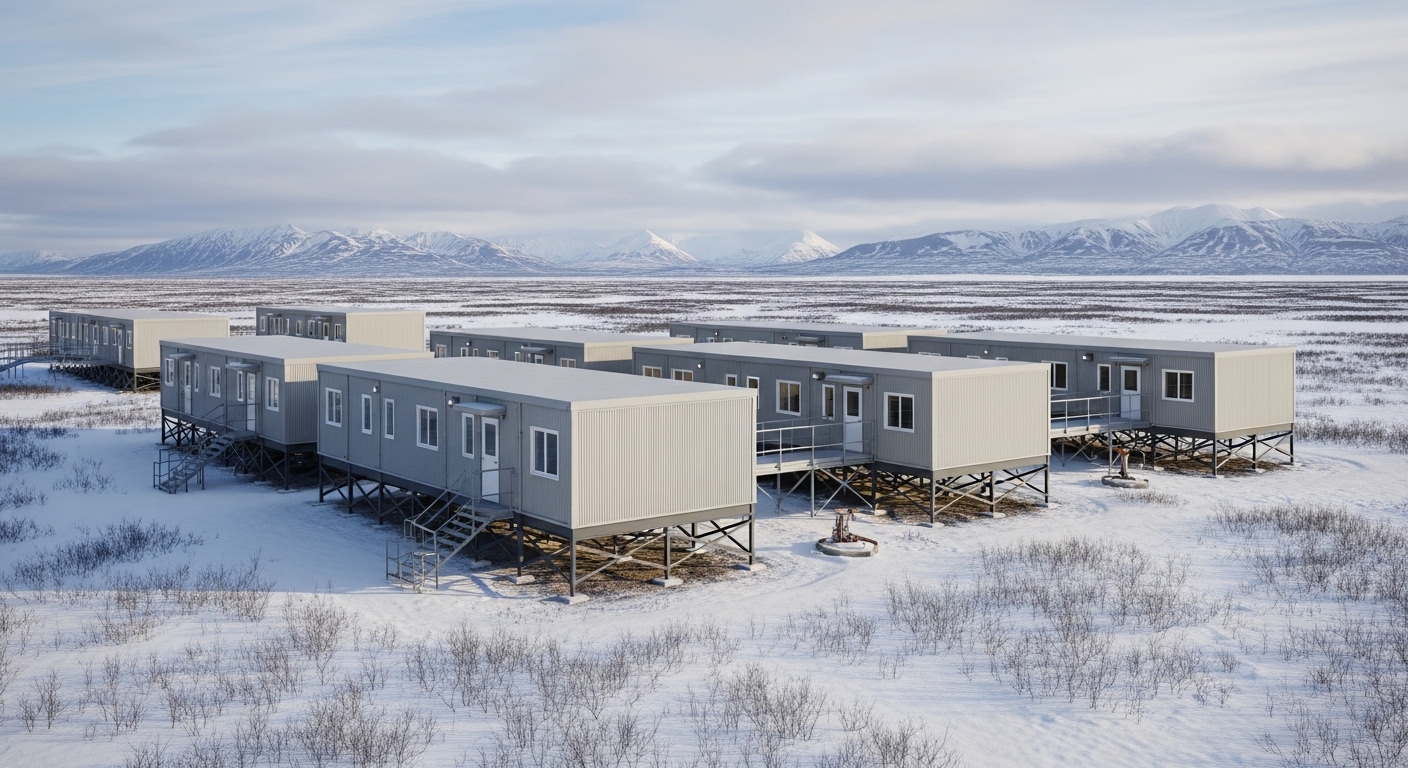
Oil exploration and development in Alaska’s North Slope occur in one of the most environmentally sensitive ecosystems in the world. The Arctic tundra is characterized by fragile vegetation, shallow soil layers, and permafrost that can be permanently damaged by excessive heat transfer or heavy construction disturbance. As energy companies expand exploration programs across regions such as the National Petroleum Reserve in Alaska, protecting the tundra while maintaining operational capability has become a critical engineering priority.
Zero-impact modular foundation systems have emerged as an effective solution for minimizing environmental disturbance during oil exploration. By combining modular construction with elevated structural foundations and minimal ground contact techniques, these systems allow workforce accommodation and operational infrastructure to be deployed without permanently altering the tundra landscape.
What are Zero-Impact Modular Foundations
Zero-impact modular foundations refer to foundation systems designed to support modular buildings while minimizing disturbance to sensitive ground conditions. In Arctic environments, the goal is to protect both the surface tundra vegetation and the underlying permafrost layer that stabilizes the terrain.
Unlike traditional construction methods that rely on large concrete foundations or deep excavation, modular foundations used in Arctic exploration typically rely on elevated support systems that distribute building loads without significant ground penetration.
Typical zero-impact foundation strategies include:
• Elevated steel support frames that lift buildings above the tundra surface
• Adjustable foundation pads that distribute loads evenly across the ground
• Thermally isolated structural systems that reduce heat transfer to frozen soil
• Modular foundation components designed for rapid installation and removal
• Minimal excavation techniques that preserve natural ground conditions
These foundation systems allow infrastructure to be installed temporarily and removed later with minimal environmental impact.
Advantages
Zero-impact modular foundation systems provide several advantages for oil exploration projects operating in sensitive Arctic environments.
• Protection of tundra ecosystems
Elevated structures minimize contact with surface vegetation and help preserve the fragile Arctic landscape.
• Permafrost stability
Thermally isolated foundations prevent heat from buildings from melting the frozen soil layer beneath the structure.
• Rapid installation and removal
Modular foundation systems can be installed quickly and removed once exploration activities are complete, allowing sites to return to their natural state.
• Reduced construction disturbance
Minimal excavation and lighter construction equipment reduce soil disruption during infrastructure deployment.
• Compatibility with modular buildings
Prefabricated modular buildings can be installed directly onto engineered support systems, allowing rapid infrastructure deployment.
• Lower environmental compliance risk
Projects that use low-impact foundation strategies are better aligned with regulatory requirements designed to protect Arctic ecosystems.
These benefits make zero-impact modular foundations particularly suitable for early-stage exploration programs and temporary workforce accommodation camps.
Usage Areas
Low-impact modular foundation systems are widely used across Arctic industrial sectors where environmental protection is a key priority.
Common applications include:
• Oil and gas exploration camps supporting drilling operations
• Workforce accommodation settlements for early-stage field development
• Temporary infrastructure supporting seismic survey operations
• Remote monitoring stations and operational support facilities
• Infrastructure supporting pipeline and energy corridor construction
In Alaska’s North Slope region, these systems allow operators to deploy necessary infrastructure while maintaining strict environmental standards required for operations in protected Arctic ecosystems.
Dorçe Prefabrik develops modular infrastructure solutions designed for remote and environmentally sensitive project environments. Through advanced prefabricated steel building technologies, integrated engineering capabilities, and turnkey EPC project delivery, Dorçe provides modular construction systems that minimize environmental disturbance while supporting large industrial operations. By combining modular building technologies with efficient logistics planning and rapid installation methods, Dorçe enables energy and infrastructure projects to establish operational facilities quickly while preserving the surrounding natural environment.
Tags
Tags