About Melissa Boyacı

This author has not yet filled in any details.
So far Melissa Boyacı has created 263 blog entries.

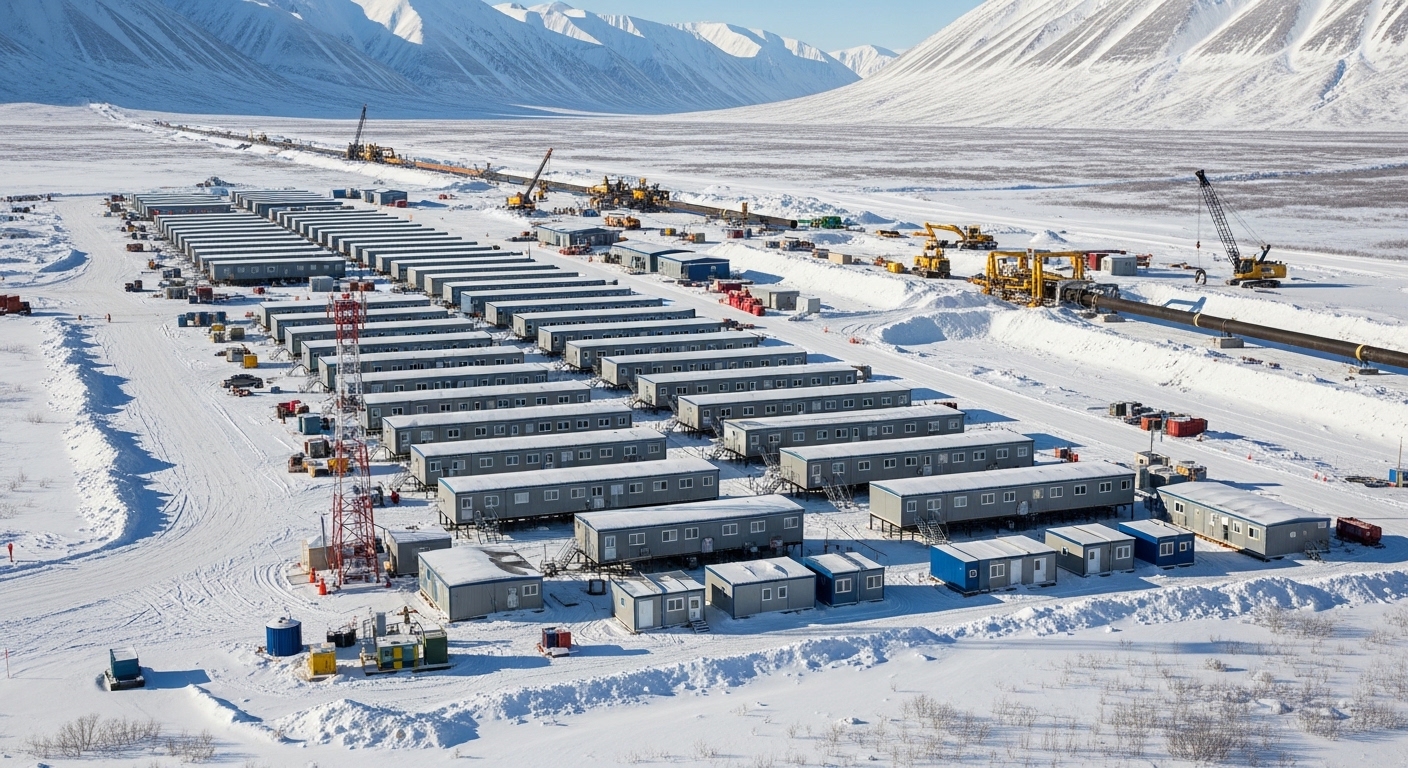
Remote Mining Camps in Alaska: Modular Construction for Isolated Exploration Sites

2026-03-13T09:43:26+03:00

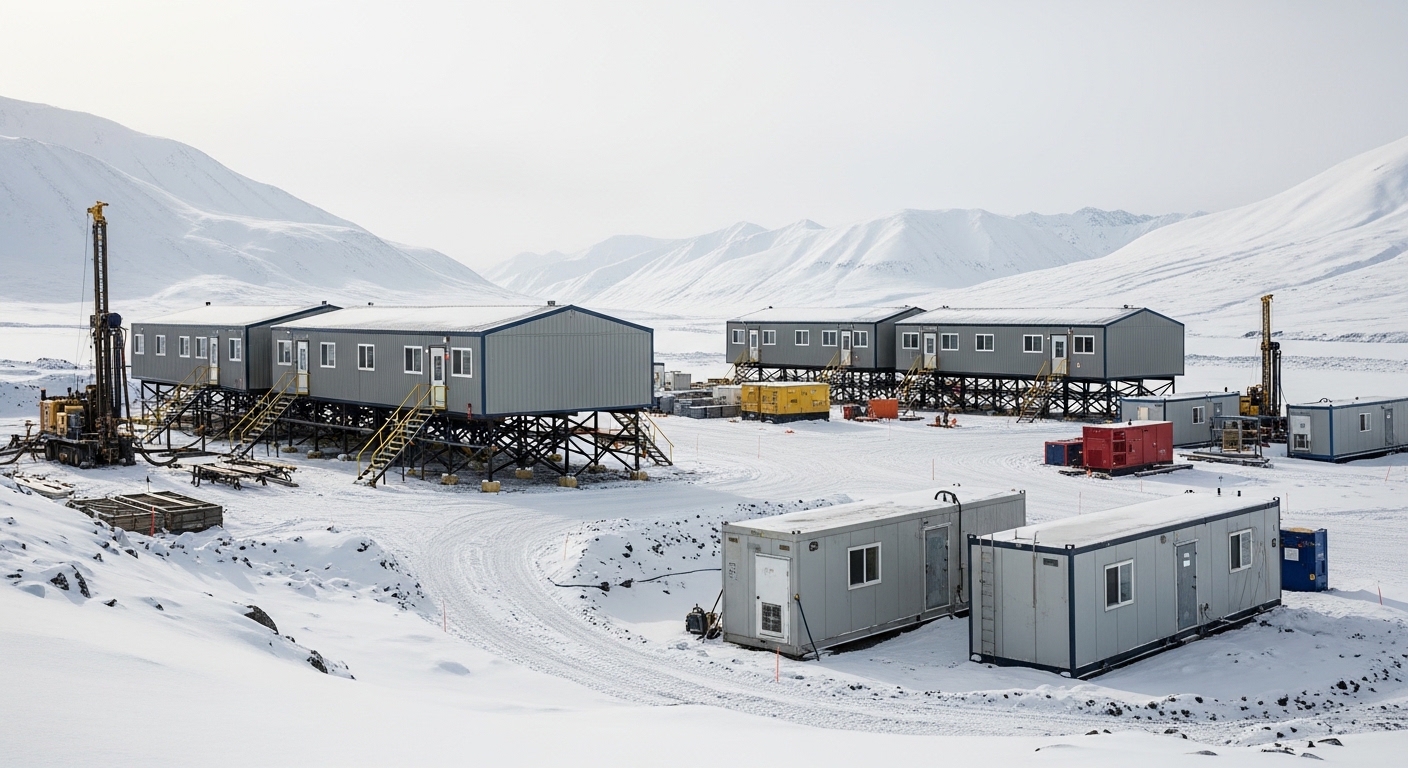
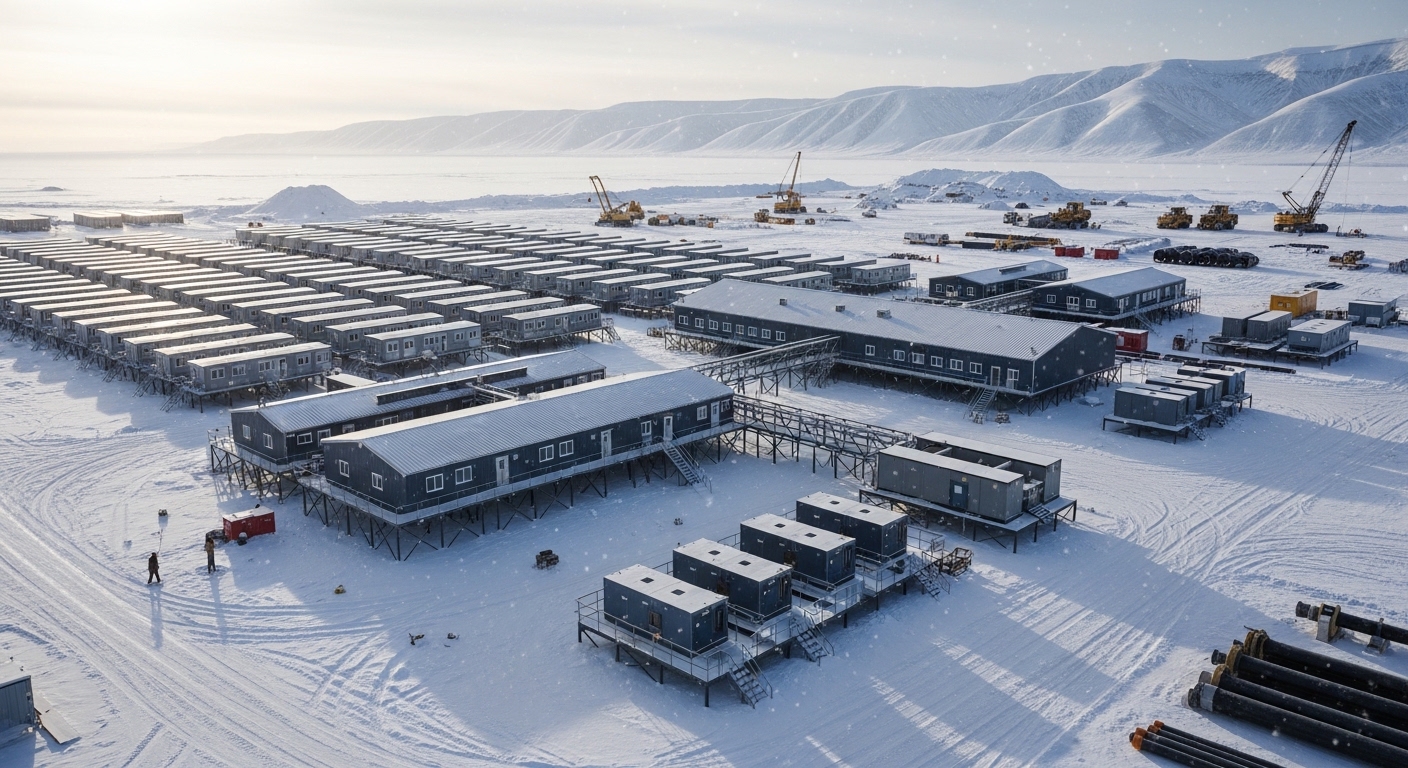
Remote Mining Camps in Alaska: Modular Construction for Isolated Exploration Sites Alaska hosts some of the most resource-rich mining regions in the world, yet many of these deposits are located in extremely remote and environmentally challenging locations. Exploration and early-stage mining operations often take place far from established towns, road networks, or utilities. In such conditions, workforce accommodation and operational infrastructure must be deployed rapidly, operate independently, and withstand extreme environmental conditions. Modular construction has become one of the most effective methods for building remote mining camps in Alaska. Prefabricated modular buildings allow mining companies to establish safe, efficient, more..
Remote Mining Camps in Alaska: Modular Construction for Isolated Exploration Sites2026-03-13T09:43:26+03:00

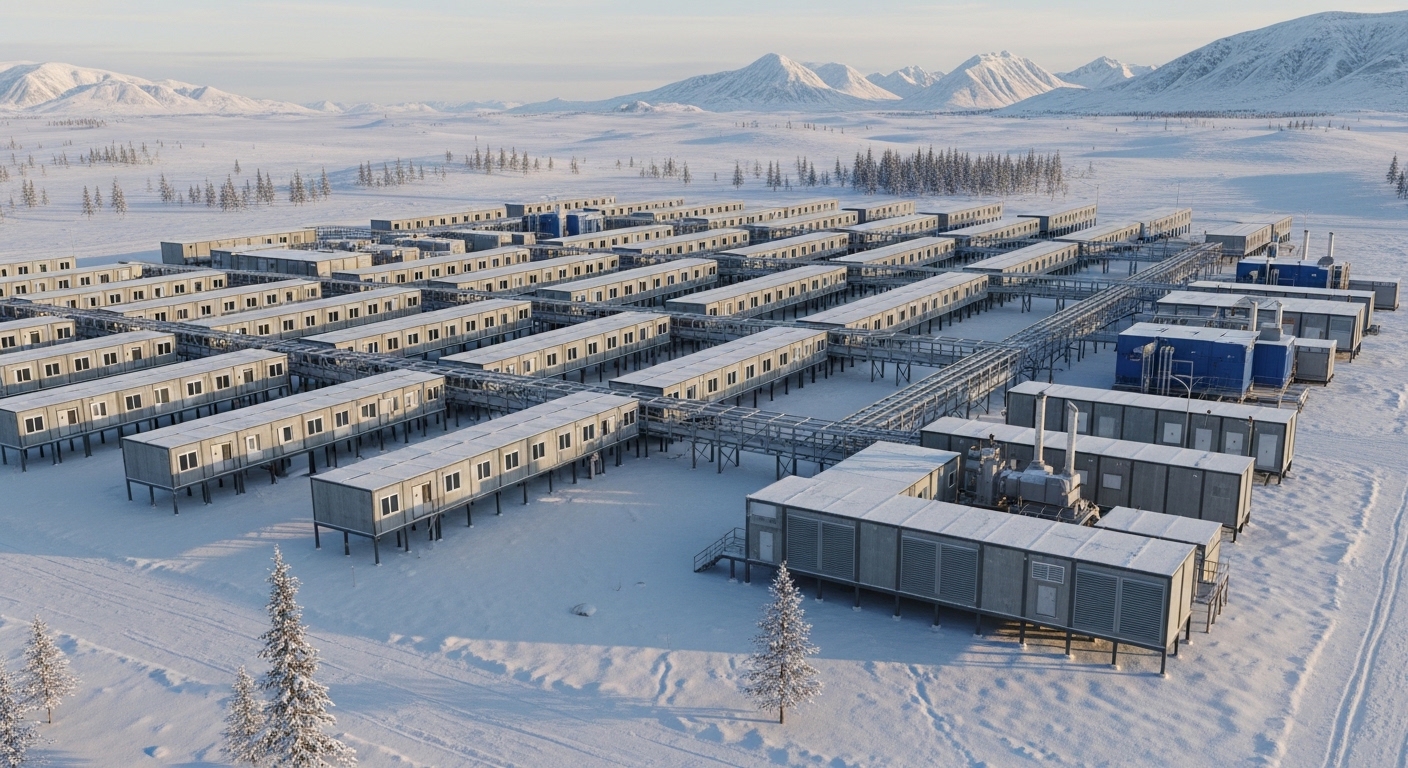
Arctic-Grade Modular Housing: Meeting Extreme Weather Standards for the North Slope

2026-03-13T09:40:03+03:00

Streamlining Workforce Logistics for the Alaska LNG Pipeline: A Turnkey Approach The North Slope of Alaska is one of the most demanding environments in the global energy sector. Temperatures frequently fall below −40°C, wind chill can push perceived temperatures even lower, and infrastructure must withstand extreme snow loads, ice accumulation, and permafrost ground conditions. For oil and gas developments across the North Slope, workforce accommodation must therefore be engineered far beyond conventional building standards. Arctic-grade modular housing has emerged as the most reliable solution for delivering durable, energy-efficient, and rapidly deployable living infrastructure in such conditions. Through prefabricated modular more..

Arctic-Grade Modular Housing: Meeting Extreme Weather Standards for the North Slope2026-03-13T09:40:03+03:00

Streamlining Workforce Logistics for the Alaska LNG Pipeline: A Turnkey Approach

2026-03-13T09:35:13+03:00

Streamlining Workforce Logistics for the Alaska LNG Pipeline: A Turnkey Approach The Alaska LNG Pipeline represents one of the most complex workforce mobilization challenges in modern energy infrastructure. Stretching across approximately 800 miles from the North Slope gas fields to southern liquefaction facilities, the project requires thousands of workers operating simultaneously across remote construction spreads. Managing workforce logistics at this scale is not simply a housing challenge. It is an integrated system involving accommodation, transportation, utilities, supply chains, safety, and operational coordination. In remote Arctic environments where temperatures can fall below −40°C and construction windows are limited, efficient workforce more..

Streamlining Workforce Logistics for the Alaska LNG Pipeline: A Turnkey Approach2026-03-13T09:35:13+03:00

Prefabricated Modular Camps for the 800-Mile Alaska Gasline Construction Spreads

2026-03-13T09:26:37+03:00

Prefabricated Modular Camps for the 800-Mile Alaska Gasline Construction Spreads The Alaska LNG pipeline system, often referred to as the Alaska Gasline, represents one of the most ambitious energy infrastructure projects in North America. Stretching approximately 800 miles from the North Slope to southern Alaska, the pipeline requires multiple simultaneous construction spreads operating across remote and environmentally challenging terrain. Each construction spread functions as a semi-independent operational zone with its own workforce, equipment staging, logistics infrastructure, and accommodation systems. Housing thousands of workers across multiple pipeline spreads requires a scalable and relocatable accommodation strategy. Prefabricated modular camps provide a more..

Prefabricated Modular Camps for the 800-Mile Alaska Gasline Construction Spreads2026-03-13T09:26:37+03:00

How to House 7,000 Workers for the Alaska LNG Project: Scalable Modular Solutions

2026-03-13T09:19:34+03:00

How to House 7,000 Workers for the Alaska LNG Project: Scalable Modular Solutions The Alaska LNG Project represents one of the most logistically complex energy infrastructure developments in North America. With pipelines spanning more than 800 miles, liquefaction facilities, compressor stations, and remote construction zones, workforce accommodation becomes a critical operational requirement. Housing approximately 7,000 workers in Arctic and sub-Arctic conditions demands infrastructure that can be deployed rapidly, scaled efficiently, and maintained reliably under extreme environmental stress. Traditional construction methods struggle in environments where short building seasons, frozen ground, and logistical isolation significantly limit site productivity. As a result, more..

How to House 7,000 Workers for the Alaska LNG Project: Scalable Modular Solutions2026-03-13T09:19:34+03:00

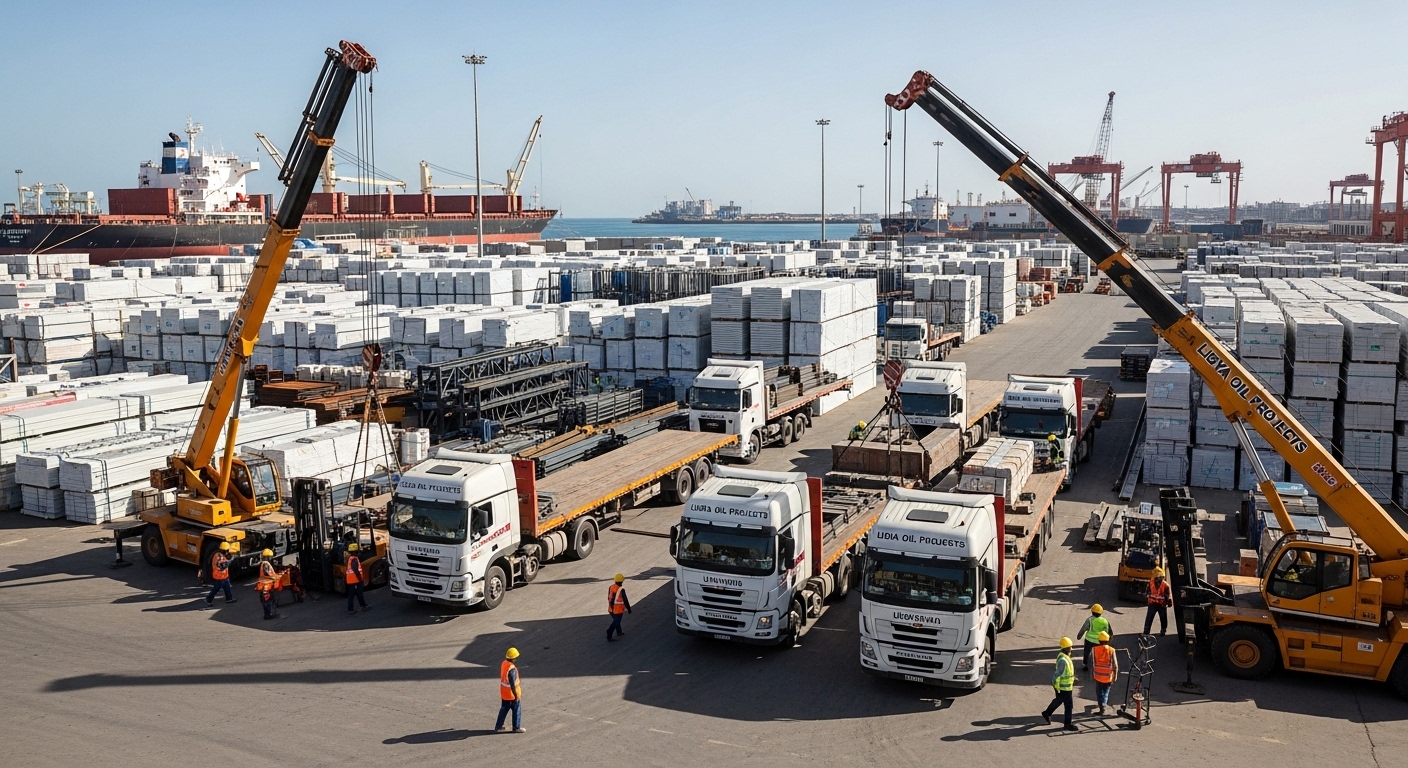
Supply Chain Resilience: Sourcing Construction Materials for Libya from a Regional Hub

2026-02-19T11:41:19+03:00

Sourcing Construction Materials for Libya from a Regional Hub  Libya’s oil, gas, mining, and infrastructure sectors depend heavily on predictable material flow. Whether supporting NOC Libya tenders, Sirte Basin exploration, Murzuq oil field services, or large-scale industrial expansions, construction timelines are often determined not by engineering complexity, but by supply chain stability. In remote and logistically sensitive environments, supply chain resilience becomes a structural requirement. Sourcing construction materials through a regional hub such as the Tripoli logistics base or coordinated Turkey Libya corridor transforms risk exposure into managed predictability. The Structural Vulnerabilities of Direct-to-Site Procurement Remote oil field accommodation and temporary site facilities face unique procurement challenges: more..

Supply Chain Resilience: Sourcing Construction Materials for Libya from a Regional Hub2026-02-19T11:41:19+03:00

The Turkey-Libya Logistics Corridor: Why Turkish EPC Contractors are the Best Fit for Oil & Gas Projects

2026-02-17T11:31:52+03:00

The Turkey-Libya Logistics Corridor: Why Turkish EPC Contractors are the Best Fit for Oil & Gas Projects  The Turkey Libya logistics corridor has become one of the most practical supply and mobilization routes for Libya’s upstream oil and gas recovery, exploration, and field development programs. For projects connected to NOC Libya tenders, Sirte Basin exploration, Murzuq oil field services, and Tripoli logistics base staging, the ability to move people, modular infrastructure, and critical equipment quickly and predictably is often more important than the theoretical lowest build cost. Turkish EPC contractors are frequently well-positioned in this corridor because they can combine regional proximity with industrial manufacturing depth, modular construction capability, and turnkey delivery models that more..

The Turkey-Libya Logistics Corridor: Why Turkish EPC Contractors are the Best Fit for Oil & Gas Projects2026-02-17T11:31:52+03:00

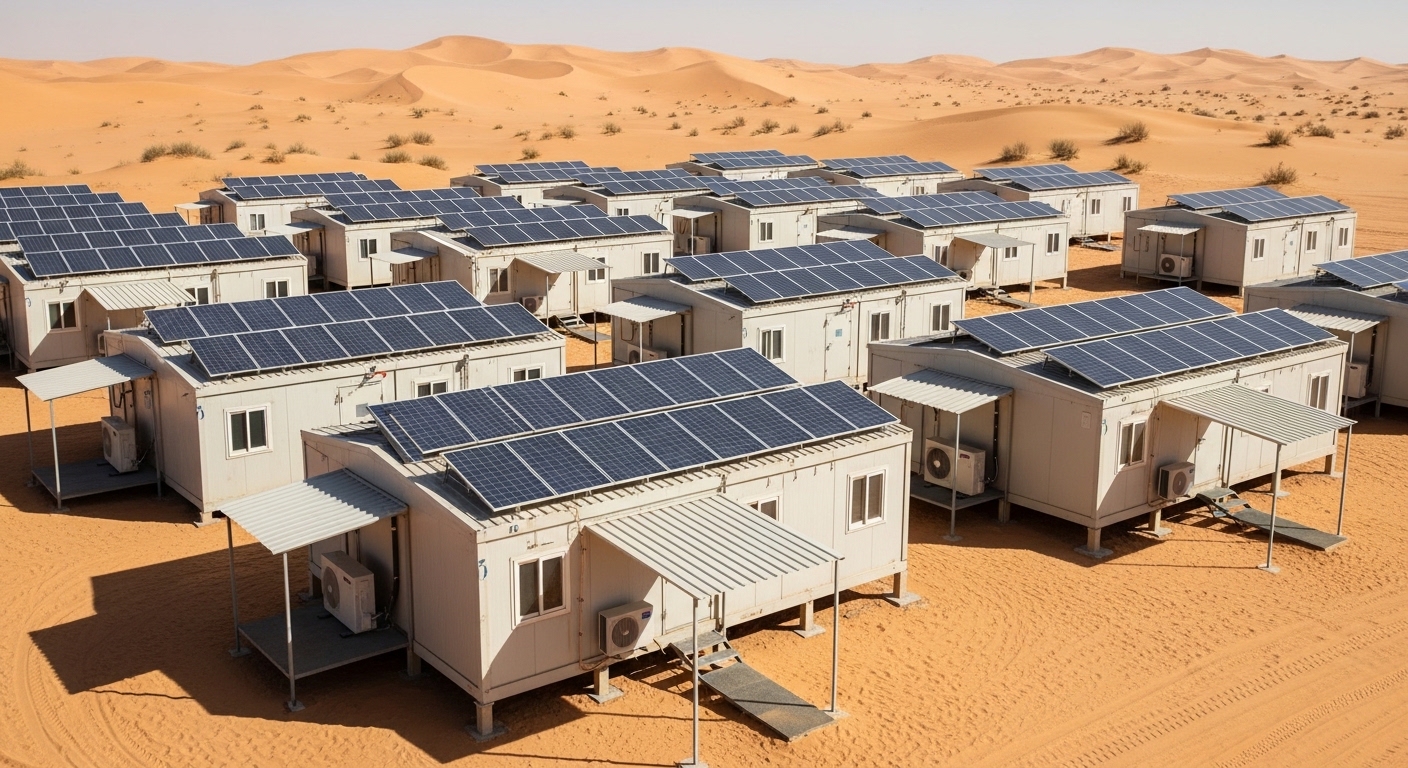
HVAC Efficiency in Arid Climates: Sustainable Energy Management for Remote Man Camps

2026-02-17T10:09:27+03:00

HVAC Efficiency in Arid Climates: Sustainable Energy Management for Remote Man Camps In North Africa and the Middle East, remote man camps supporting oil, gas, mining, and infrastructure operations operate under some of the harshest climatic conditions on earth. In Libya’s Sirte Basin, Murzuq Basin, and other desert regions connected to NOC Libya tenders, ambient temperatures frequently exceed 45°C, while extreme diurnal temperature swings strain building systems. In such environments, HVAC efficiency is not a comfort upgrade. It is a strategic energy management decision that directly affects fuel consumption, generator sizing, logistics frequency, and long-term operating costs. Sustainable HVAC more..

HVAC Efficiency in Arid Climates: Sustainable Energy Management for Remote Man Camps2026-02-17T10:09:27+03:00

Blast-Resistant Modules: Ensuring Workforce Safety in Libya’s High-Risk Oil Zones

2026-02-17T09:51:56+03:00

Blast-Resistant Modules: Ensuring Workforce Safety in Libya’s High-Risk Oil Zones Workforce safety in Libya’s oil and gas sector extends beyond standard occupational health measures. In certain high-risk zones linked to NOC Libya tenders, Sirte Basin operations, Murzuq oil field services, and remote exploration blocks, infrastructure must be engineered to withstand potential blast pressures, accidental explosions, and external security threats. Blast-resistant modules designed through advanced modular construction principles have become a critical component of modern oil field accommodation, Life Support Areas (LSA), and temporary site facilities in Libya. The Risk Landscape in Libyan Oil Zones Oil and gas operations inherently more..

Blast-Resistant Modules: Ensuring Workforce Safety in Libya’s High-Risk Oil Zones2026-02-17T09:51:56+03:00

Engineering for Extremes: Sandstorm-Proof Modular Designs for the Libyan Desert

2026-02-17T09:43:10+03:00

Engineering for Extremes: Sandstorm-Proof Modular Designs for the Libyan Desert Operating in Libya’s desert basins requires more than structural compliance. It requires engineering systems specifically designed to withstand extreme sandstorms, temperature fluctuations, abrasive dust, and long logistics corridors. In regions such as the Sirte Basin and Murzuq Basin, where NOC Libya tenders frequently involve exploration and oil field services, infrastructure durability directly affects operational continuity. Modular construction and prefabricated buildings engineered for sandstorm resistance have become essential components of workforce housing, man camps, Life Support Areas (LSA), and temporary site facilities across Libya. The Desert Threat Profile in Libya more..

Engineering for Extremes: Sandstorm-Proof Modular Designs for the Libyan Desert2026-02-17T09:43:10+03:00
Go to Top