Remote Operation Excellence: Managing 5,000-Person Oil Camps in Extreme Climates

2026-03-13T18:13:16+03:00

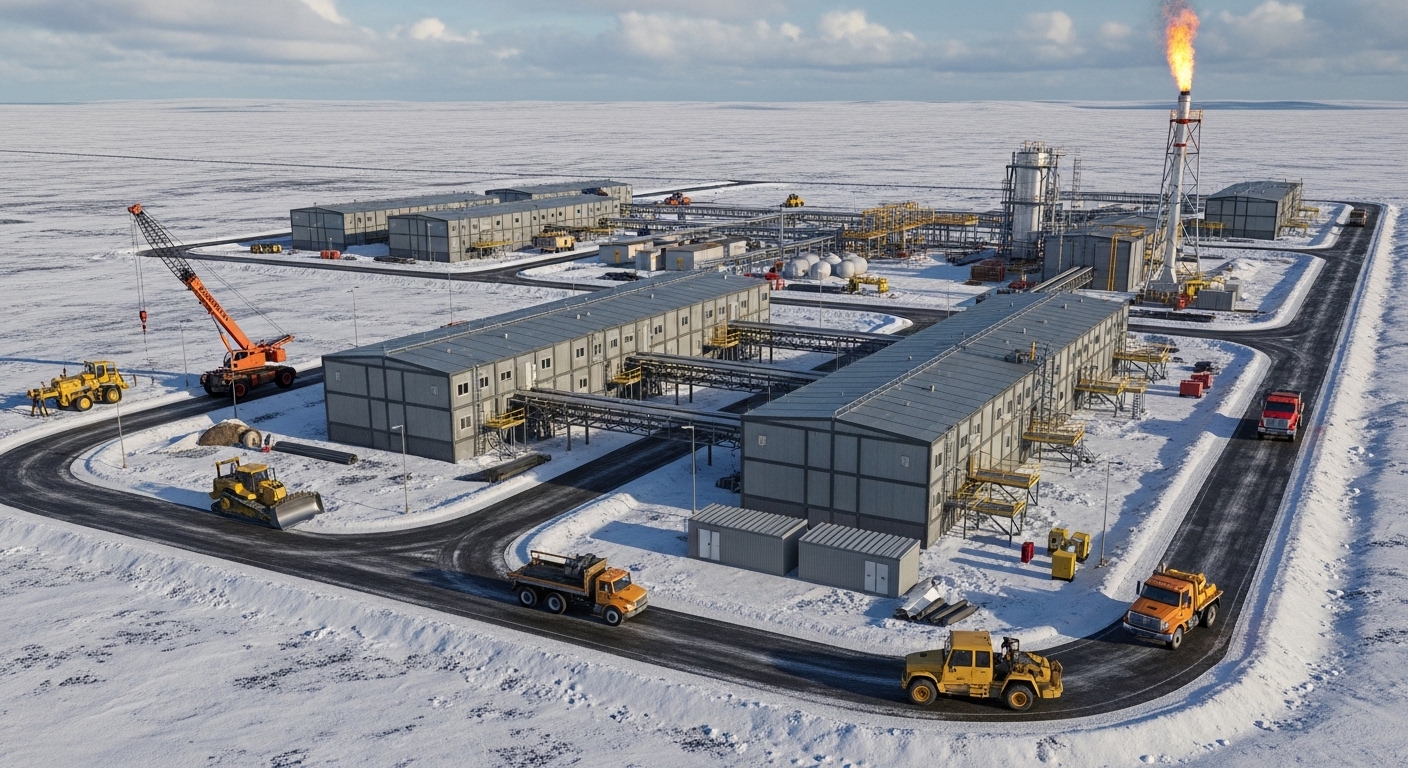
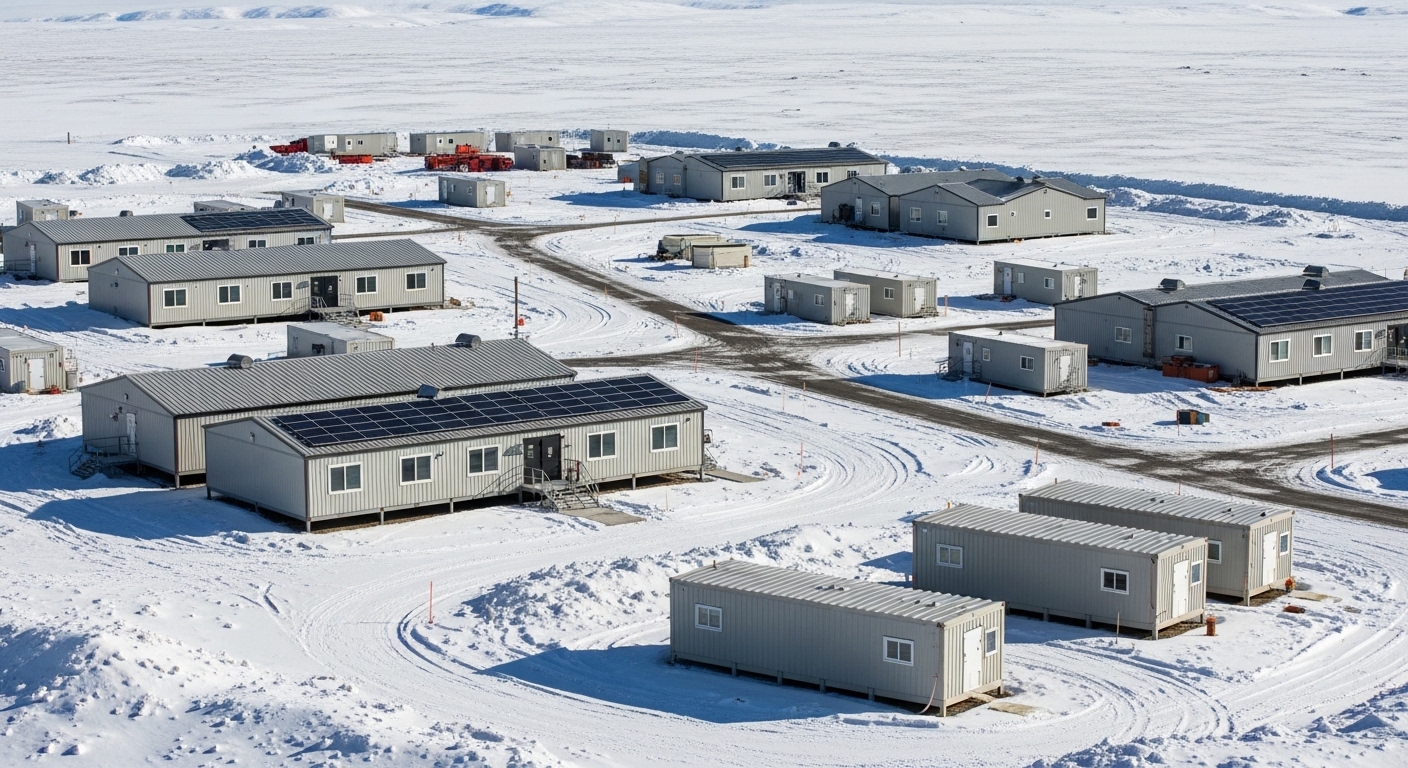
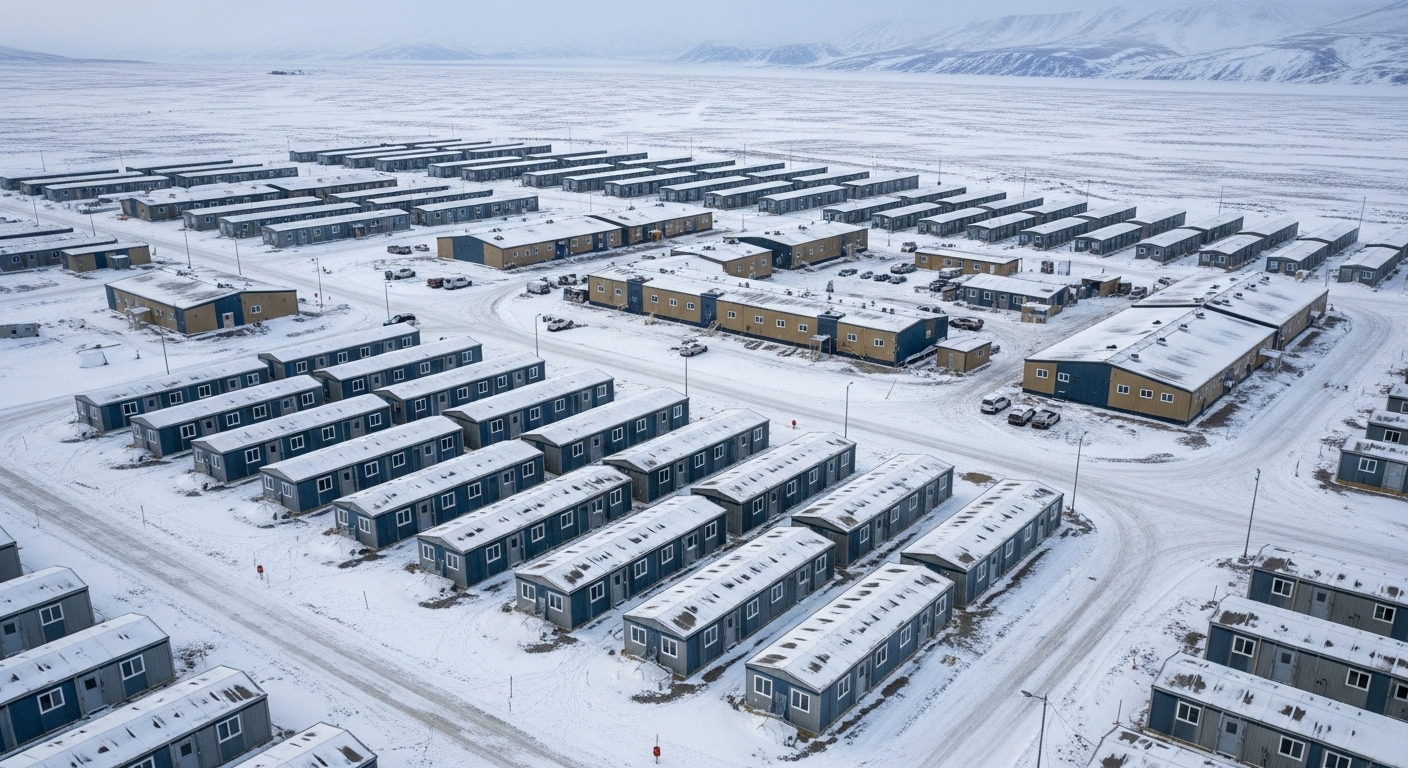
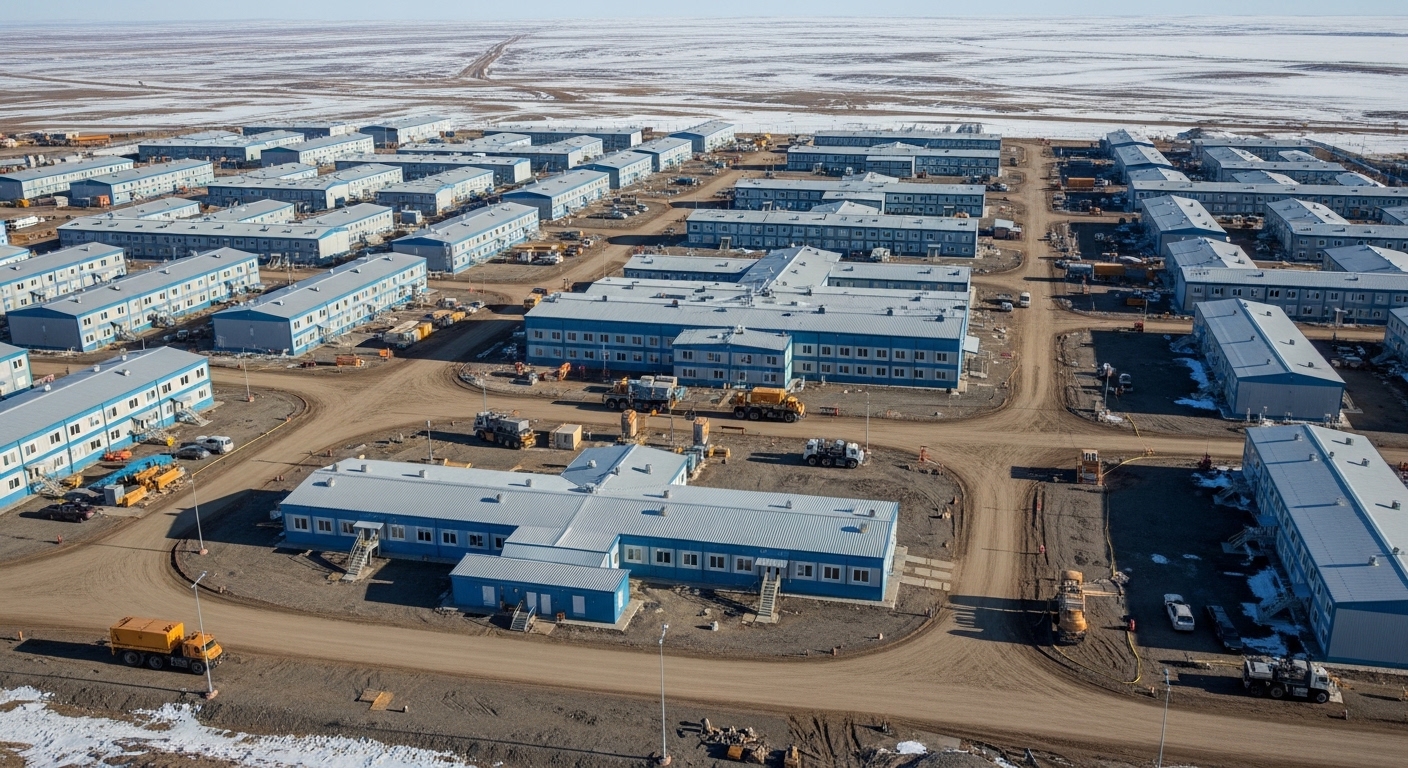
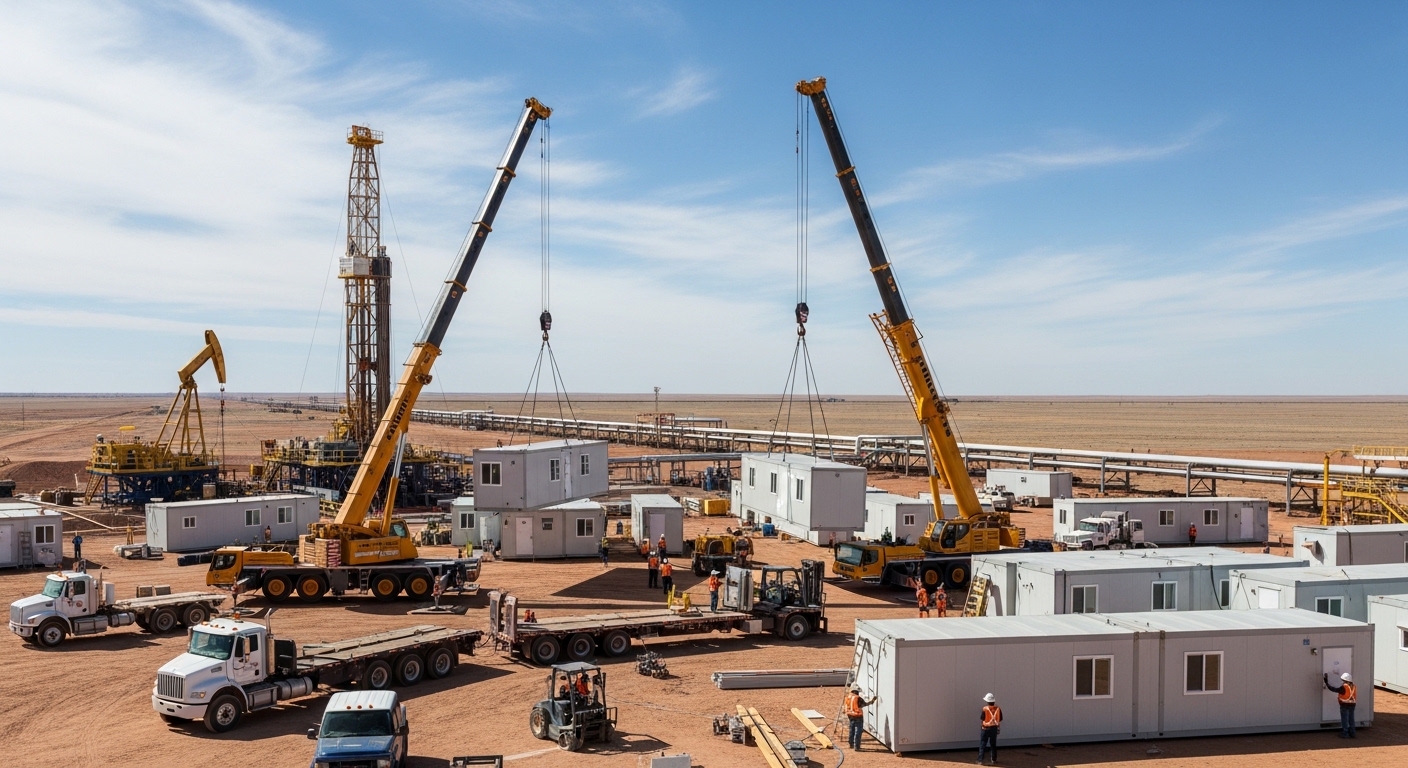
Remote Operation Excellence: Managing 5,000-Person Oil Camps in Extreme Climates Large-scale oil and gas projects frequently operate in some of the world’s most remote and environmentally challenging regions. From Arctic energy developments in Alaska and Northern Russia to desert exploration zones across North Africa and the Middle East, these projects require large workforce accommodation systems capable of supporting thousands of personnel for extended periods. Managing a 5,000-person oil camp in such conditions requires far more than simply providing housing. It demands a fully integrated operational ecosystem that combines infrastructure, logistics, utilities, life-support services, and strict safety management. Modern energy more..
Remote Operation Excellence: Managing 5,000-Person Oil Camps in Extreme Climates2026-03-13T18:13:16+03:00

Accelerating ‘First Oil’ with High-Speed Modular Construction Systems

2026-03-13T18:07:16+03:00

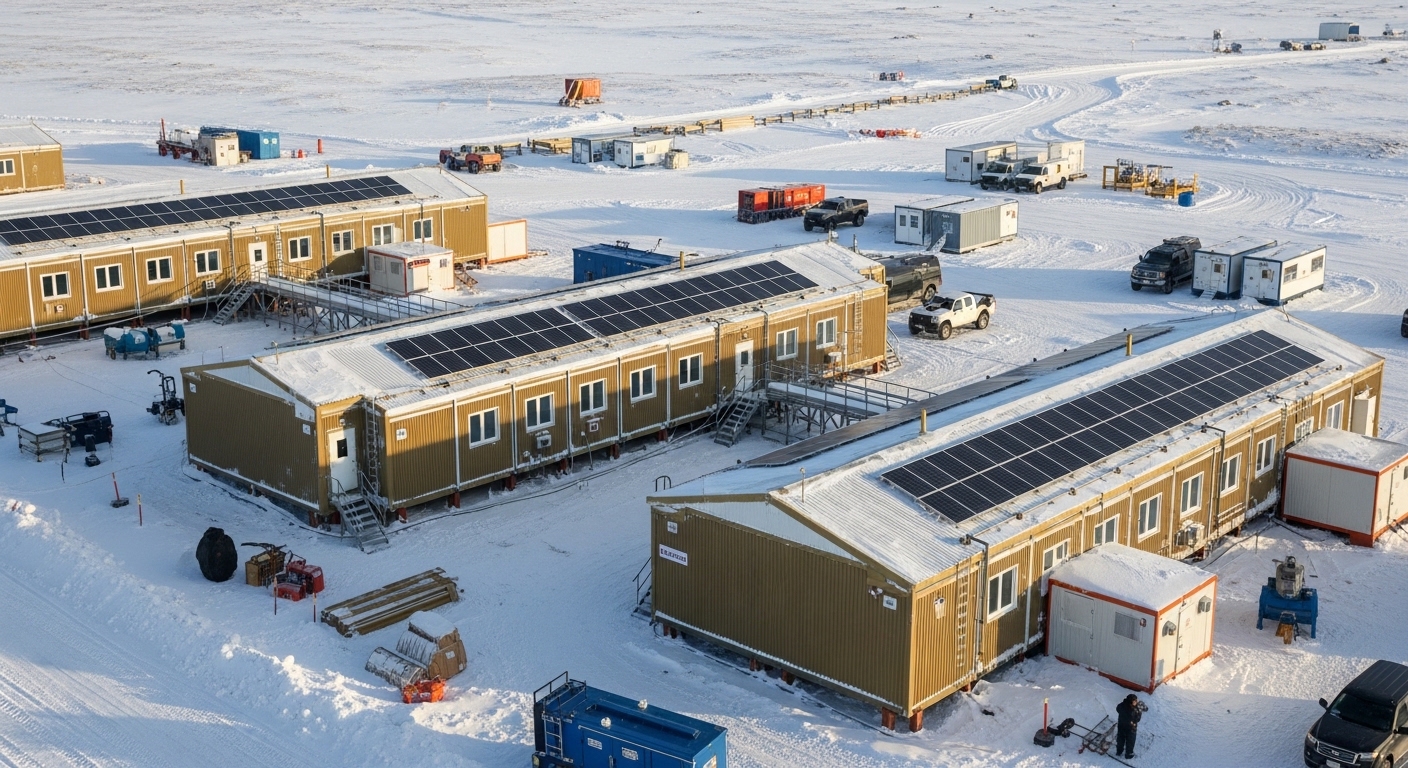
Accelerating 'First Oil' with High-Speed Modular Construction Systems In upstream oil and gas development, the timeline to “first oil” is one of the most critical performance indicators for project success. The sooner a project reaches production, the sooner capital investments begin generating returns. However, large oil developments often face delays caused by complex logistics, difficult environmental conditions, and the challenge of constructing large infrastructure systems in remote locations. For projects operating in regions such as Alaska’s North Slope, North Africa’s desert basins, or remote offshore staging areas, the speed of infrastructure deployment directly influences the production schedule. High-speed modular more..

Accelerating ‘First Oil’ with High-Speed Modular Construction Systems2026-03-13T18:07:16+03:00

From the Sahara to the Arctic: Why Dorçe is the Preferred Partner for Global Oil Giants

2026-03-13T18:03:26+03:00

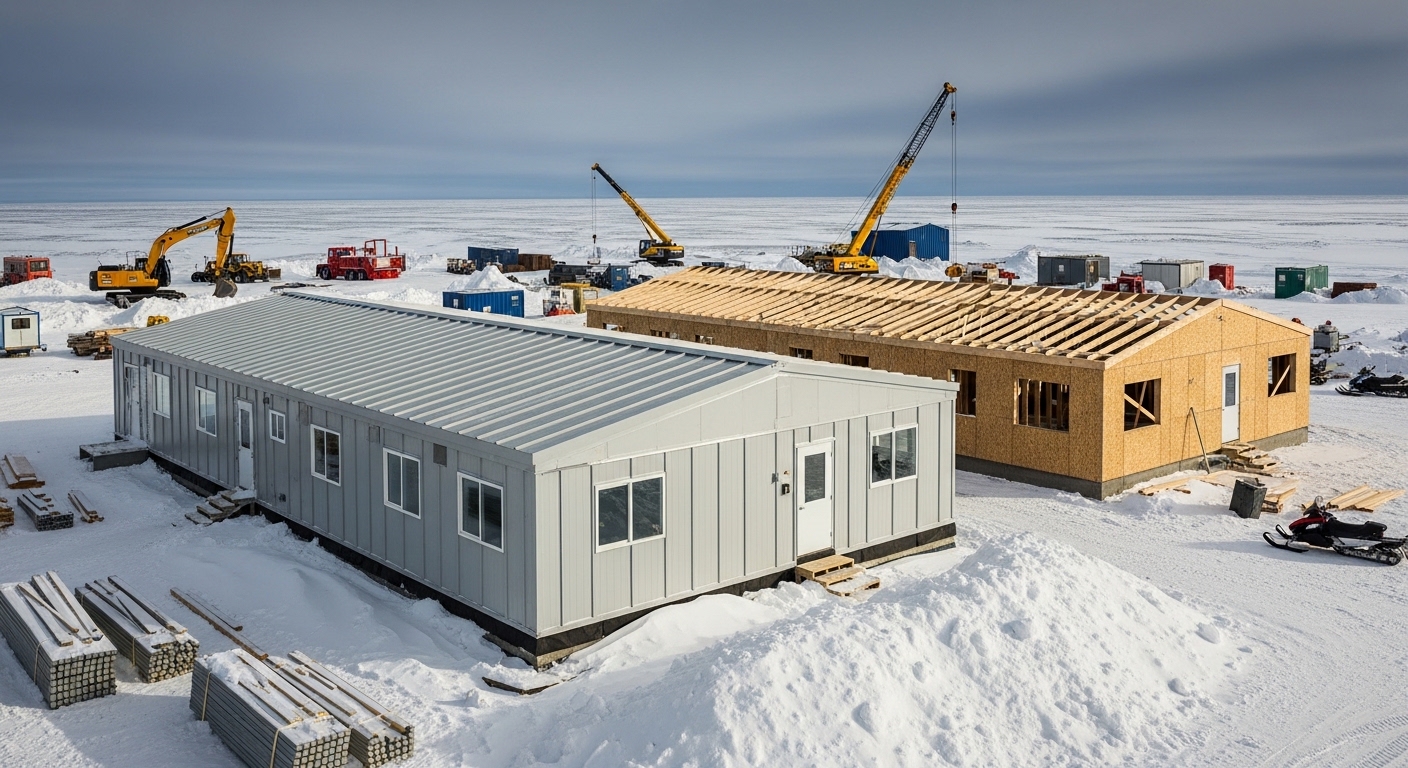
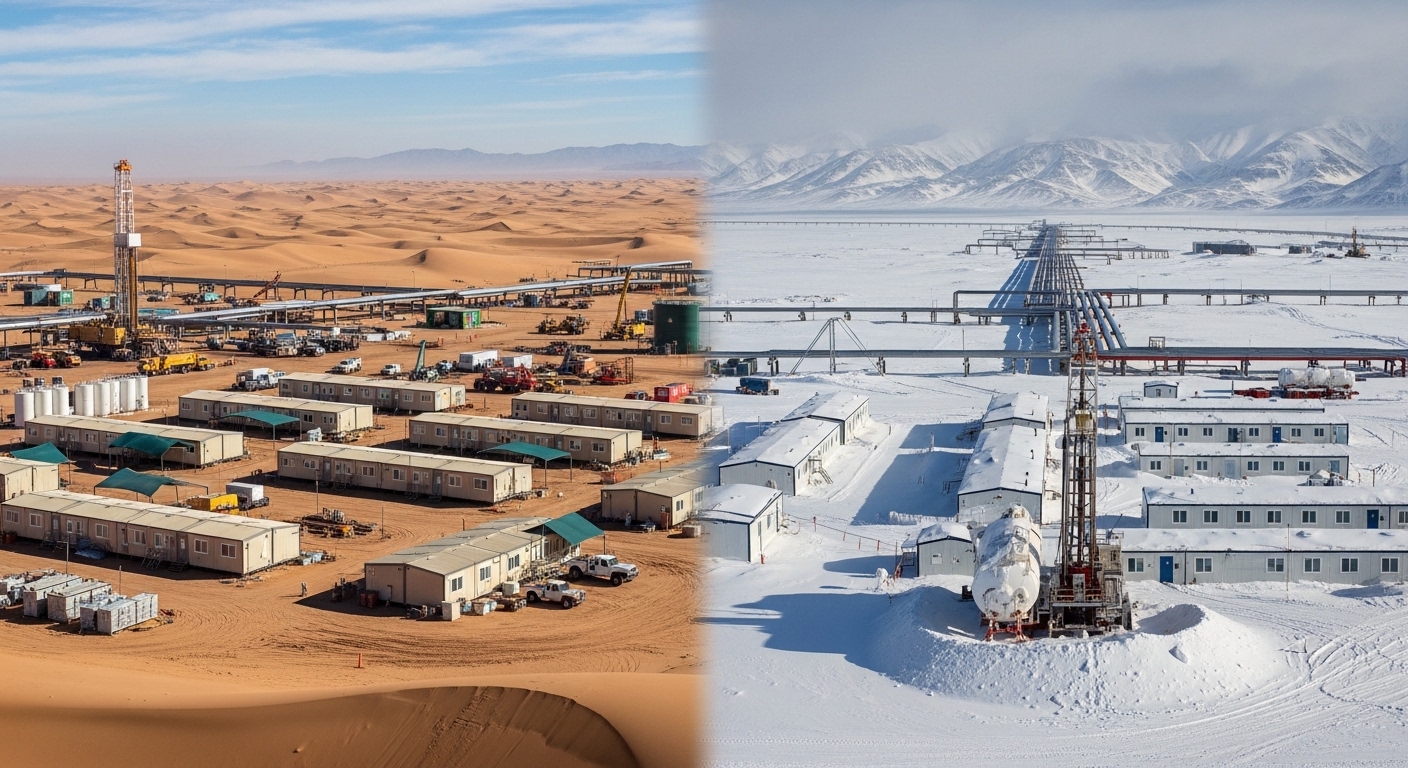
From the Sahara to the Arctic: Why Dorçe is the Preferred Partner for Global Oil Giants Energy projects operate in some of the most demanding environments on earth. From the scorching heat of the Sahara Desert to the extreme cold of the Arctic, oil and gas developments require infrastructure that can be deployed rapidly, operate reliably, and withstand harsh environmental conditions. For global energy companies, choosing the right engineering and construction partner is critical to maintaining operational efficiency and meeting strict project timelines. Dorçe has built a strong reputation as a trusted infrastructure partner for large oil and gas more..

From the Sahara to the Arctic: Why Dorçe is the Preferred Partner for Global Oil Giants2026-03-13T18:03:26+03:00

Applying Global EPC Expertise to Alaska’s North Slope Oil Infrastructure

2026-03-13T17:55:19+03:00

Applying Global EPC Expertise to Alaska’s North Slope Oil Infrastructure Alaska’s North Slope remains one of the most strategically important oil production regions in North America. The development of new fields, expansion of existing production areas, and continued exploration across the National Petroleum Reserve in Alaska require advanced infrastructure capable of operating reliably in extreme Arctic conditions. Projects in this region demand not only engineering excellence but also the ability to mobilize large-scale industrial infrastructure in remote environments with limited transportation access and strict environmental regulations. Engineering, Procurement, and Construction (EPC) delivery models have become an essential approach for more..

Applying Global EPC Expertise to Alaska’s North Slope Oil Infrastructure2026-03-13T17:55:19+03:00

Future-Proofing Oil Camps: Energy-Efficient Modular Units for Sustainable Extraction

2026-03-13T17:50:53+03:00

Future-Proofing Oil Camps: Energy-Efficient Modular Units for Sustainable Extraction Energy projects operating in remote oil fields must balance operational efficiency with increasing expectations for environmental responsibility. As global energy companies continue to develop resources in regions such as Alaska’s North Slope, the infrastructure that supports these operations is evolving rapidly. Workforce camps, once designed purely for temporary accommodation, are now expected to meet higher standards of energy efficiency, environmental performance, and long-term adaptability. Future-proofing oil camps means designing infrastructure that can operate efficiently under extreme conditions while reducing environmental impact and supporting evolving regulatory and ESG requirements. Energy-efficient modular more..

Future-Proofing Oil Camps: Energy-Efficient Modular Units for Sustainable Extraction2026-03-13T17:50:53+03:00

Modular vs. Stick-Built: Cost Analysis for Remote Oil Workforce Housing in Alaska

2026-03-13T17:45:45+03:00

Modular vs. Stick-Built: Cost Analysis for Remote Oil Workforce Housing in Alaska  Workforce accommodation is one of the most critical infrastructure requirements for oil and gas projects operating on Alaska’s North Slope and in other remote Arctic regions. Housing hundreds or even thousands of workers in isolated environments requires reliable construction methods that balance speed, cost efficiency, and long-term durability. Traditionally, many remote facilities were built using stick-built construction methods, where buildings are assembled piece by piece directly on site. However, modular construction has increasingly become the preferred solution for workforce housing in Arctic energy projects. A detailed cost comparison between modular and stick-built construction reveals why modular more..

Modular vs. Stick-Built: Cost Analysis for Remote Oil Workforce Housing in Alaska2026-03-13T17:45:45+03:00

How to Optimize Oil Field Logistics with Turnkey Prefabricated Solutions

2026-03-13T17:40:59+03:00

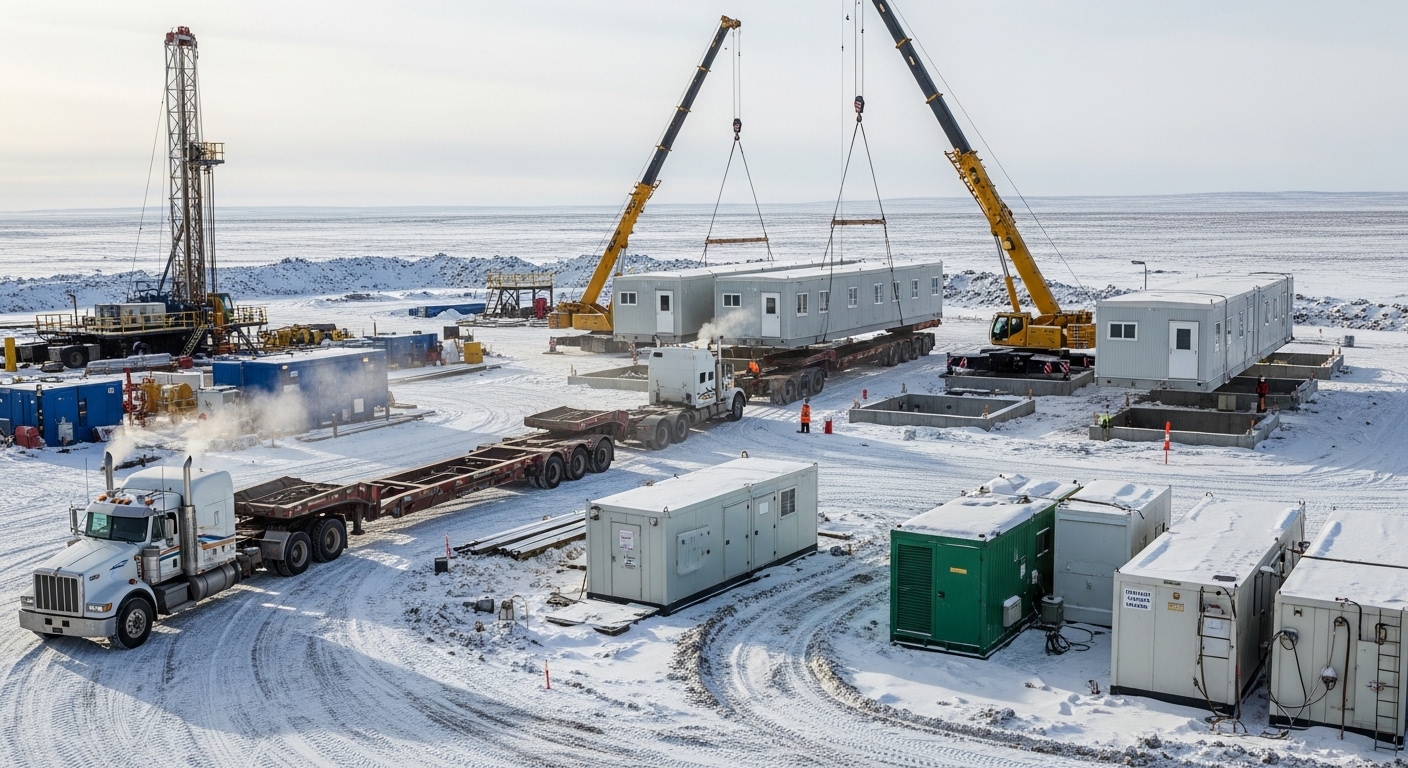
How to Optimize Oil Field Logistics with Turnkey Prefabricated Solutions  Logistics plays a decisive role in the success of oil and gas projects, particularly in remote regions where infrastructure is limited and environmental conditions can disrupt traditional construction and supply chains. From transporting equipment to establishing workforce accommodation and operational facilities, oil field logistics requires careful planning, efficient resource management, and infrastructure capable of supporting large teams in isolated environments. Turnkey prefabricated construction solutions have become an increasingly effective method for optimizing oil field logistics. By integrating design, manufacturing, transportation, and installation into a single coordinated delivery model, prefabricated more..

How to Optimize Oil Field Logistics with Turnkey Prefabricated Solutions2026-03-13T17:40:59+03:00

The Role of Modular Construction in Reducing Carbon Footprints for Arctic Oil Projects

2026-03-13T17:36:58+03:00

The Role of Modular Construction in Reducing Carbon Footprints for Arctic Oil Projects Oil and gas development in Arctic regions presents unique environmental challenges. Operations on Alaska’s North Slope and similar high-latitude environments require infrastructure capable of supporting large workforces and complex industrial activity while minimizing ecological impact. In recent years, environmental performance and carbon reduction have become increasingly important considerations for energy companies, investors, and regulators. As a result, project developers are seeking construction methods that reduce emissions, improve efficiency, and align with broader sustainability and ESG targets. Modular construction has emerged as an effective strategy for reducing more..

The Role of Modular Construction in Reducing Carbon Footprints for Arctic Oil Projects2026-03-13T17:36:58+03:00

What is the Best Workforce Housing Solution for Alaska’s Oil and Gas Sector in 2026?

2026-03-13T17:31:09+03:00

What is the Best Workforce Housing Solution for Alaska’s Oil and Gas Sector in 2026? Remote oil and gas developments in Alaska continue to place extraordinary pressure on workforce accommodation systems. On the North Slope and in other isolated operating zones, companies must house large rotating teams in locations where climate conditions are severe, logistics are expensive, and permanent community infrastructure is limited. In 2026, the most effective workforce housing strategy is no longer based on simple temporary shelter. It is based on modular, high-performance, rapidly deployable accommodation systems that can support long project cycles while maintaining safety, comfort, more..

What is the Best Workforce Housing Solution for Alaska’s Oil and Gas Sector in 2026?2026-03-13T17:31:09+03:00

Zero-Impact Modular Foundations: Protecting Alaska’s Tundra During Oil Exploration

2026-03-13T16:55:06+03:00

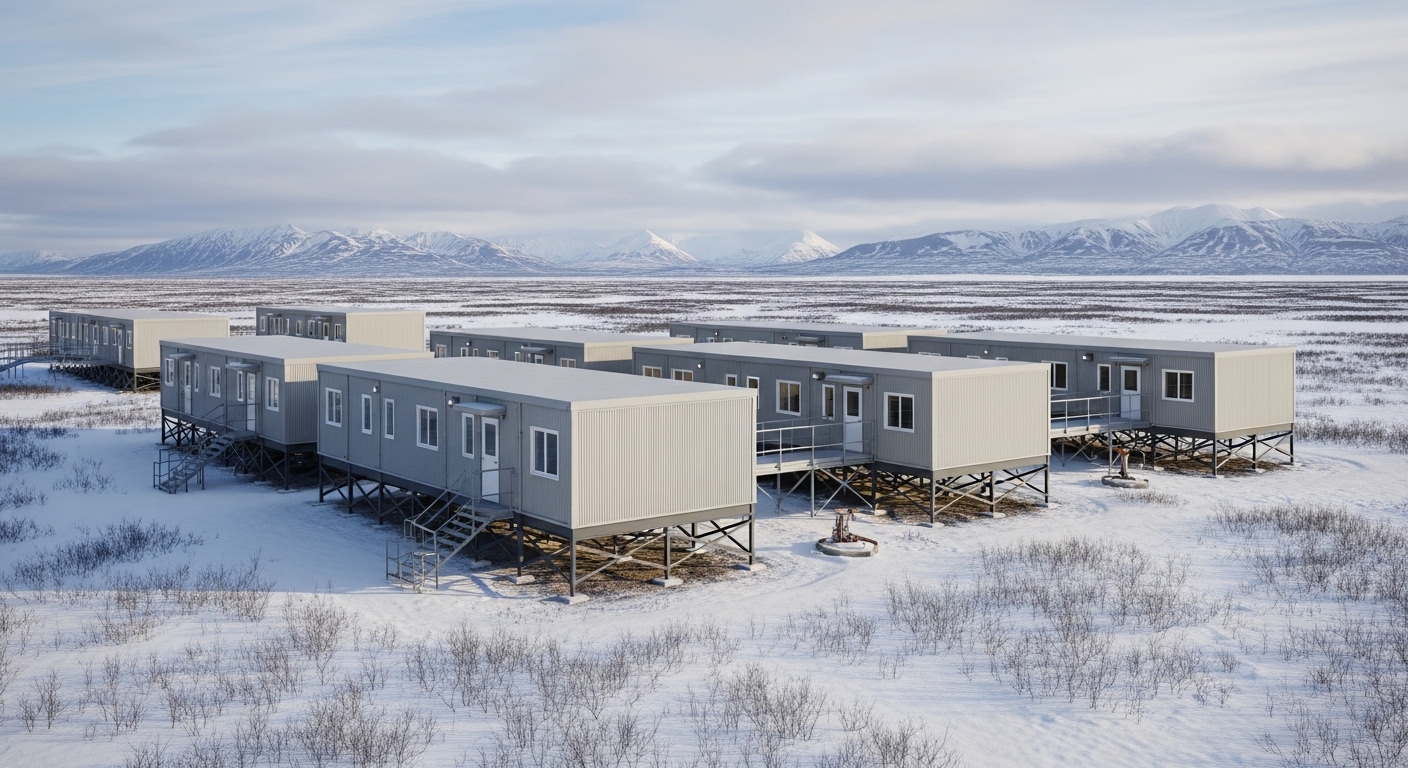
Zero-Impact Modular Foundations: Protecting Alaska’s Tundra During Oil Exploration Oil exploration and development in Alaska’s North Slope occur in one of the most environmentally sensitive ecosystems in the world. The Arctic tundra is characterized by fragile vegetation, shallow soil layers, and permafrost that can be permanently damaged by excessive heat transfer or heavy construction disturbance. As energy companies expand exploration programs across regions such as the National Petroleum Reserve in Alaska, protecting the tundra while maintaining operational capability has become a critical engineering priority. Zero-impact modular foundation systems have emerged as an effective solution for minimizing environmental disturbance during more..

Zero-Impact Modular Foundations: Protecting Alaska’s Tundra During Oil Exploration2026-03-13T16:55:06+03:00
Go to Top