
Emergency Field Hospitals: Rapid Assembly Modular Medical Facilities by Dorce
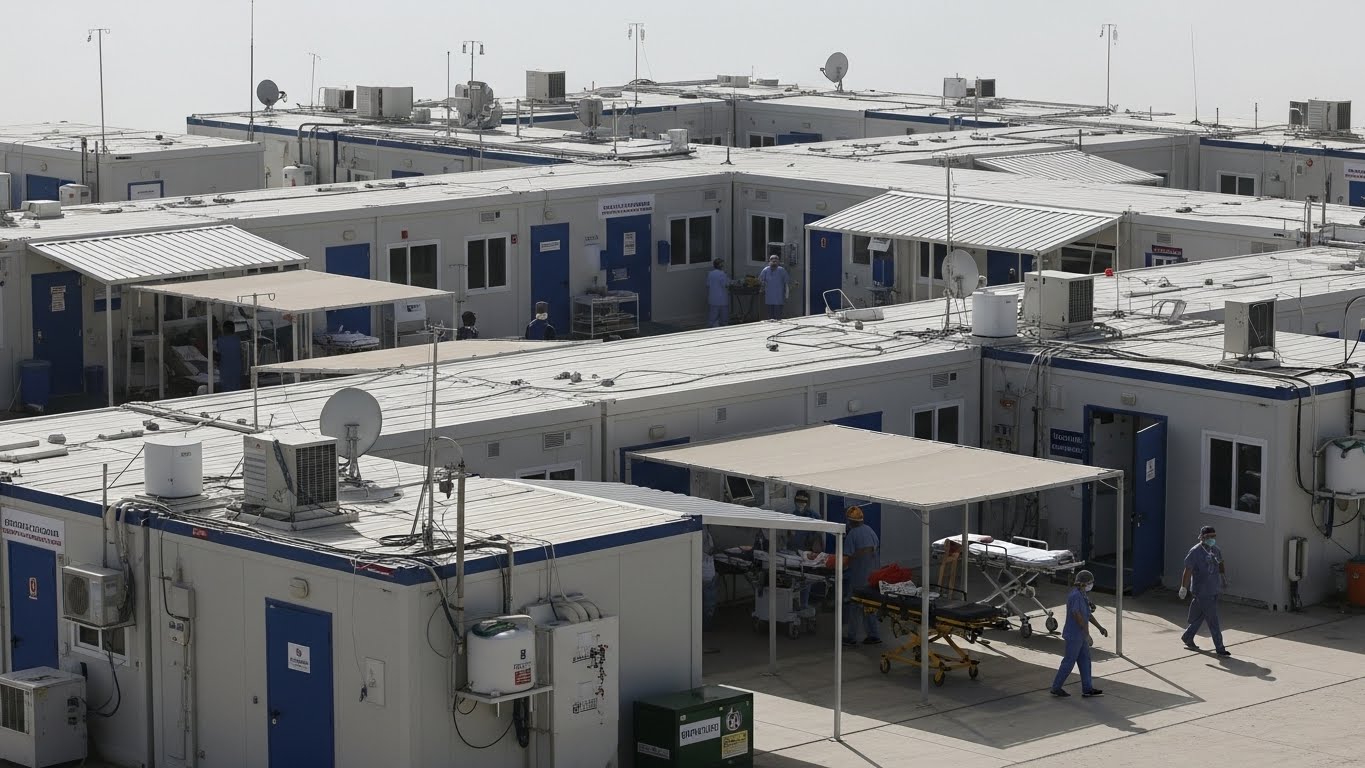
Emergency field hospitals play a decisive role in crisis response when existing healthcare infrastructure is damaged, overwhelmed, or inaccessible. In conflict zones, disaster affected regions, and large scale humanitarian emergencies, the ability to deploy fully functional medical facilities within a very short timeframe directly impacts survival rates and public health outcomes. Rapid assembly modular medical facilities provide a proven solution by combining speed, medical compliance, and operational reliability in environments where time and resources are critically limited.
Modular field hospitals are no longer basic temporary structures. They are engineered healthcare environments designed to support advanced medical functions under demanding conditions. By shifting construction and system integration to controlled factory settings, modular medical facilities allow emergency healthcare services to be delivered quickly while maintaining international medical standards.
What Are Emergency Field Hospitals?
Emergency field hospitals are prefabricated modular medical facilities designed for fast deployment and immediate operation. They consist of factory produced modules or container based units that integrate structural systems, medical grade finishes, HVAC, electrical infrastructure, medical gas systems, and plumbing before arriving on site.
These facilities can be configured to include triage zones, emergency rooms, operating theaters, intensive care units, inpatient wards, laboratories, pharmacies, diagnostic imaging areas, and staff accommodation. Modular layouts allow hospitals to be scaled, expanded, or reconfigured based on patient volume and medical priorities. This flexibility makes them suitable for both short term emergency response and medium to long term healthcare support.
Advantages
- Rapid assembly modular medical facilities offer critical advantages in emergency healthcare scenarios.
- Speed of deployment is the primary benefit. Parallel offsite manufacturing and onsite preparation enable hospitals to become operational in weeks or even days instead of months.
- Medical compliance is ensured through factory controlled installation of finishes, ventilation systems, infection control measures, and clean room standards. This reduces clinical risk and supports safe patient care.
- Operational reliability is enhanced by pre tested systems. Electrical, mechanical, and medical gas networks are commissioned before delivery, minimizing startup issues in the field.
- Scalability allows healthcare capacity to grow as demand increases. Additional wards, ICUs, or diagnostic units can be added without disrupting ongoing operations.
- Logistics efficiency is achieved through standardized modules and containerized transport formats that simplify shipping and handling in restricted access zones.
- Reduced onsite labor improves safety and accelerates installation in unstable or high risk environments.
Usage Areas
Emergency field hospitals and modular medical facilities are deployed across a wide range of crisis situations.
- Conflict and post conflict healthcare support
- Natural disaster response such as earthquakes and floods
- Pandemic and epidemic response facilities
- Refugee and displacement camp healthcare services
- Remote regions with limited permanent medical infrastructure
- Temporary replacement for damaged hospitals and clinics
These facilities can operate as standalone hospitals or be integrated into larger humanitarian or military support compounds.
Dorçe’s Difference
Dorçe brings extensive experience in delivering rapid assembly modular medical facilities for emergency, humanitarian, and defense related healthcare needs. With a strong background in modular hospitals, mobile clinics, and large scale camp infrastructure, Dorçe understands the clinical, technical, and logistical requirements of emergency medical operations.
Dorçe’s emergency field hospitals are engineered to meet international healthcare standards while prioritizing speed and reliability. High performance building envelopes, medical grade interior finishes, and factory integrated MEP and medical gas systems ensure safe and continuous operation from day one. Layouts are designed to support efficient patient flow, infection control, and staff safety.
By managing design, engineering, manufacturing, logistics, installation, and commissioning under a single integrated delivery model, Dorçe minimizes coordination risk and ensures accountability. This turnkey approach is especially critical in emergency healthcare environments where delays or system failures can have life threatening consequences.
Emergency medical response requires infrastructure that is as resilient and responsive as the teams it supports. Through rapid assembly modular field hospitals, Dorçe delivers reliable, scalable, and medically compliant facilities that enable healthcare providers to act immediately, protect lives, and restore essential medical services in the most challenging conditions.