
Off-Site Construction: Reducing Lead Times in Emergency Projects
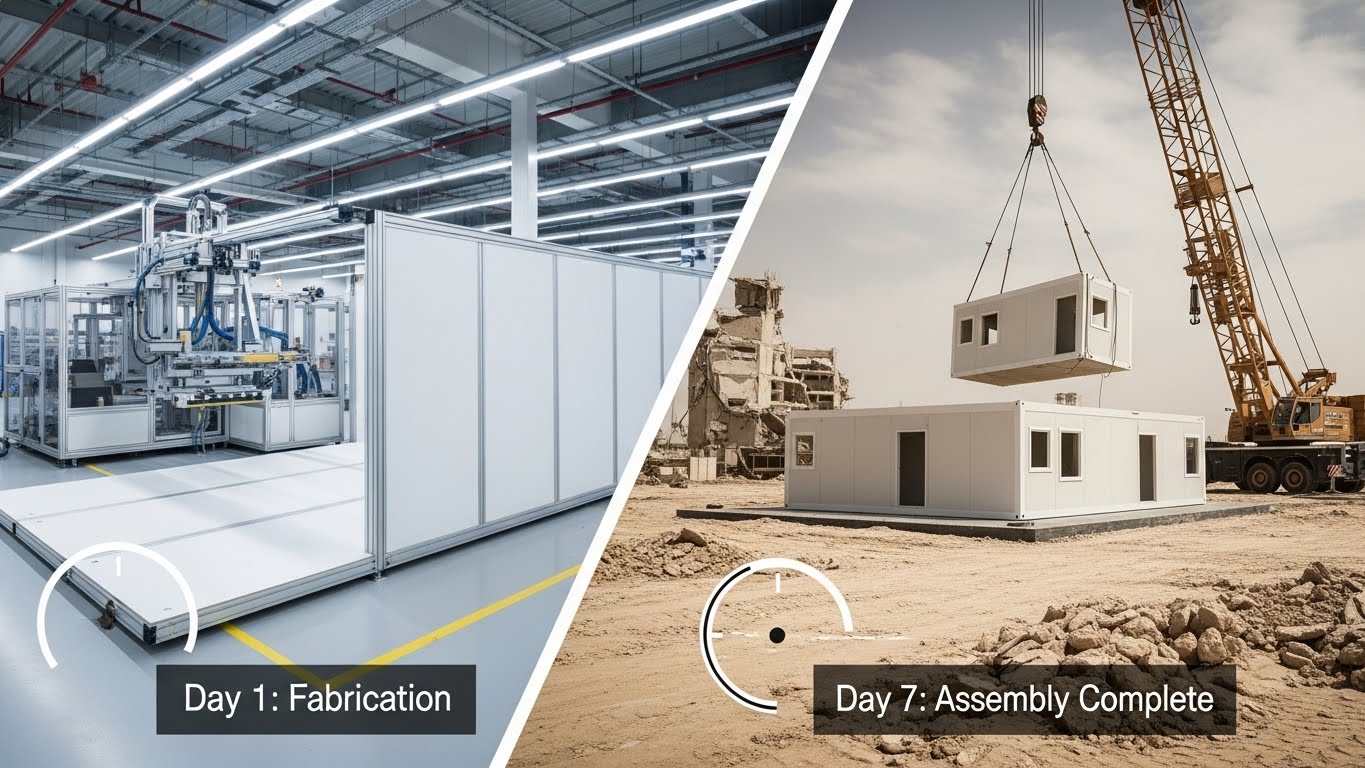
In emergency situations such as natural disasters, humanitarian crises, and post conflict recovery efforts, time is the most critical factor. Traditional construction methods often struggle to respond fast enough to urgent shelter, healthcare, and infrastructure needs. Off site construction offers a proven alternative by enabling rapid delivery, predictable quality, and scalable solutions under extreme time pressure. For emergency projects where speed, reliability, and coordination are essential, off site construction has become a strategic approach rather than an optional method.
What is Off-Site Construction?
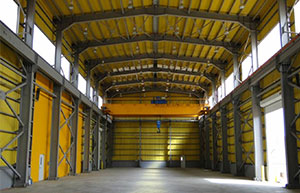
Off site construction is a building method where structural components, modular units, or complete buildings are manufactured in a controlled factory environment and then transported to the project site for final assembly. Unlike conventional on site construction, where most activities occur in parallel but within limited site conditions, off site construction allows manufacturing, engineering, and procurement to progress simultaneously with site preparation.
This approach is particularly effective for emergency projects, as critical building elements such as accommodation units, clinics, command centers, kitchens, and sanitation facilities can be produced while groundwork and logistics planning are still underway. Once delivered, installation is completed in days rather than months.
Advantages of Off-Site Construction for Emergency Projects
The most significant advantage of off site construction is speed. Factory production eliminates weather related delays and enables standardized processes that dramatically shorten lead times. Emergency facilities can be deployed rapidly, ensuring that affected communities receive support when it matters most.
Quality consistency is another key benefit. Controlled manufacturing environments allow for precise workmanship, standardized materials, and rigorous quality checks. This ensures that emergency buildings meet safety, hygiene, and durability standards even when delivered under tight deadlines.
Off site construction also improves cost control. Predictable production schedules and reduced on site labor requirements help minimize unexpected expenses. This is particularly important for donor funded or publicly financed emergency projects where budget transparency is essential.
Safety and sustainability further strengthen the value of off site construction. Reduced on site activity lowers accident risks in unstable or hazardous locations, while optimized material usage significantly reduces waste compared to traditional building methods.
Usage Areas in Emergency Projects
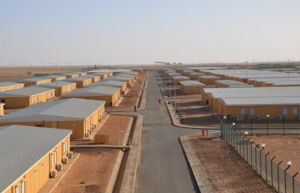
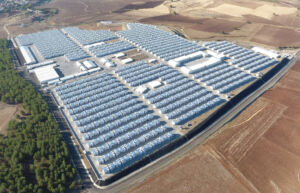
Off site construction is widely used in disaster relief housing for rapid accommodation of displaced populations. Modular housing units provide dignified living conditions with insulation, climate control, and essential services.
Healthcare infrastructure is another critical application. Modular hospitals, clinics, laboratories, and isolation units can be deployed quickly to support emergency medical response during epidemics, earthquakes, or conflict situations.
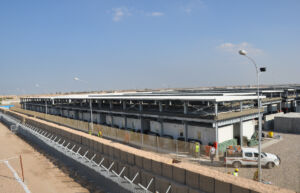
Off site systems are also ideal for emergency command centers, logistics hubs, and administrative buildings required by government agencies, NGOs, and international organizations. Additionally, schools, dining facilities, and sanitation blocks can be installed rapidly to restore basic community services in affected regions.
Dorce’s Difference and Conclusion
Dorce Prefabricated Construction applies off site construction as an integrated engineering and delivery model rather than a standalone product solution. With in house design, manufacturing, logistics, and installation capabilities, Dorce ensures that emergency projects are delivered with speed, technical accuracy, and long term performance in mind.
By combining modular steel systems, containerized units, and panelized building technologies, Dorce tailors each solution to site conditions, climate challenges, and operational requirements. This holistic approach enables rapid deployment without compromising structural integrity, user comfort, or compliance with international standards.
Off site construction is redefining how emergency projects are delivered worldwide. By reducing lead times and increasing reliability, it provides governments and humanitarian organizations with the confidence to act quickly and effectively. With its global experience and turnkey capabilities, Dorce continues to play a critical role in transforming urgent needs into safe, functional, and resilient built environments.