
Blast-Resistant Modules: Ensuring Workforce Safety in Libya’s High-Risk Oil Zones

Workforce safety in Libya’s oil and gas sector extends beyond standard occupational health measures. In certain high-risk zones linked to NOC Libya tenders, Sirte Basin operations, Murzuq oil field services, and remote exploration blocks, infrastructure must be engineered to withstand potential blast pressures, accidental explosions, and external security threats.
Blast-resistant modules designed through advanced modular construction principles have become a critical component of modern oil field accommodation, Life Support Areas (LSA), and temporary site facilities in Libya.
The Risk Landscape in Libyan Oil Zones
Oil and gas operations inherently involve hazardous materials and high-pressure systems. In Libya, additional risk variables may include:
• Proximity to hydrocarbon processing units
• Explosive storage zones
• Remote security vulnerabilities
• Convoy and perimeter risks
• Potential industrial accident scenarios
In such environments, workforce housing and control infrastructure must incorporate blast mitigation strategies that align with international oil and gas safety standards.
What Is a Blast-Resistant Module?
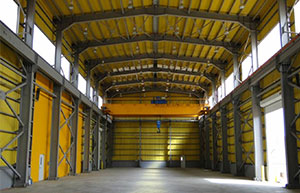
A blast-resistant module is a prefabricated structure engineered to absorb and redistribute blast pressure without catastrophic structural failure.
Core design objectives include:
• Structural containment of overpressure
• Controlled deformation without collapse
• Protection of occupants from fragmentation
• Preservation of critical equipment
Unlike conventional prefabricated buildings, blast-resistant containers are engineered using advanced structural calculations and reinforced steel systems.
Structural Engineering Principles
Blast-resistant modules rely on several key engineering strategies:
• Reinforced steel frame systems
• Enhanced weld integrity
• Strengthened corner posts and load-bearing elements
• Energy-dissipating structural connections
• Reinforced floor and roof panels
Design calculations consider:
• Peak overpressure values
• Impulse duration
• Structural rebound performance
• Occupant survivability thresholds
These parameters are aligned with global oil and gas protective building guidelines.
Applications in Libyan Oil Operations
Blast-resistant modules are deployed in various operational roles:
• Control rooms near processing facilities
• Instrumentation and monitoring centers
• Emergency command centers
• Electrical and generator rooms
• Hazardous material storage units
• High-risk administrative offices
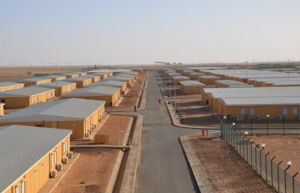
In certain Life Support Areas, selected workforce housing units may also incorporate enhanced protective measures when positioned near industrial hazards.
Integration Within Man Camps and LSAs
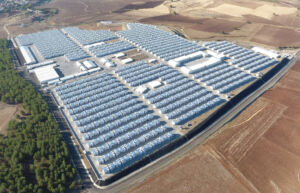
Blast-resistant infrastructure must be integrated into overall camp master planning.
Strategic planning considerations include:
• Minimum standoff distances from high-risk zones
• Segregated hazardous material storage
• Blast-shadow positioning relative to operational units
• Reinforced perimeter systems
Combining modular construction with site layout engineering improves overall risk mitigation.
Material and Envelope Reinforcement
Sandstorm-proof design principles intersect with blast-resistant engineering in Libya’s desert environment.
Reinforcement measures include:
• Heavy-gauge steel panels
• Reinforced door and window assemblies
• Impact-resistant glazing
• Multi-layer insulation systems
• Anchored foundation systems
Proper anchoring prevents module displacement during overpressure events.
Mechanical and Electrical Protection
Sensitive equipment must remain functional following blast exposure.
Protective engineering includes:
• Shock-mounted equipment racks
• Secured cable routing
• Protected ventilation systems
• Fire-rated partitioning
• Emergency power redundancy
These features ensure operational continuity in the event of an incident.
Logistics and Deployment Strategy
Blast-resistant modules are typically manufactured off-site and staged at centralized hubs such as the Tripoli logistics base.
Advantages of off-site fabrication:
• Controlled quality inspection
• Structural integrity verification
• Pre-installation of mechanical systems
• Reduced on-site welding or modification
• Faster installation windows
Transport planning to the Sirte Basin or Murzuq Basin requires reinforced securing mechanisms to protect structural elements during convoy movement.
Turnkey EPC and Compliance
In high-risk oil zones, blast-resistant infrastructure must comply with strict HSE and international energy standards.
Turnkey EPC execution ensures:
• Integrated structural engineering
• Coordinated installation sequencing
• Compliance documentation
• Quality traceability
• Inspection and certification management
This approach reduces liability exposure for operators under NOC Libya tenders.
Turkish Contractors in Libya and Protective Infrastructure
Turkish contractors in Libya have long-standing experience delivering industrial and energy infrastructure under complex security conditions. Many ENR Top 250 contractors operate with integrated design and manufacturing capacity capable of meeting protective building requirements.
This expertise supports:
• Rapid mobilization
• Regional compliance familiarity
• Adaptation to desert logistics
• Integration of modular safety systems
Dorçe Prefabrik Capabilities in Blast-Resistant Systems
Dorçe Prefabrik delivers blast-resistant container modules engineered for oil and gas applications in Libya and similar high-risk environments.
Core capabilities include:
• Reinforced steel modular design
• Structural overpressure engineering
• Prefabricated buildings integrated with protective systems
• Turnkey EPC delivery
• Rapid mobilization via Tripoli logistics staging
• Scalable integration into man camps and LSAs
Dorçe’s manufacturing processes ensure quality control before modules reach remote deployment sites, minimizing field modification requirements.
Balancing Safety and Efficiency
Blast-resistant infrastructure must not compromise operational efficiency or workforce comfort.
Effective solutions balance:
• Structural reinforcement
• Thermal insulation performance
• HVAC reliability
• Habitability standards
• Scalable modular expansion
Well-designed modules protect personnel while maintaining the functionality required for continuous oil field operations.
Conclusion: Safety as Structural Strategy
In Libya’s high-risk oil zones, workforce safety is engineered, not assumed. Blast-resistant modules transform prefabricated buildings into protective systems capable of withstanding extreme events.
By integrating reinforced modular construction, strategic site planning, and Turnkey EPC coordination, operators strengthen safety compliance while preserving operational continuity. Dorçe Prefabrik supports this objective through engineered blast-resistant modules designed specifically for the demands of Libya’s oil and gas sector, ensuring protection, durability, and rapid deployment in challenging environments.
Tags
Tags