
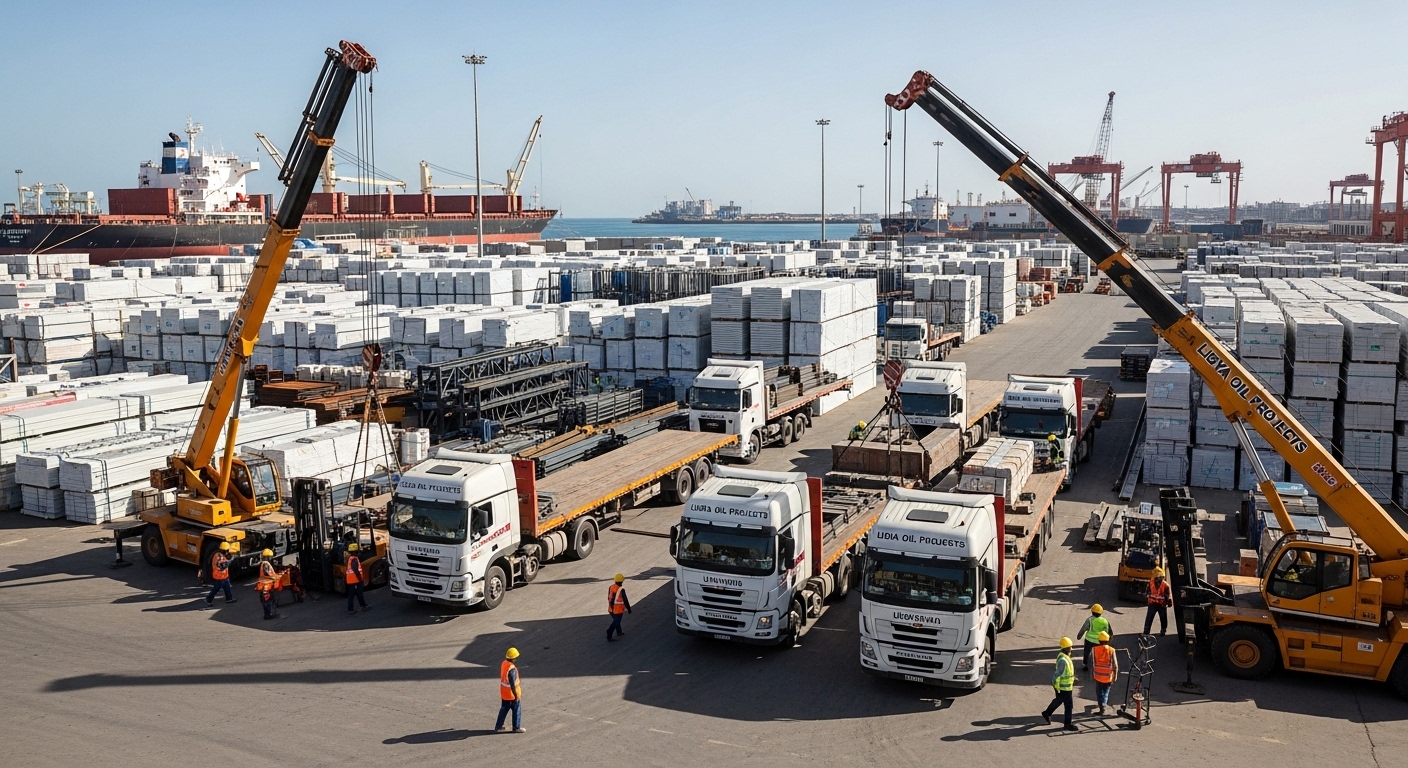
Supply Chain Resilience: Sourcing Construction Materials for Libya from a Regional Hub

2026-02-19T11:41:19+03:00

Sourcing Construction Materials for Libya from a Regional Hub  Libya’s oil, gas, mining, and infrastructure sectors depend heavily on predictable material flow. Whether supporting NOC Libya tenders, Sirte Basin exploration, Murzuq oil field services, or large-scale industrial expansions, construction timelines are often determined not by engineering complexity, but by supply chain stability. In remote and logistically sensitive environments, supply chain resilience becomes a structural requirement. Sourcing construction materials through a regional hub such as the Tripoli logistics base or coordinated Turkey Libya corridor transforms risk exposure into managed predictability. The Structural Vulnerabilities of Direct-to-Site Procurement Remote oil field accommodation and temporary site facilities face unique procurement challenges: more..

Supply Chain Resilience: Sourcing Construction Materials for Libya from a Regional Hub2026-02-19T11:41:19+03:00

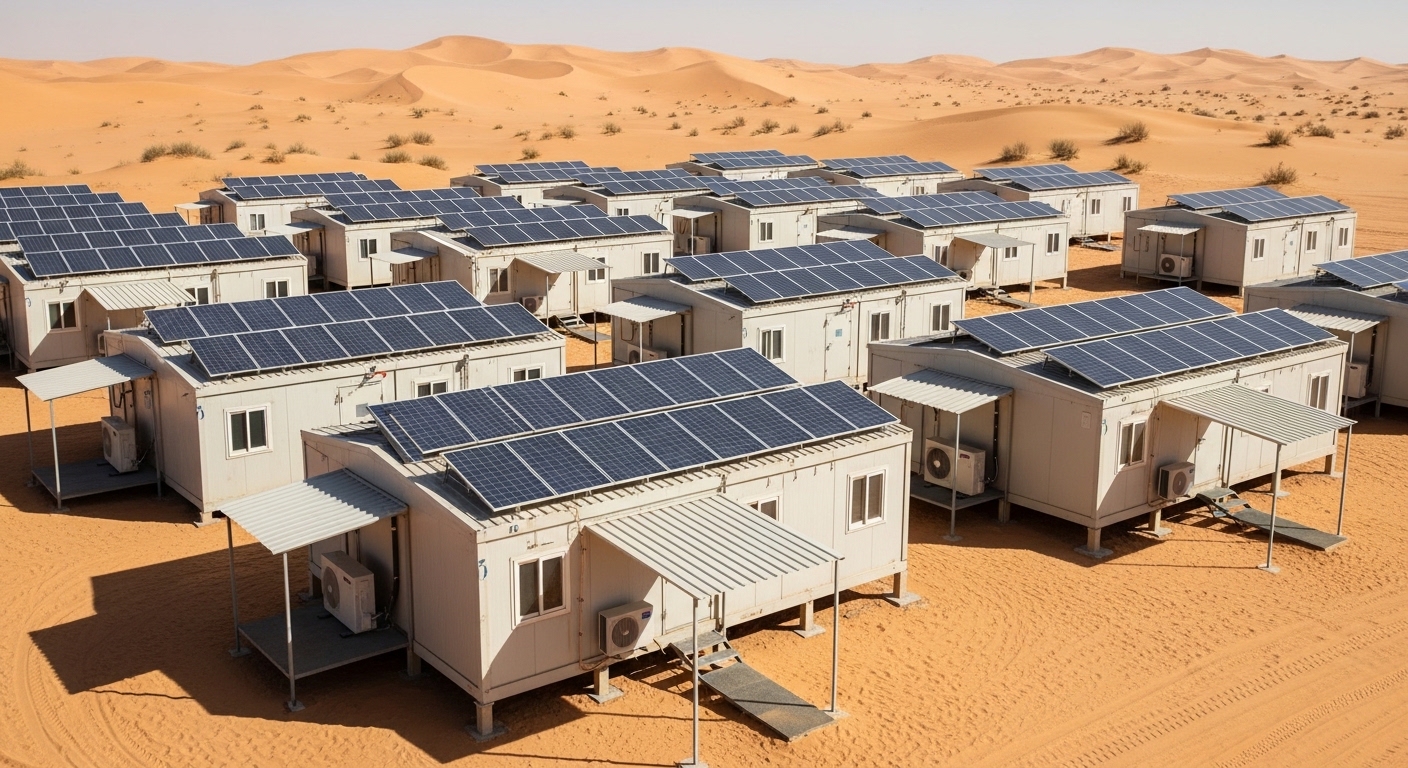
HVAC Efficiency in Arid Climates: Sustainable Energy Management for Remote Man Camps

2026-02-17T10:09:27+03:00

HVAC Efficiency in Arid Climates: Sustainable Energy Management for Remote Man Camps In North Africa and the Middle East, remote man camps supporting oil, gas, mining, and infrastructure operations operate under some of the harshest climatic conditions on earth. In Libya’s Sirte Basin, Murzuq Basin, and other desert regions connected to NOC Libya tenders, ambient temperatures frequently exceed 45°C, while extreme diurnal temperature swings strain building systems. In such environments, HVAC efficiency is not a comfort upgrade. It is a strategic energy management decision that directly affects fuel consumption, generator sizing, logistics frequency, and long-term operating costs. Sustainable HVAC more..

HVAC Efficiency in Arid Climates: Sustainable Energy Management for Remote Man Camps2026-02-17T10:09:27+03:00
Go to Top